Strategic Guide to Aromatherapy OEM/ODM: Scaling Your Fragrance Brand in 2026
1. Introduction: The B2B Landscape of Aromatherapy in 2026
The global aromatherapy and home fragrance market has reached a critical inflection point in 2026. No longer a niche wellness category, it is now a multi-billion dollar industrial sector driven by a sophisticated consumer base that demands technical precision, clinical transparency, and "functional luxury." For B2B stakeholders—brand owners, hotel procurement managers, and global distributors—the challenge has shifted from simply "sourcing product" to "architecting a sensory ecosystem."
In this landscape, the choice of a manufacturing partner is the single most important strategic decision. The rise of Aromatherapy OEM/ODM (Original Equipment/Design Manufacturing) has democratized high-end production, but the barrier to true market leadership remains high. This guide analyzes the market dynamics of 2026 and provides a roadmap for brands looking to scale through professional contract manufacturing.
2. Market Intelligence: The Shift to "Mature Wellness"
By mid-2026, market data indicates a definitive move away from "fast fragrance" toward what experts call "Mature Wellness."
- The Gourmand Evolution: Traditional sweet scents (vanilla, caramel) have evolved into savory, nutty, and complex profiles.
- Bio-Transparency: Consumers now expect GC/MS (Gas Chromatography-Mass Spectrometry) reports to be accessible via QR codes on retail packaging.
- The Rise of Rituals: Fragrance is being integrated into specific daily rituals—coffee and tea moments, sleep hygiene, and remote work focus.
For a brand to succeed in 2026, its OEM partner must be able to formulate scents that align with these behavioral shifts.
3. OEM vs. ODM: Which Model Fits Your Growth Stage?
Understanding the distinction between these two models is essential for resource allocation.
The OEM (Original Equipment Manufacturer) Model
In the OEM model, the brand provides the final fragrance oil formulation and packaging design. The manufacturer acts as the technical executor, handling:
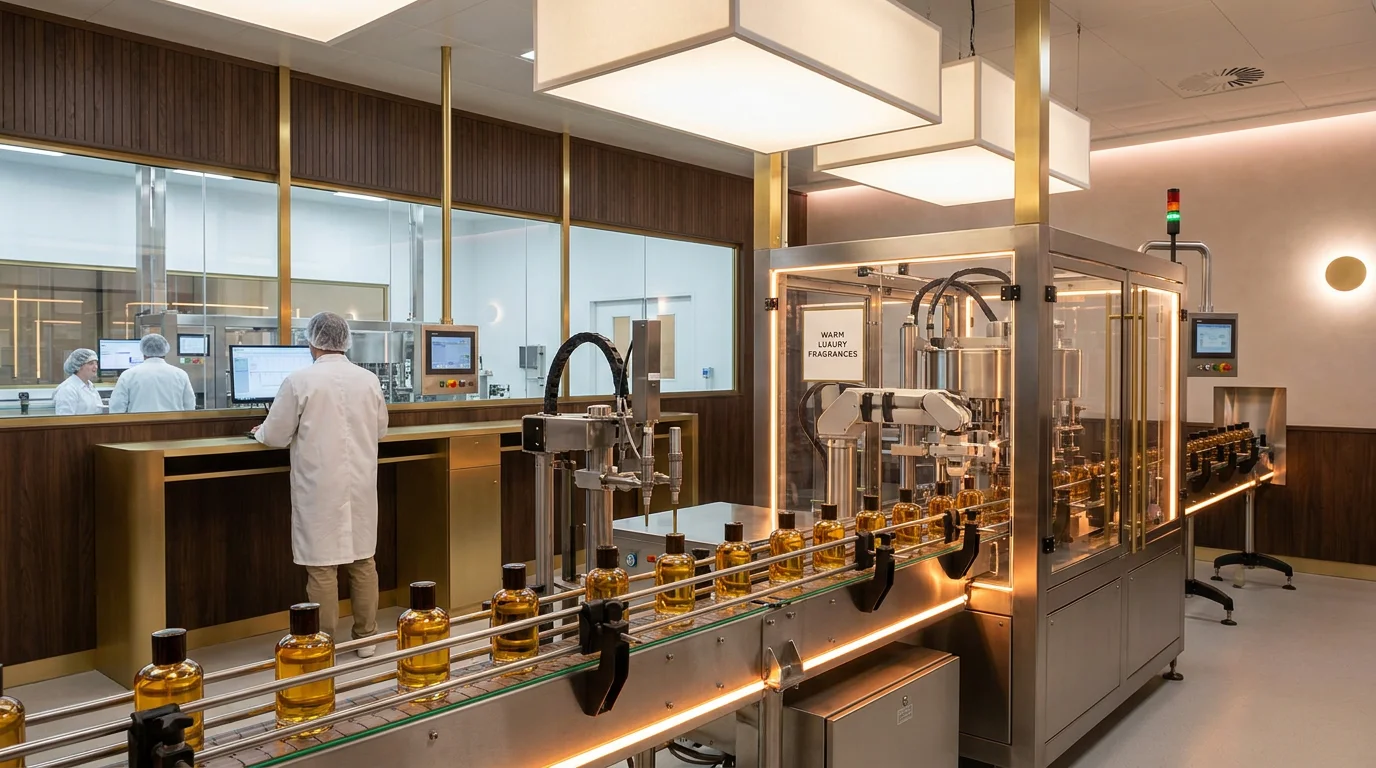
- Medical-Grade Filling: Ensuring +/- 2ml precision in large-scale production.
- Compliance Verification: Ensuring the final product meets IFRA and REACH standards.
- Industrial Scalability: Moving from 1,000 to 100,000 units without quality degradation.
Best for: Established brands with in-house R&D and design teams.
The ODM (Original Design Manufacturer) Model
The ODM model is a "turnkey" solution. The manufacturer provides the "Seed Pool" of pre-developed scents, technical bottle designs, and branding concepts.
- Trend-Driven Formulation: Access to the manufacturer's library of 2026 trending notes (e.g., Savory Gourmand, Biotech-woods).
- Regulatory Management: The manufacturer handles all MSDS and safety documentation from scratch.
- Speed to Market: ODM can reduce the product launch cycle by up to 40%.
- Aesthetic Flexibility: Adapting to "Warm Luxury" or "Modern Minimalist" design languages effortlessly.
Best for: Entrepreneurs, boutique hotels, and retail chains looking for rapid deployment.
4. The "LoyalCrafts Standard": Precision in Manufacturing
As a leader in the sector, LoyalCrafts has established the benchmark for high-end production. Our facility applies food-grade BRC standards to fragrance manufacturing, a rarity in the industry.
I. Technical Precision: The 550-Mesh Benchmark
In the Asian markets (Japan/Korea), precision is the primary proof point of quality. LoyalCrafts utilizes 550-mesh ultra-fine filtration systems for all essential oil blends, ensuring a purity that prevents diffusion-clogging and maintains olfactory integrity over 180+ days of use.
II. Compliance as a Competitive Edge
Navigating the EU's REACH and the global IFRA standards is no longer optional. A professional OEM partner must provide:
- Automated MSDS Generation: Real-time safety data sheets for global shipping.
- Volatility Testing: Ensuring that scent throw remains consistent in varied climates (from Dubai's heat to London's humidity).
5. 2026 Sourcing Strategy: Beyond the MOQ
While "Low MOQ" (Minimum Order Quantity) was the buzzword of 2024, the priority for 2026 is Reliability-at-Scale.
- Audit Your Partner: Does the factory have 24/7 automated monitoring?
- Transparency First: If a supplier cannot provide a batch-specific GC/MS report, they are a liability to your brand's reputation.
6. Conclusion: Building Your Olfactory Legacy
The fragrance industry in 2026 rewards brands that combine emotional storytelling with industrial rigor. By leveraging a high-tier Aromatherapy OEM/ODM partner like LoyalCrafts, brands can outsource the technical complexity of manufacturing and focus entirely on the "Art of the Vibe."
Whether you are launching a bespoke hotel collection or a global retail line, the standard is clear: Precision, Compliance, and Olfactory Integrity.
For more information on LoyalCrafts' manufacturing capabilities and to view our 2026 Scent Pool, visit our Portfolio.