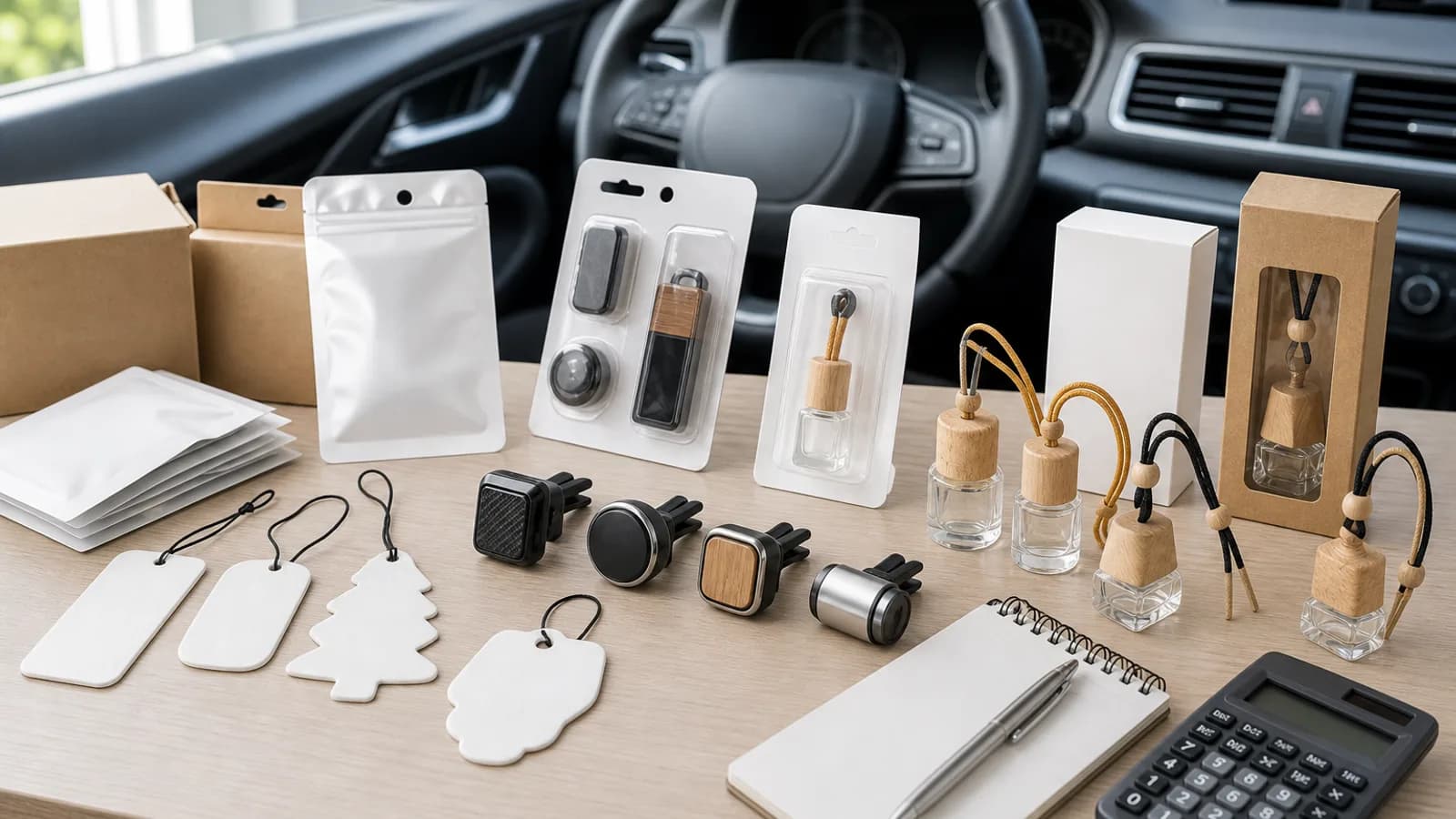
Quick answer: Car air freshener OEM cost depends less on fragrance alone and more on the format: scented paper cards, vent clips, and hanging liquid diffusers use different materials, packaging, labor, testing, and retail positioning. Paper cards are usually the most cost-efficient for promotions and volume retail. Vent clips cost more because of clip structure, refill cores, assembly, and airflow testing. Hanging liquid diffusers can feel more premium, but bottle, cap, cord, liquid stability, leakage control, and carton protection must be checked carefully before mass production.
OEM Cost Snapshot
- Main keyword: car air freshener OEM cost.
- Lowest-cost entry format: scented paper cards for promotions, car wash chains, mailers, and multipacks.
- Best controlled placement: car vent clips using airflow-assisted release and replaceable cores.
- Best premium visual format: hanging liquid diffusers with bottle, cap, cord, stopper, and retail box.
- Custom MOQ reference: paper cards from 1,000 units, car vent diffusers from 1,000 units, and car perfume diffusers from 500 units, depending on specification and SKU split.
- Bulk timing: normally 30-40 days after sample approval and payment.
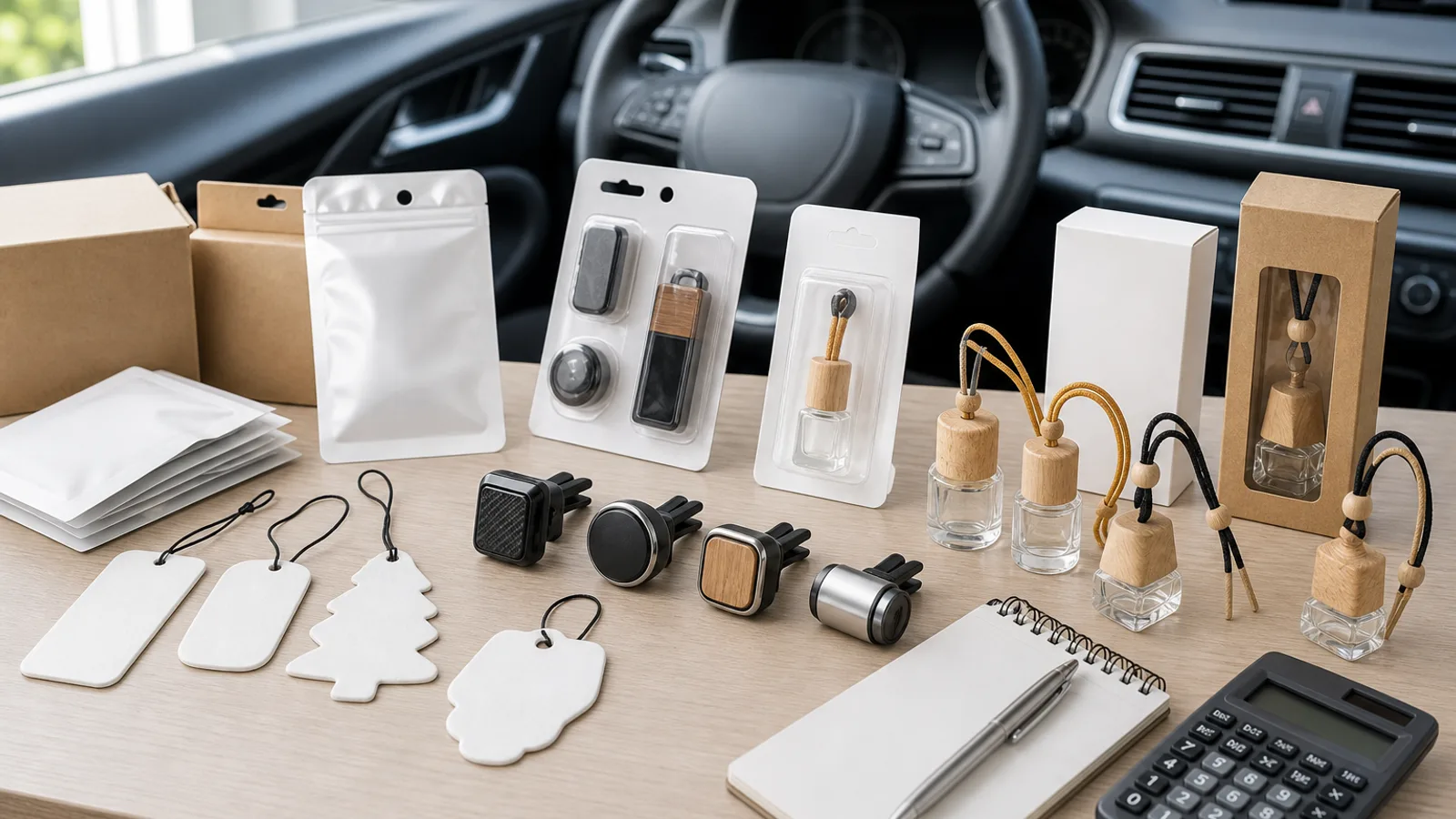
Why Car Air Freshener OEM Cost Varies by Format
A buyer may ask for "the cheapest car air freshener," but that question is too broad for a reliable quotation. A scented paper card, a car vent clip, and a hanging liquid diffuser can all freshen a vehicle cabin, but they are built in very different ways. One is based on absorbent paper and a pouch. One is based on plastic or metal hardware plus a scent core. One is based on liquid, bottle, cap, cord, inner seal, and leakage control.
For B2B buyers, the better question is: which format matches the sales channel, target price, scent life, packaging style, and testing risk? A gas station promotion may need low cost and fast visual recognition. An automotive accessory brand may need a reusable vent clip. A lifestyle retailer may prefer a small hanging bottle that looks like a miniature perfume.
This guide compares the three formats from a sourcing perspective. It supports our custom car air freshener manufacturer page and helps buyers decide what to quote first before sending a complete OEM brief.
Car Air Freshener OEM Cost Comparison Table
| Format | Typical Cost Position | Main Cost Drivers | Best Use Cases | Key Risk to Test |
|---|---|---|---|---|
| Scented paper card | Lowest entry cost | Paper board, die-cut, print, fragrance loading, string, pouch, carton | Promotions, car wash chains, service centers, multipacks | Scent life, heat stability, print quality, pouch seal |
| Car vent clip | Middle to higher | Clip housing, scent core, refill structure, assembly, blister card or box | Auto accessory retail, refills, modern car fragrance lines | Clip fit, airflow release, plastic strength, heat behavior |
| Hanging liquid diffuser | Middle to premium | Bottle, cap, rope, stopper, liquid formula, leak checks, retail box | Giftable car scent, lifestyle retail, private label bottle ranges | Leakage, cap absorption, liquid stability, safe-use instructions |
1. Scented Paper Cards: Lowest Entry Cost, Highest Artwork Flexibility
Scented paper cards are often the most practical starting point for value-focused car air freshener OEM programs. The product structure is simple: absorbent paper board, fragrance loading, die-cut shape, hanging string or elastic, individual pouch, and outer carton. The buyer can customize shape, scent, print design, pouch style, and multipack structure without developing complex hardware.
The biggest cost advantage is flat production. Paper cards are light, thin, easy to ship, and easy to display. For car wash chains, dealerships, gas stations, and promotional buyers, a paper card can deliver brand visibility at a controlled price. It also works well when the buyer wants multiple scents in one seasonal program.
The cost can still rise when the card shape is complex, print quality is high, the pouch has barrier requirements, or the buyer needs display cartons. A cheap paper card that loses scent in storage is not a good value. Buyers should test fragrance load, pouch seal, print rub resistance, string strength, oil migration, and heat exposure before approval. See our scented paper card portfolio for product references.
2. Car Vent Clips: More Hardware, Better Placement Control
Car vent clips usually cost more than paper cards because they include physical hardware. The product may use a plastic, metal, ceramic, membrane, felt, polymer, or replaceable scent core system. The clip must fit common air vents, hold its position, resist cabin heat, and release fragrance without blocking controls or looking bulky.
The advantage is placement control. A vent clip sits on the air outlet and uses airflow to support scent movement. For modern automotive accessory retail, this can feel more engineered than a paper card. Vent clips can also support refill programs, which makes them attractive for brands that want repeat purchases.
Cost drivers include housing material, mold status, clip design, refill core, fragrance carrier, assembly labor, blister packaging, display card, and carton layout. If the buyer wants a custom shape, color-matched housing, decorative metal detail, or replaceable cartridge, quotation should separate the hardware cost from the fragrance core cost. For examples, review the car vent diffuser portfolio.
3. Hanging Liquid Diffusers: Strong Visual Value, Higher Leakage Risk
Hanging liquid diffusers are often chosen when the buyer wants a premium car fragrance impression. The small bottle, wooden or polymer cap, cord, bead, and visible liquid create a stronger gift or lifestyle look than a flat card. This format works well for automotive retail, online gift bundles, lifestyle brands, and private label fragrance collections.
The cost structure is more complex. Buyers need to confirm bottle material, cap absorption, stopper, cord, liquid formula, fragrance concentration, fill volume, label or tag, pouch or box, carton protection, and leakage testing. A few cents saved on the cap, stopper, or inner seal can become expensive if the product leaks during storage or shipping.
Hanging liquid diffusers also need clear consumer instructions. The end user may need to remove or loosen a stopper, tip the bottle briefly, let the cap absorb liquid, and hang it safely. The package should avoid overpromising scent duration and should clearly communicate safe placement. Our car perfume diffuser portfolio shows this format in the broader automotive fragrance range.
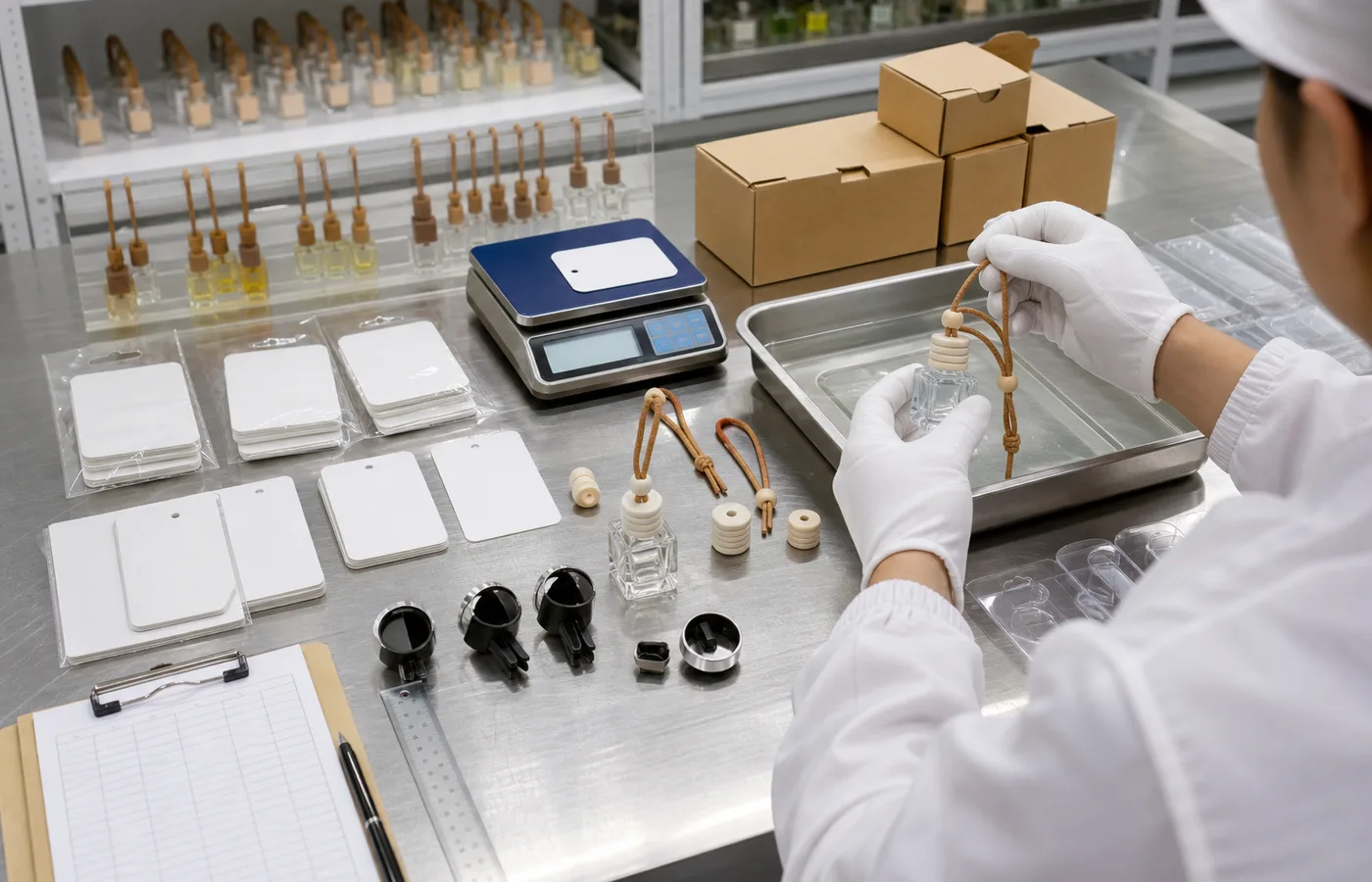
Packaging Cost: Pouch, Blister, Box or Display Carton?
Packaging can change the real OEM cost as much as the fragrance format. A paper card may use a simple barrier pouch. A vent clip may need a blister card, clamshell, small box, or display tray. A hanging liquid diffuser may need an inner stopper, protective pouch, paper box, window box, or divider carton. The cheapest package is not always the lowest total cost if it creates leakage, odor loss, crushed boxes, or poor shelf presentation.
For promotional buyers, a printed pouch or simple card backing may be enough. For retail shelves, buyers usually need barcode space, warning text, scent name, usage instructions, and hang-hole structure. For e-commerce, the carton should survive parcel handling and protect glass bottles or plastic clip parts from impact.
A practical RFQ should ask for two versions: a cost-efficient pack and a retail-ready pack. This lets the buyer see whether the extra cost buys better display, better protection, better scent retention, or only decoration.
Testing and Compliance Checks Buyers Should Not Skip
Fragrance documentation matters for every car air freshener format. The IFRA Standards provide a widely used risk-management system for fragrance ingredients, and the IFRA Standards Library offers a searchable database of ingredient standards. Buyers should request the appropriate fragrance documentation for the intended use and market.
For the United States, the CPSC explains that the Federal Hazardous Substances Act requires precautionary labeling for hazardous substances. This does not mean every air freshener has the same label, but it does mean buyers should review formula, packaging, and warning language with the target market in mind.
Car products also live in a driver environment. The NHTSA driver-distraction guidelines are aimed at in-vehicle electronic devices, but the safety principle is useful for fragrance accessories too: avoid designs or placement instructions that distract the driver or obstruct visibility. Hanging products, especially, should include clear safe-use guidance for the buyer's market.
Sample Approval Checklist for OEM Buyers
- Confirm the target format: paper card, vent clip, hanging liquid diffuser, or a mixed product line.
- Check fragrance direction in a real vehicle cabin, not only at a desk.
- Test warm storage, airflow, pouch seal, leakage, cap absorption, and material compatibility.
- Review packaging structure, barcode space, warning text, usage instructions, and carton layout.
- Separate cost for product components, fragrance, retail packaging, display packing, and sample work.
- Approve a sealed golden sample before bulk production starts.
Which Format Should You Quote First?
Choose paper cards when price and volume matter most
Paper cards are the best first quote for giveaways, checkout counters, service centers, car wash programs, subscription inserts, and seasonal multipacks. They offer strong branding surface and low shipping weight, but buyers should be realistic about scent life and heat exposure.
Choose vent clips when the product needs a hardware feel
Vent clips are better when the brand wants controlled placement, refill potential, and a more durable accessory impression. They are usually not the cheapest option, but they can support a stronger retail story and repeat-purchase model.
Choose hanging liquid diffusers when visual value matters
Liquid diffusers are suitable when the buyer wants a premium bottle look and a more giftable format. They need careful leakage and heat testing, so the supplier should confirm bottle, cap, stopper, cord, liquid, and packaging together.
Case Example: One Automotive Fragrance Range, Three Price Points
A distributor wants a private label car fragrance range for convenience stores and car wash locations. A practical structure could use paper cards for low-cost promotions, vent clips for mid-range retail, and hanging liquid diffusers for giftable checkout products. The three formats can share related scent directions such as citrus clean, ocean air, soft musk, green tea, and woody amber.
This approach gives the buyer a price ladder instead of forcing one product to serve every channel. Paper cards drive volume, vent clips create a stronger accessory feel, and liquid diffusers raise perceived value. The sourcing brief should still keep each format separate, because each one has different materials, packaging, tests, and order planning.
Need a car air freshener OEM cost comparison?
Send your target market, preferred format, scent direction, packaging style, and estimated quantity per SKU. LoyalCrafts can compare paper cards, vent clips, and hanging liquid diffusers, then reply within 24 hours.
FAQ
Which car air freshener format has the lowest OEM cost?
Scented paper cards are usually the lowest-cost entry format because they use flat absorbent paper, printing, fragrance loading, string, pouch, and carton packing. Exact cost still depends on card size, shape, print, scent load, pouch quality, and quantity per SKU.
Are vent clips more expensive than paper cards?
Vent clips are usually more expensive because they require hardware, clip structure, scent core, assembly, and airflow performance checks. They can still be worthwhile when the brand wants controlled placement, refill potential, or a stronger automotive accessory feel.
Why can hanging liquid diffusers cost more?
Hanging liquid diffusers include a bottle, cap, cord, stopper, liquid formula, filling process, leakage control, retail packaging, and carton protection. The format looks more premium, but it needs stronger sample testing before mass production.
Can one OEM project include all three formats?
Yes. Many B2B buyers build a price ladder with paper cards for promotions, vent clips for mid-range retail, and hanging liquid diffusers for premium or giftable sales. Each format should still be quoted and tested separately.
What should I send before asking for a quote?
Send the target format, scent direction, market, quantity per SKU, packaging reference, artwork status, target price range, document needs, and launch timing. This helps the supplier compare the real cost instead of guessing from a generic product name.
You May Also Like
- Custom Car Air Freshener Manufacturer
- Scented Paper Card Portfolio
- Car Vent Diffuser Portfolio
- Hanging Car Air Freshener Liquid Buying Guide
Summary
Car air freshener OEM cost is a format decision before it is a fragrance decision. Paper cards are usually best for low-cost volume, vent clips for controlled placement and refill potential, and hanging liquid diffusers for premium visual value. Buyers should compare materials, packaging, testing risk, sample timing, and sales channel before approving the final format.
LoyalCrafts supports custom car air freshener manufacturing across paper cards, EVA cards, vent clips, hanging liquid diffusers, membrane diffusers, and related automotive scent formats. Send your OEM brief with target format, market, quantity, scent direction, and packaging reference for a practical cost comparison.