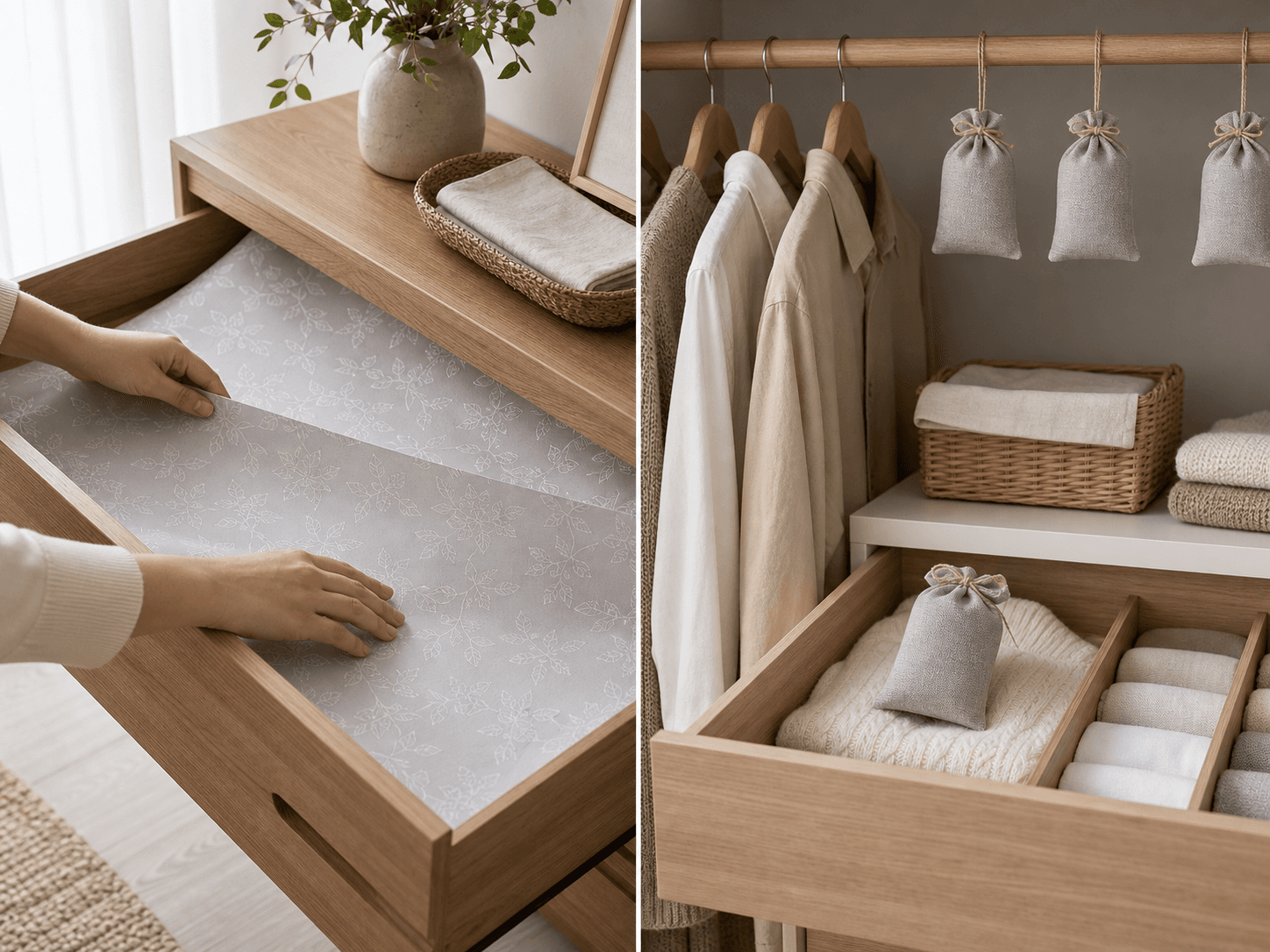
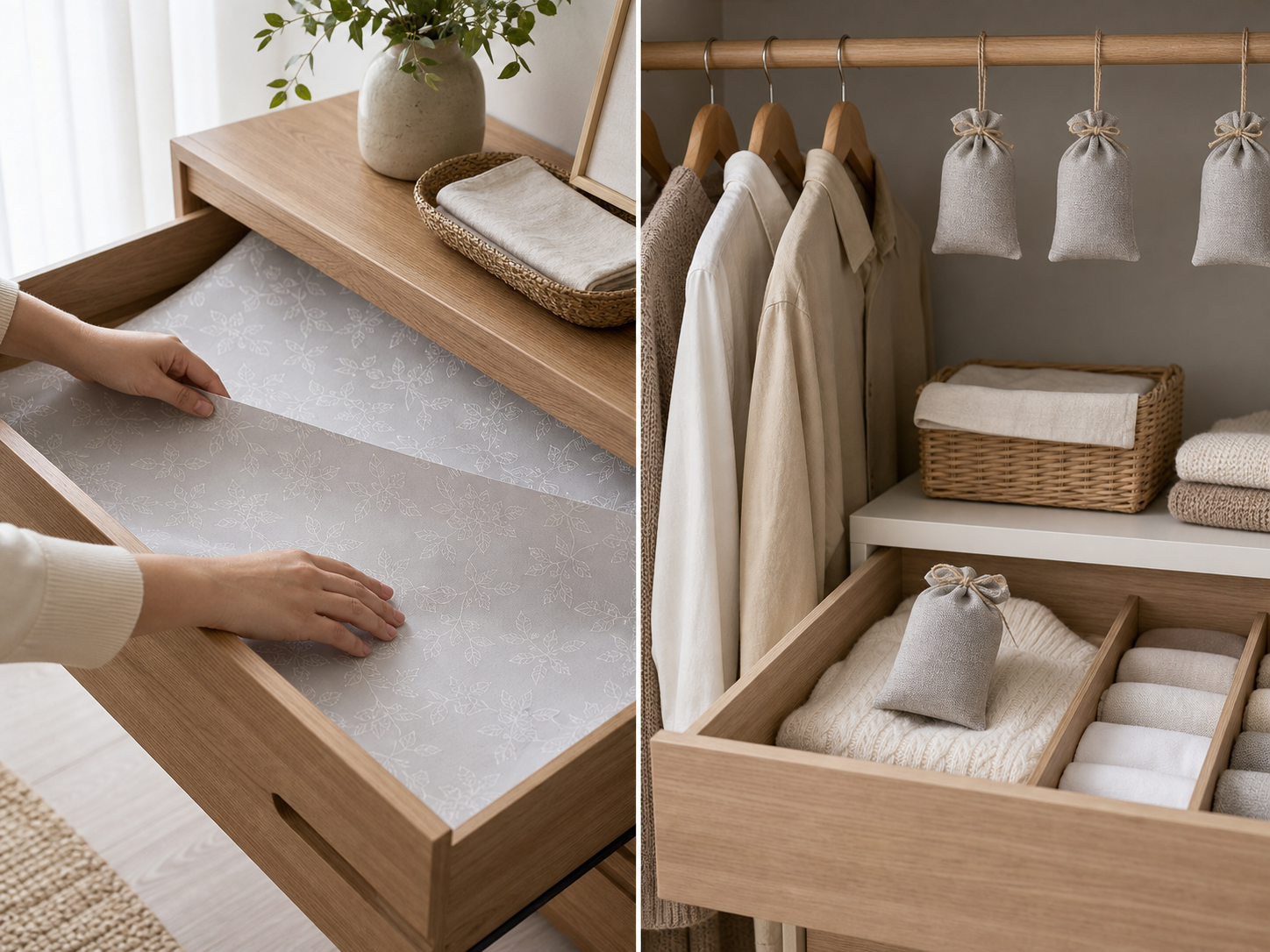
Quick answer: Drawer sachets for dresser storage are best for flexible, low-contact fragrance in small spaces, while scented drawer liners are better when buyers want a cleaner visual presentation, steady surface coverage, and a more premium unboxing moment. For humid closets, the strongest solution is often a three-part system: scented sachets, scented drawer liners, and a moisture absorber.
Best Closet Freshness System
- Drawer sachets: flexible scenting for dressers, wardrobes, luggage, and gift boxes.
- Scented drawer liners: premium surface coverage and a cleaner drawer presentation.
- Scented moisture absorbers: practical dampness control for humid closets.
- Best B2B bundle: sachets plus liners plus moisture absorbers for private label closet care.
Why Closet Freshness Is a Product Design Problem, Not Just a Fragrance Problem
Closet odor usually starts with trapped air, fabric fibers, residual laundry moisture, and limited ventilation. A pleasant scent can make a drawer feel cleaner, but fragrance alone cannot solve dampness. The U.S. Environmental Protection Agency recommends keeping indoor humidity below 60 percent, ideally between 30 and 50 percent, because higher humidity increases the chance of mold and musty odor problems. That matters for home fragrance buyers because closets, drawers, guest-room wardrobes, hotel storage, and retail packaging all have one thing in common: they are enclosed spaces.
For B2B buyers, the right decision is not simply whether to buy a lavender sachet or a paper liner. The real question is: what product format gives the customer the cleanest experience, the safest contact with fabrics, the longest useful scent life, and the strongest brand impression?
That is where scented linen sachets, paper sachets, scented drawer liners, and scented moisture absorbers each play a different role.
What Are Drawer Sachets for Dresser Use?
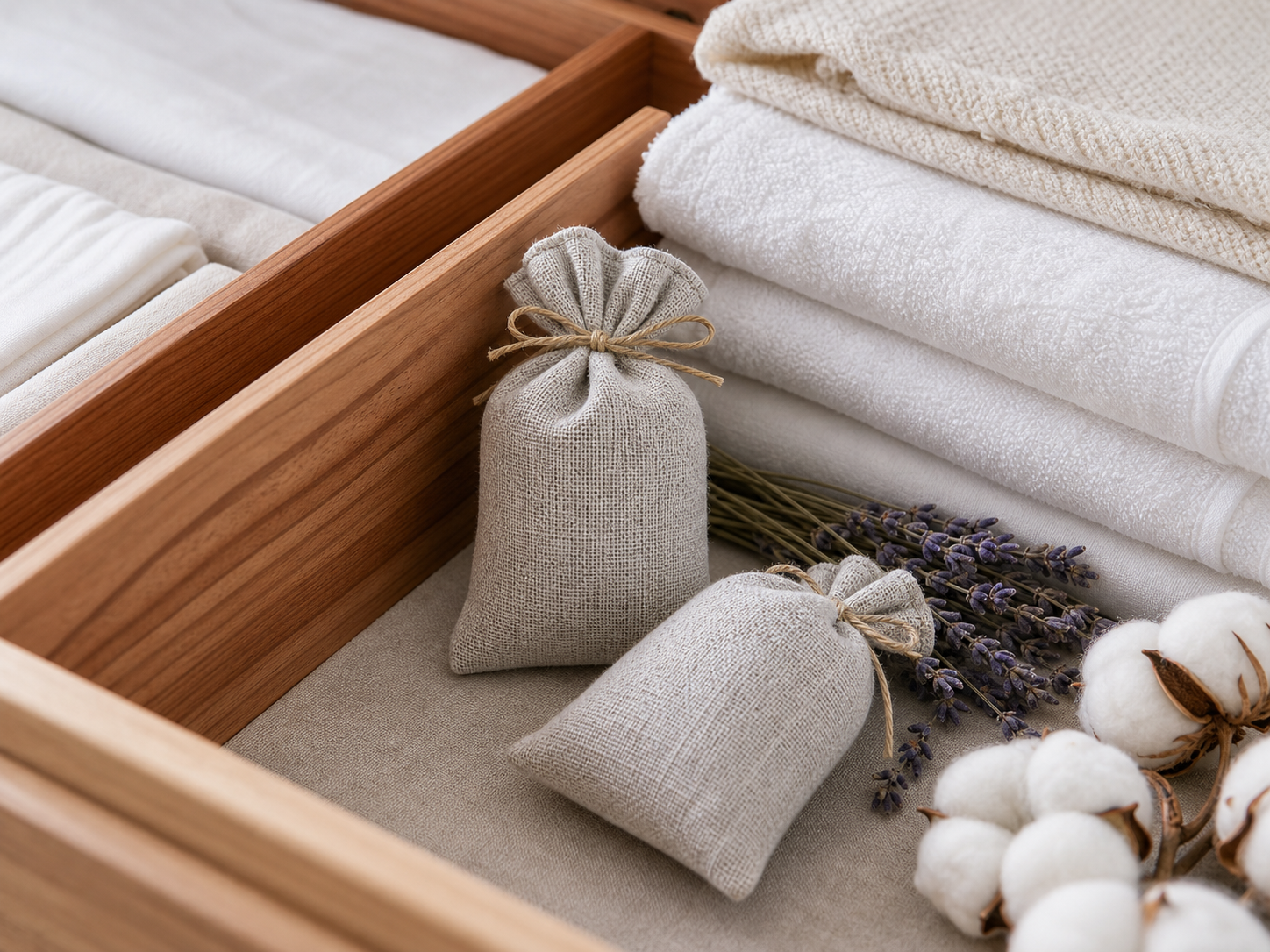
Drawer sachets for dresser use are small fragrance carriers placed inside drawers, wardrobes, closets, luggage, gift boxes, or storage bins. They can be made from paper, nonwoven fabric, linen, cotton, organza, or other breathable materials. Inside the sachet, the scent may come from fragrance-infused filler, scented beads, aroma powder, or treated paper substrate.
In practical use, a sachet works like a low-maintenance scent source. It does not need flame, electricity, or spraying. The customer simply places it near folded clothes, towels, bedding, shoes, or seasonal garments. For private label brands, sachets are especially useful because the outer pouch can carry branded printing, color matching, ribbon, hang tags, or seasonal artwork.
Our fragrance expert says: "For enclosed storage, a sachet should smell clean at arm's length, not overpowering inside the drawer. If the first impression is too strong, the customer may worry about fabric transfer even when the formula is technically stable."
What Are Scented Drawer Liners?
Scented drawer liners are fragrance-treated paper sheets, EVA-backed sheets, or decorative liner rolls placed flat on drawer surfaces. They protect the drawer base, create a cleaner presentation, and deliver a subtle fragrance near the fabric. Compared with sachets, liners feel more built-in. They are often used for premium home storage, hotel amenities, wardrobe organizers, gift packaging, and closet-care sets.
A drawer liner is also more visible than a sachet. When a customer opens a drawer, the liner becomes part of the interior design. That makes it valuable for brands selling coordinated home fragrance collections. A scented drawer liner can match the design language of room sprays, sachets, candles, and wardrobe accessories.
Drawer Sachets vs. Scented Drawer Liners: Which Is Better?
Neither format is universally better. The best choice depends on how the product will be used, packaged, and replaced.
| Decision Factor | Drawer Sachets for Dresser | Scented Drawer Liners |
|---|---|---|
| Best use case | Drawers, closets, luggage, shoe cabinets, gift boxes | Dresser drawers, wardrobes, hotel storage, premium packaging |
| Brand visibility | Visible if printed or hung | Highly visible when drawer opens |
| Flexibility | Easy to move or replace | Stays in one location |
| Perceived value | Good for multipacks and seasonal scents | Strong for premium home organization |
| Best B2B bundle | Sachet plus moisture absorber | Liner plus matching sachet |
7 Practical Ways to Keep Closets and Dressers Fresh
1. Start with Moisture Control Before Adding Fragrance
Musty odor often returns when humidity remains high. A scented sachet can improve the first impression, but it should not be treated as a moisture-control product unless it is specifically designed that way. For humid regions such as coastal North America, Japan, South Korea, Northern Europe, or rainy-season markets, pair fragrance items with a moisture absorber. This creates a clearer value proposition: fresh scent plus dampness control.
2. Use Drawer Sachets for Flexible Small-Space Scenting
Drawer sachets for dresser use work well when customers want a simple, no-instruction solution. They can place one sachet in a sock drawer, two in a wardrobe, or one in a luggage compartment before travel. For brands, sachets are easy to sell in multipacks, seasonal scent sets, hotel amenity kits, and private label wardrobe-care collections.
3. Use Scented Drawer Liners for a Premium Interior Finish
Drawer liners add a design layer that sachets cannot. They create a clean base, reduce direct contact between clothing and rough drawer surfaces, and give the drawer a finished look. For home decor retailers, this can be more attractive than a loose fragrance pouch. For hospitality buyers, liners can help guest-room drawers feel cleaner and more intentionally prepared.
4. Choose Low-Transfer Fragrance Systems for Fabric Contact Areas
Any product used near textiles should be designed with transfer risk in mind. The fragrance load, carrier material, ink system, pouch seal, and packaging all matter. B2B buyers should ask suppliers for stability testing, odor consistency checks, and packaging compatibility testing before scaling a private label order. The International Fragrance Association describes IFRA Standards as a global risk management system for safe fragrance ingredient use, and responsible suppliers should be able to discuss IFRA compliance for the intended product category.
5. Match Fragrance Style to the Storage Context
Clean cotton, lavender, cedar, green tea, white tea, linen, soft musk, and light floral profiles usually perform well in dresser and closet categories. Heavy gourmand, intense amber, or strong woody notes can feel luxurious in candles but overwhelming inside a small drawer. For hotels, spas, and lifestyle retailers, the safest direction is often a clean, airy fragrance that supports the perception of freshly laundered fabrics.
6. Create a Replaceable System Instead of a One-Time Product
A strong private label program should make replacement easy. Sachets can be sold as refill packs. Drawer liners can be offered in matching rolls or pre-cut sheets. Moisture absorbers can be replaced seasonally. This gives brands more repeat-purchase potential and gives customers a clearer routine: refresh scent every few weeks, replace moisture control when full, and change liners when cleaning drawers.
7. Build a Complete Closet-Care Bundle
The most commercially useful product is often a bundle, not a single item. A closet-care bundle can include scented sachets for flexible placement, drawer liners for visual finish, a moisture absorber for dampness control, and a small room spray for nearby spaces. This approach is especially strong for private label buyers serving department stores, hotel groups, home organization brands, and gift retailers.
Case Example: A Hotel Linen Closet Freshness Kit
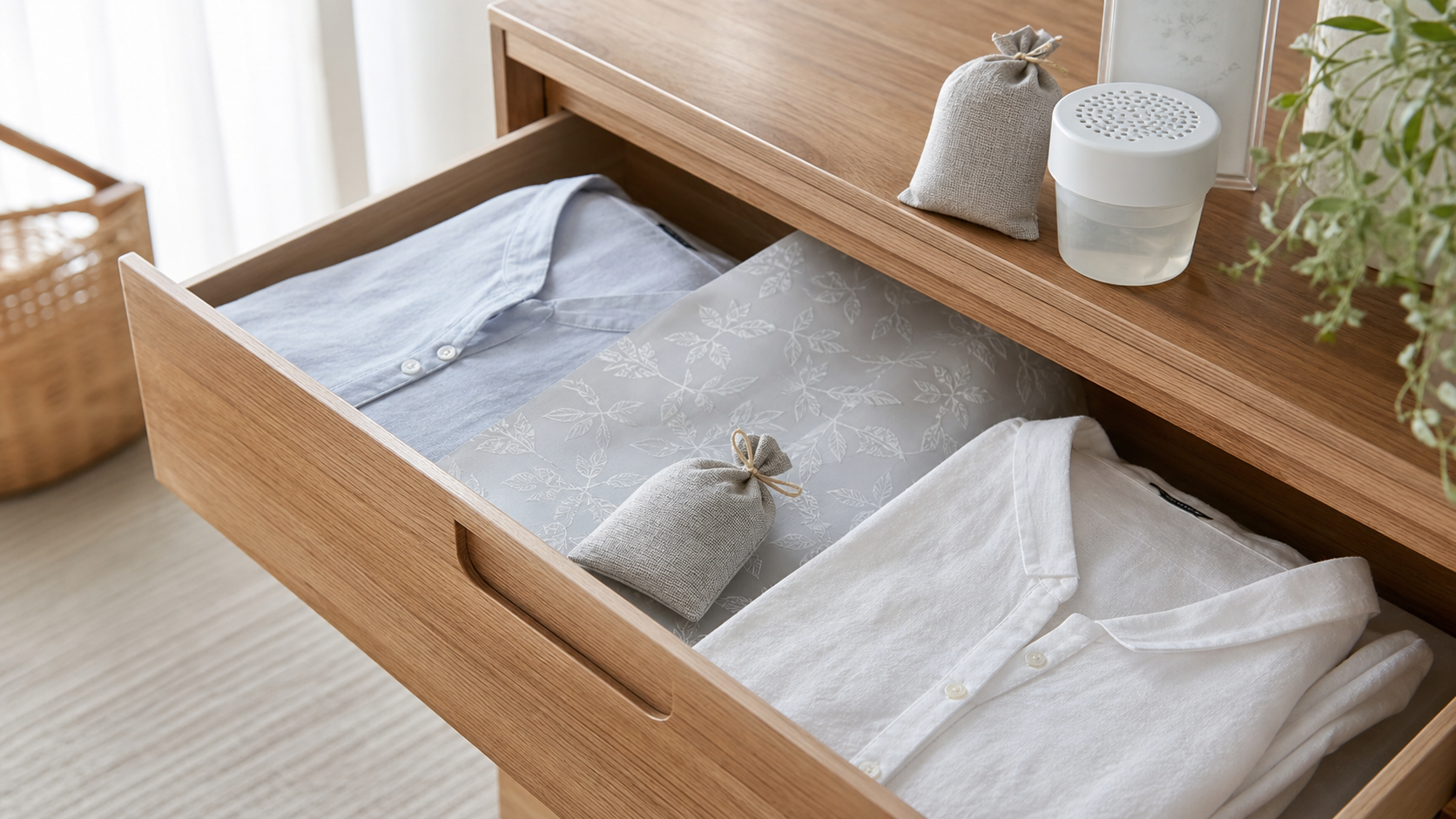
Imagine a boutique hotel group preparing guest-room storage for spring and summer. The purchasing team wants a cleaner drawer experience, but they do not want an overpowering perfume note on towels or bedding. A practical kit could include pre-cut scented drawer liners for dresser bases, two light linen sachets per wardrobe, and a compact moisture absorber for storage rooms.
The result is not just a nicer smell. The guest sees a neat drawer, notices a soft clean scent, and feels the room has been prepared with care. For the hotel, the kit is also operationally simple: housekeeping can replace sachets on a schedule and change liners during deep-clean cycles.
How B2B Buyers Should Specify Drawer Sachets and Drawer Liners
Before placing a bulk order, define the product environment. Will the item sit directly beside clothing? Will it be used in humid bathrooms, shoe cabinets, wardrobes, or hotel drawers? Will the scent need to survive ocean freight or hot warehouse storage? These answers affect material choice, fragrance loading, packaging, and quality checks.
For drawer sachets, specify pouch material, size, filling type, fragrance family, target scent intensity, packaging style, and replacement guidance. For scented drawer liners, specify sheet size, paper weight, backing material, print design, fragrance strength, folding method, and whether the liner will be sold as rolls, sheets, or gift-box inserts.
LoyalCrafts supports OEM and ODM fragrance manufacturing for private label home fragrance products, including sachets, drawer liners, moisture absorbers, sprays, candles, and reed diffusers. For custom scent development, packaging, and export documentation, buyers can start from the wholesale inquiry page.
Safety, Compliance, and Practical Use Notes
Home fragrance products used near clothing should be designed for their actual use environment. Buyers should request IFRA-related documentation where applicable, ask about allergen and labeling requirements for target markets, and confirm that the fragrance system is suitable for the product format. For European, North American, Japanese, and Korean markets, documentation and consistency are often as important as scent preference.
Customers should also be given clear use instructions. A simple label can say: place sachet in drawer or closet, avoid direct contact with delicate fabrics if the product is not designed for direct fabric contact, keep away from children and pets, and replace when scent fades. For drawer liners, instructions should explain whether the printed or coated side faces up and whether trimming is allowed.
FAQ
How long do drawer sachets for dresser storage last?
Most scented sachets last several weeks to a few months, depending on fragrance load, pouch material, drawer size, temperature, airflow, and humidity. For private label programs, replacement timing should be tested under the target market's storage conditions instead of guessed.
Are scented drawer liners safe for clothing?
They can be suitable when designed for drawer use, but buyers should confirm material compatibility, fragrance stability, and transfer testing. Delicate fabrics, white textiles, and high-humidity storage need extra care. Clear instructions reduce misuse and returns.
Should I choose sachets or liners for a private label product?
Choose sachets for flexibility, multipacks, travel, and refill sales. Choose liners for a premium drawer presentation and stronger visual branding. Many B2B buyers combine both formats in a closet-care kit.
Can fragrance remove musty closet odor?
Fragrance can improve odor perception, but persistent mustiness usually needs moisture control, ventilation, cleaning, and dry storage. A scented moisture absorber is often a better companion product than fragrance alone in humid spaces.
Conclusion: The Best Freshness System Uses More Than One Product
Drawer sachets for dresser use are one of the simplest ways to add a clean scent to small storage spaces. Scented drawer liners add polish, surface coverage, and a stronger brand moment. Scented moisture absorbers help address the dampness that often sits behind musty odor. For private label buyers, the strongest commercial opportunity is a complete closet-care system: sachets for flexible scenting, liners for presentation, and moisture control for practical freshness.
Request Wholesale Pricing Today to develop custom scented sachets, drawer liners, and closet-care bundles for your market.