Quick answer: A moisture absorber for closet use is a compact product designed to help manage damp storage conditions in wardrobes, drawers, lockers, and seasonal clothing areas. For private label buyers, the best product depends on the target climate, absorbent system, fragrance level, leak protection, packaging, order scope, and document requirements. It should support moisture control and freshness, not promise to solve serious leaks, mold, or ventilation problems by itself.
Closet Moisture Absorber Sourcing Snapshot
- Order planning: final quantity depends on product format, packaging, materials, and customization scope.
- Stock samples: usually prepared in 1-3 days, with freight paid by the buyer.
- Custom samples: usually 7-14 days after scent, packaging, and sample fee are confirmed.
- Bulk lead time: usually 30-40 days after sample approval and payment.
- Best product fit: hanging moisture absorber, refill pouch, closet cup, scented sachet, or closet-care bundle.
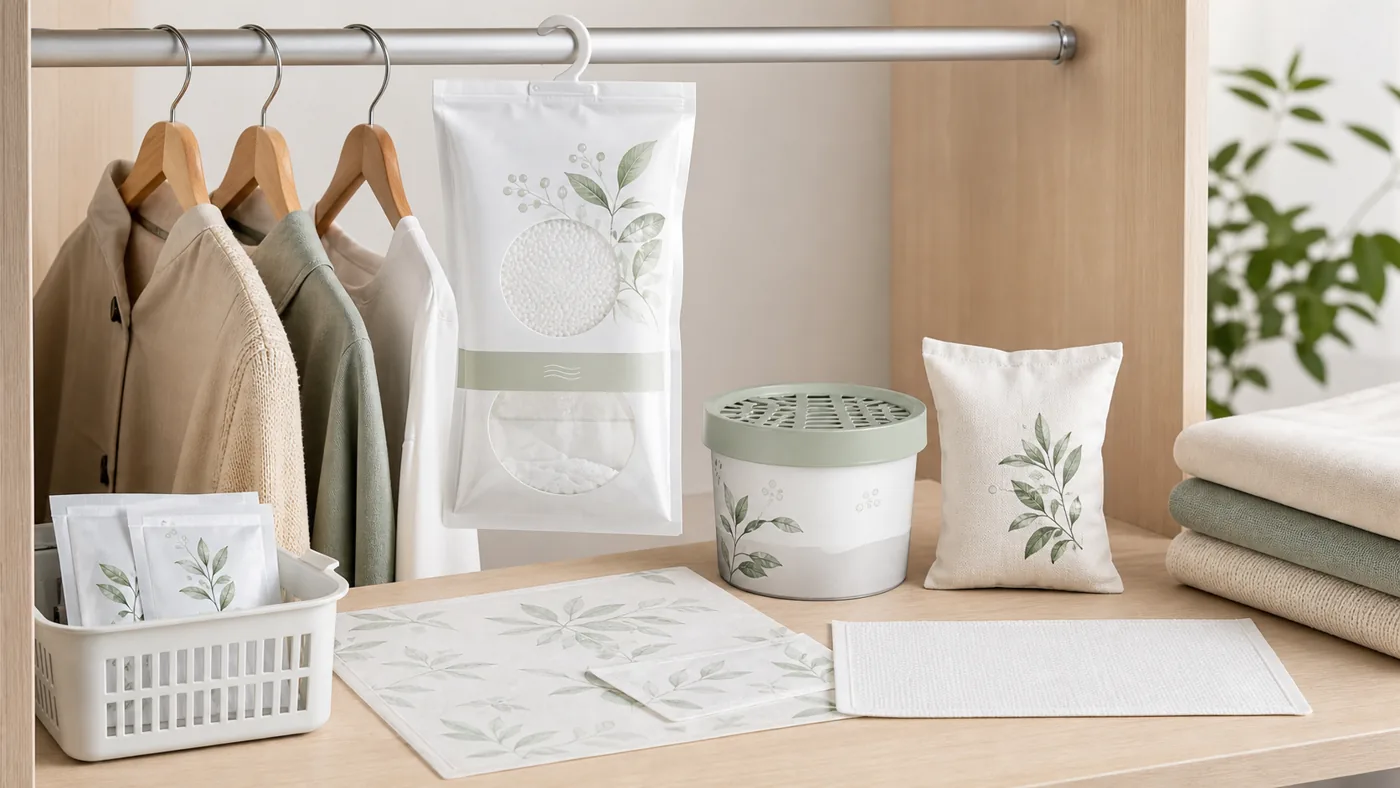
What Is a Moisture Absorber for Closet Use?
A moisture absorber for closet use is a passive storage-care product placed in a wardrobe, drawer, shoe cabinet, locker, or small enclosed area to help manage excess humidity. It commonly uses a moisture-attracting material, sealed pouch, cup, or hanging bag format. A scented version adds a light fragrance experience so the product feels more pleasant for daily wardrobe care.
The term matters for sourcing because buyers often mix several use cases together: moisture control, odor perception, fragrance release, visual packaging, and retail claims. A strong private label brief separates these jobs. Moisture control should be tested as a function. Fragrance should be tested for pleasant intensity. Packaging should be tested for leakage, shelf presentation, and transport.
Why This Category Works for Private Label Buyers
Closets, drawers, and seasonal storage are repeat-use spaces. Consumers may replace a hanging bag when it fills, buy a refill pouch, or add a scented sachet after washing clothes. That gives retail buyers a practical route into repeat purchase without launching a complicated electrical dehumidifier.
The category also pairs well with other private label products. A buyer can create a closet-care range that includes a scented moisture absorber, scented linen sachet, scented drawer liner, and breathable membrane deodorant. This creates a complete wardrobe freshness story instead of a single low-margin item.
There is one important limit: fragrance is not a repair method. The U.S. Environmental Protection Agency states that moisture control is central to mold control, and its mold guidance recommends keeping indoor humidity below 60 percent, ideally between 30 and 50 percent where possible. A closet moisture absorber can support a dry-storage routine, but buyers should avoid claims that suggest it fixes leaks, mold contamination, or poor building ventilation by itself.
7 Buying Checks Before You Order
1. Choose the Right Format
The first decision is format. Hanging bags are easy for wardrobes because consumers can see collected liquid or absorbent change. Cups and tubs can work on shelves, in bathrooms, and in laundry areas. Sachet-style formats are compact and giftable, but they are usually better for fragrance and light freshness than for visible moisture capture.
For a low-risk first order, use an existing format with custom label, scent, and carton. Custom molds, special hooks, or unusual refills can create a better brand look, but they may change the required quantity, sample cost, and timeline.
2. Match the Absorbent System to the Use Case
Desiccants are materials that attract or hold water from the surrounding environment. Wikipedia's desiccant overview defines a desiccant as a hygroscopic substance used to induce or sustain dryness nearby. In consumer closet products, common systems may include calcium chloride based absorbents, silica gel, clay, charcoal blends, or other moisture-control materials depending on product design.
B2B buyers should ask what the absorbent is, how it is contained, whether it can leak, and how the product signals replacement. Do not approve a design based only on fragrance. The moisture-control system is the product's functional core.
3. Decide Whether the Product Should Be Scented
A scented moisture absorber can make a closet feel fresher, but scent level must be controlled. Too little fragrance may feel disappointing. Too much fragrance may feel harsh around clothing or in small rooms. Clean linen, cedar, white tea, lavender, green tea, cotton musk, eucalyptus, and soft floral profiles usually work better than heavy gourmand scents for wardrobe care.
For a new private label line, a three-scent launch is often enough: one clean scent, one herbal scent, and one soft floral or woody scent. This gives buyers variety without splitting production into too many small SKUs.
4. Confirm Leakage and Contact Protection
Leak protection is one of the most important checks for closet moisture absorber products. The pouch, weld, seal, hook, cup lid, inner film, and carton must be tested together. If a product is hung near fabric, any liquid capture area should be protected from normal movement and consumer handling.
Ask for sample testing in the position consumers will use: hanging, standing, side-facing, and after carton transport. For retail buyers, leakage risk can create returns, damaged clothing complaints, and retailer rejection.
5. Build Packaging Around the Channel
A discount store may need a clear hook pack with direct benefit text. A lifestyle retailer may prefer a clean kraft box, pastel label, and matching sachet. An online multipack may need protective carton design and clear replacement instructions. The same product can look cheap or premium depending on packaging structure.
If you are comparing price, keep the packaging brief consistent. A hanging bag with a plain printed header card is not the same quote as a printed pouch, window box, display tray, and barcode label set.
6. Request the Right Tests and Documents
Buyers should request product specification, material description, fragrance information, SDS or MSDS support where relevant, label artwork confirmation, packing details, and destination-market document needs. If the product uses fragrance, ask whether the scent is suitable for the intended product category and concentration.
For claim language, stay practical. "Helps reduce excess moisture in closets" is easier to support than dramatic claims about removing all mold, odor, or dampness. Product documents should match the actual absorbent system and fragrance design.
7. Quote by SKU, Not Just by Total Quantity
Order quantities and pricing usually depend on SKU. A buyer splitting one order across five scents may face different economics than one scent in one package. Each scent, label, fragrance load, box, or language version can create another SKU.
For a first order, ask the supplier to quote practical quantity options against the same specification. Compare what changes in packaging, component cost, setup cost, and lead time. If the buyer wants several scents, consider shared packaging and different scent stickers to reduce complexity.
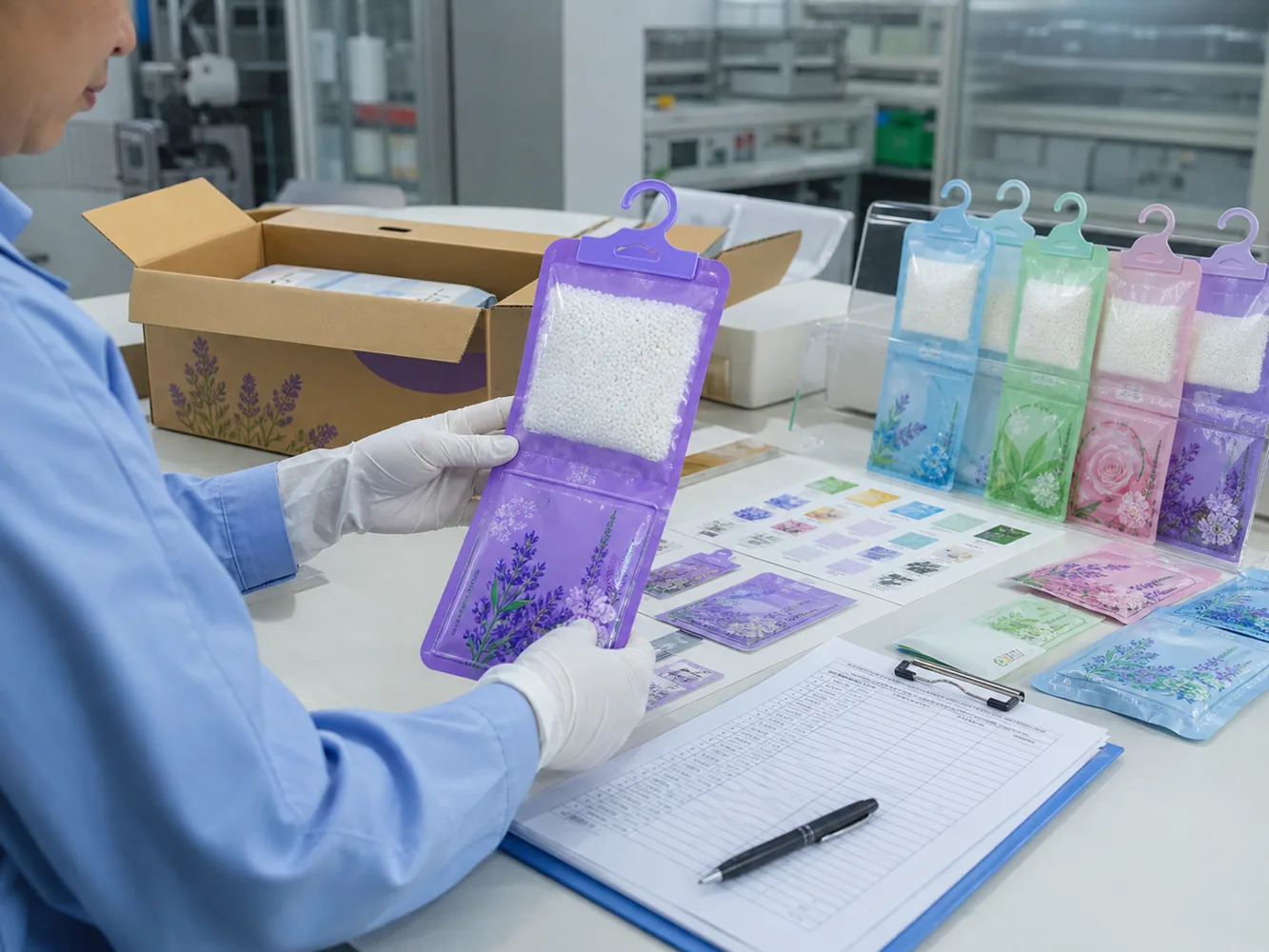
Format Comparison for Closet Moisture Absorber Buyers
| Format | Best Use | Private Label Advantage | Key Risk to Test |
|---|---|---|---|
| Hanging bag | Wardrobes and laundry rooms | Visible function, strong retail clarity | Leakage, hook strength, seal quality |
| Cup or tub | Shelves, bathrooms, storage rooms | Simple display and easy instructions | Tip-over resistance and lid fit |
| Scented sachet | Drawers, gifts, luggage, closets | Flexible styling and soft lifestyle look | Fragrance transfer and scent life |
| Bundle kit | Retail closet-care range | Higher perceived value and repeat purchase | SKU complexity and carton cost |
RFQ Template: What to Send a Supplier
Use this checklist when requesting a quote for a moisture absorber for closet project:
- Target product format: hanging bag, cup, sachet, refill, or bundle.
- Target market and sales channel: supermarket, dollar store, online, gift, hotel, or private brand retail.
- Target quantity per SKU or expected annual volume, if already known.
- Scent direction: unscented, clean linen, cedar, lavender, tea, eucalyptus, floral, or custom.
- Packaging style: header card, pouch, carton, display box, multipack, or refill pack.
- Required documents: product specification, SDS or MSDS support, artwork review, carton details, and destination-market files.
- Target timeline: stock sample, custom sample, production date, and shipping plan.
Our fragrance expert says: "A closet moisture absorber should be sold with honest claims. The strongest private label products combine a tested absorbent system, controlled fragrance level, leak-safe packaging, and clear replacement instructions."
FAQ
What is the best moisture absorber for closet use?
The best format depends on the use scene. Hanging bags are useful for wardrobes because the function is visible. Cups work on shelves. Sachets are better for fragrance and light freshness. Private label buyers should test absorbency, leakage, fragrance level, and packaging before choosing.
Can a scented moisture absorber remove musty odor?
It can improve freshness perception and support a dry-storage routine, but it should not be marketed as a complete solution for mold, leaks, or serious dampness. Persistent musty odor usually requires cleaning, drying, ventilation, and moisture-source control.
How is the order quantity confirmed for private label closet moisture absorbers?
The final order quantity depends on the absorbent system, fragrance, packaging, print, hook, carton, and number of scent or label variations. Buyers should share the product format and packaging brief before assuming one fixed quantity applies to every product.
How long does custom sampling take?
Stock samples are usually prepared in 1-3 days, with freight paid by the buyer. Custom samples usually take 7-14 days after scent direction, packaging, sample fee, and freight are confirmed.
What documents should B2B buyers request?
Request product specification, absorbent material description, fragrance information, SDS or MSDS support where relevant, label artwork confirmation, packing details, and any destination-market documents required by the buyer, retailer, or importer.
Conclusion: Build a Closet-Care Range, Not Just One SKU
A moisture absorber for closet use is strongest when it fits a clear storage problem and a clear retail story. For humid markets, start with a hanging moisture absorber or cup. For lifestyle retailers, pair the format with scented sachets and drawer liners. For online launches, build multipacks and refills that make repeat purchase simple.
LoyalCrafts can help private label buyers compare formats, scent directions, packaging options, samples, and production plans. Send your closet moisture absorber brief with product type, target quantity, market, and packaging reference.
You May Also Like
- Scented Moisture Absorber Product Portfolio
- Scented Linen Sachet Portfolio
- Closet Deodorizer Private Label Ideas
- Private Label Fragrance Packaging Cost Checklist
Sources: U.S. Environmental Protection Agency, A Brief Guide to Mold, Moisture and Your Home; Wikipedia, Desiccant.