The Physics of Porous Substrate Infusion: Engineering High-Performance Scented Cards for B2B Private Label
Technical Engineering Overview
- Capillary Kinetics: Utilizing Young-Laplace principles to control oil absorption rates in specialized paper fibers.
- Molecular Anchoring: Leveraging hydrogen bonding between fragrance molecules and cellulose to minimize 'bleeding' in high-heat environments.
- Porosity Gradient: Engineering multi-layer substrates with variable pore sizes for phased diffusion (Linear Release).
- Solvent Compatibility: Optimizing low-viscosity carriers to ensure 100% saturation without substrate warping.
- Environmental Stress: Validating scent retention through 45-day cycle testing at 80% humidity.
In the competitive landscape of B2B private label fragrances, the scented card (or fragrant tablet) is often dismissed as a basic commodity. However, for luxury brands and automotive retailers, the longevity of these products is a critical metric of brand value. Engineering a card that remains fragrant for 45 days is not just a manufacturing task—it is a study in Fluid Dynamics and Material Science.
At LoyalCrafts, we have moved beyond simple "dipping" methods. Our R&D laboratory utilizes the physics of porous substrate infusion to create products that deliver a consistent, high-intensity olfactory experience from day 1 to day 45.
1. Capillary Kinetics: The Young-Laplace Principle
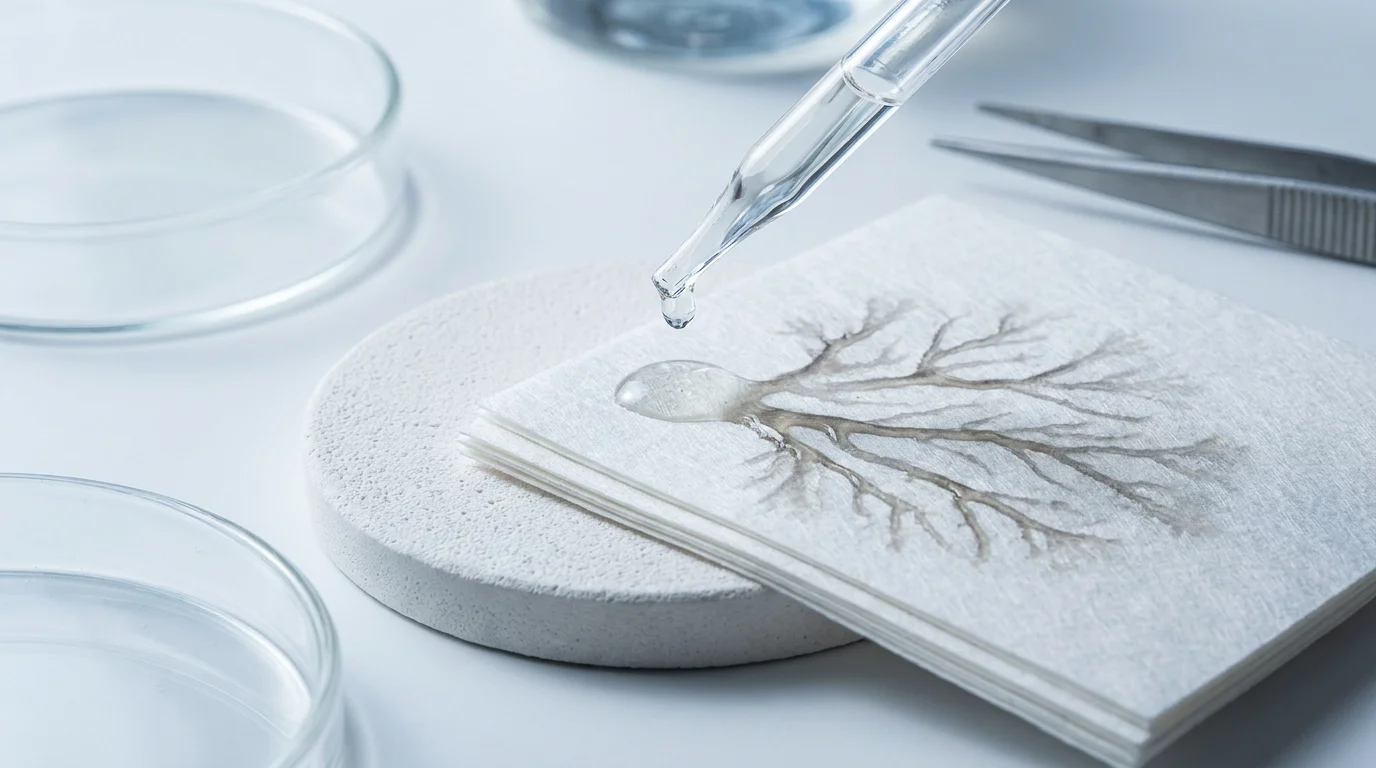
The core of scented card engineering lies in the capillary action within the substrate. Whether using high-density cotton paper, porous ceramic, or technical polymers, the rate of infusion is governed by the Young-Laplace equation. By precisely controlling the surface tension of our fragrance oils and the pore radius of the substrate, we can ensure that the oil is drawn deep into the "heart" of the material rather than sitting on the surface.
This deep infusion is what prevents the common issue of "wet spots" on the surface while providing a internal reservoir of fragrance for long-term release.
2. Microstructure Analysis: Fiber Saturation
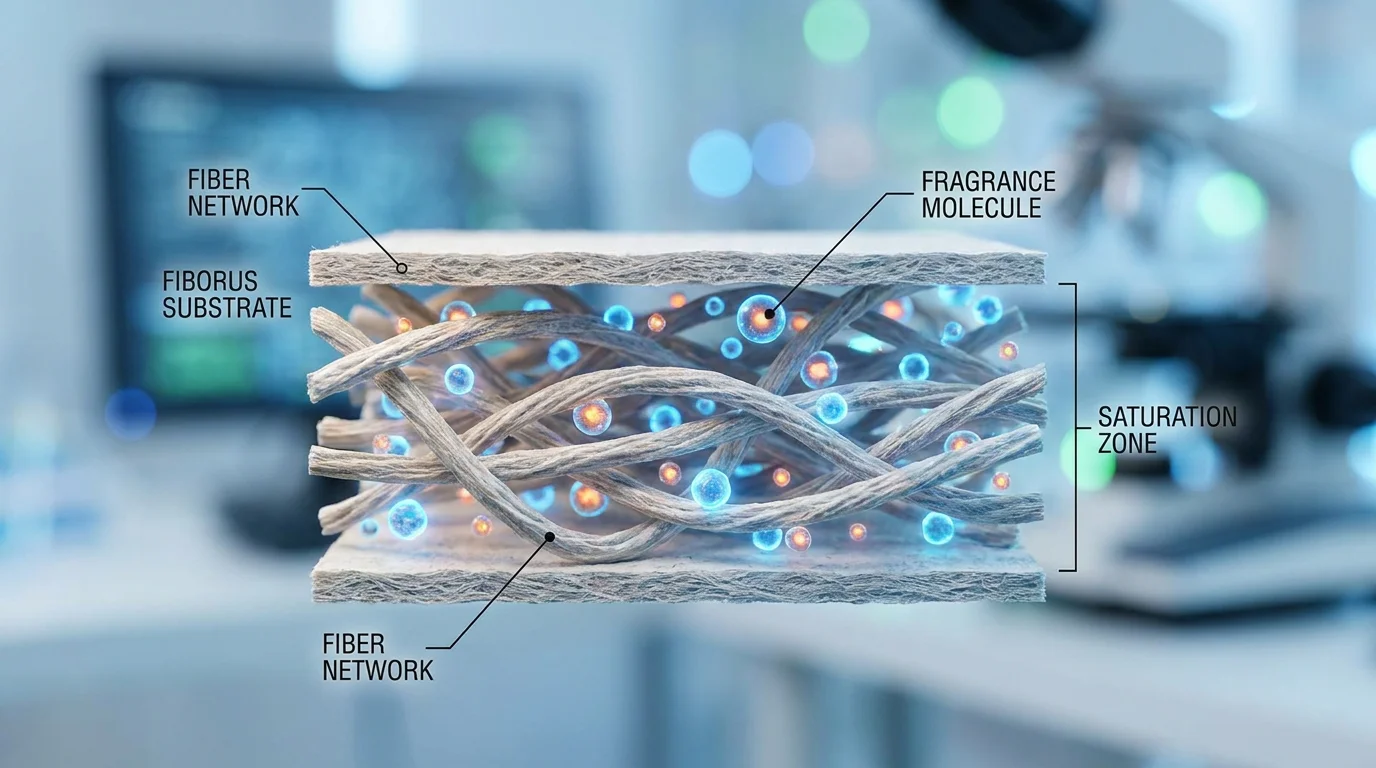
To achieve high-performance results, we utilize microscopic analysis to evaluate how individual fibers within a substrate are saturated. A common failure in cheap scented cards is "Fiber Swelling," which can warp the card and trap fragrance molecules, preventing them from diffusing. At LoyalCrafts, we select substrates with a Porosity Gradient—a structure that features larger pores on the outside for immediate impact and micro-pores on the inside for sustained release.
3. Molecular Anchoring: Preventing Drift
In B2B logistics, products often travel in hot shipping containers where temperatures can exceed 50°C. Under these conditions, standard fragrance oils can "drift" or bleed out of the substrate. We employ Molecular Anchoring—the addition of technical fixatives that form weak hydrogen bonds with the substrate's cellulose. This "anchors" the scent molecules in place, ensuring they only release when exposed to ambient air flow, rather than leaking during transit.
Conclusion: Engineering Trust, Not Just Scent
A scented card is a tangible touchpoint for your brand. By applying advanced physics to the infusion process, LoyalCrafts ensures that this touchpoint remains vibrant and reliable. When you choose a manufacturing partner, choose one that treats every product—no matter how small—as a feat of engineering.