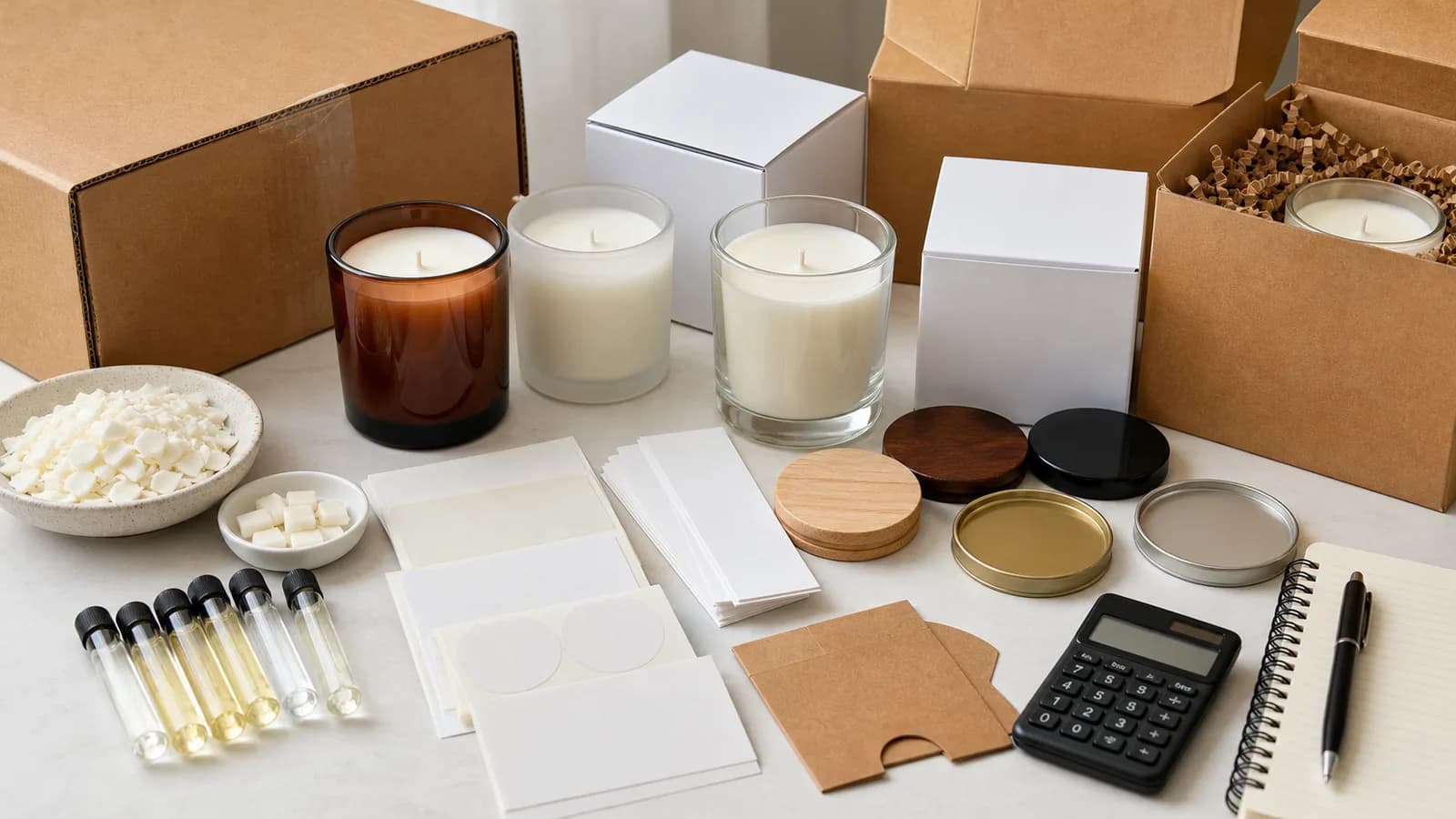
Quick answer: Private label candle packaging cost is mainly shaped by the glass vessel, lid or dust cover, label or decoration method, gift box, insert, carton protection, sample approval work, and SKU variations. For a cost-conscious candle launch, buyers usually get the best balance by starting with a proven glass vessel, one reliable lid style, pressure-sensitive labels, a simple color box or kraft box, and export-safe carton packing. Premium gift boxes, custom molds, heavy glass, special finishes, and complex inserts can improve shelf value, but each upgrade should be quoted as a separate line item.
Candle Packaging Cost Snapshot
- Main keyword: private label candle packaging cost.
- Best starting point: stock glass vessel, tested wick system, custom label, standard lid, and protective color box.
- Common upgrades: heavy glass, colored glass, wooden lid, metal lid, screen print, foil label, rigid gift box, molded insert, and display carton.
- Custom MOQ reference: LoyalCrafts custom scented candle projects usually start from 1,000 units, depending on vessel, fragrance, pack, and SKU split.
- Sample timing: stock samples 1-3 days; custom samples usually 7-14 days after brief, sample fee, and freight are confirmed.
- Bulk timing: normally 30-40 days after sample approval and payment.
Why Candle Packaging Cost Is More Than the Jar
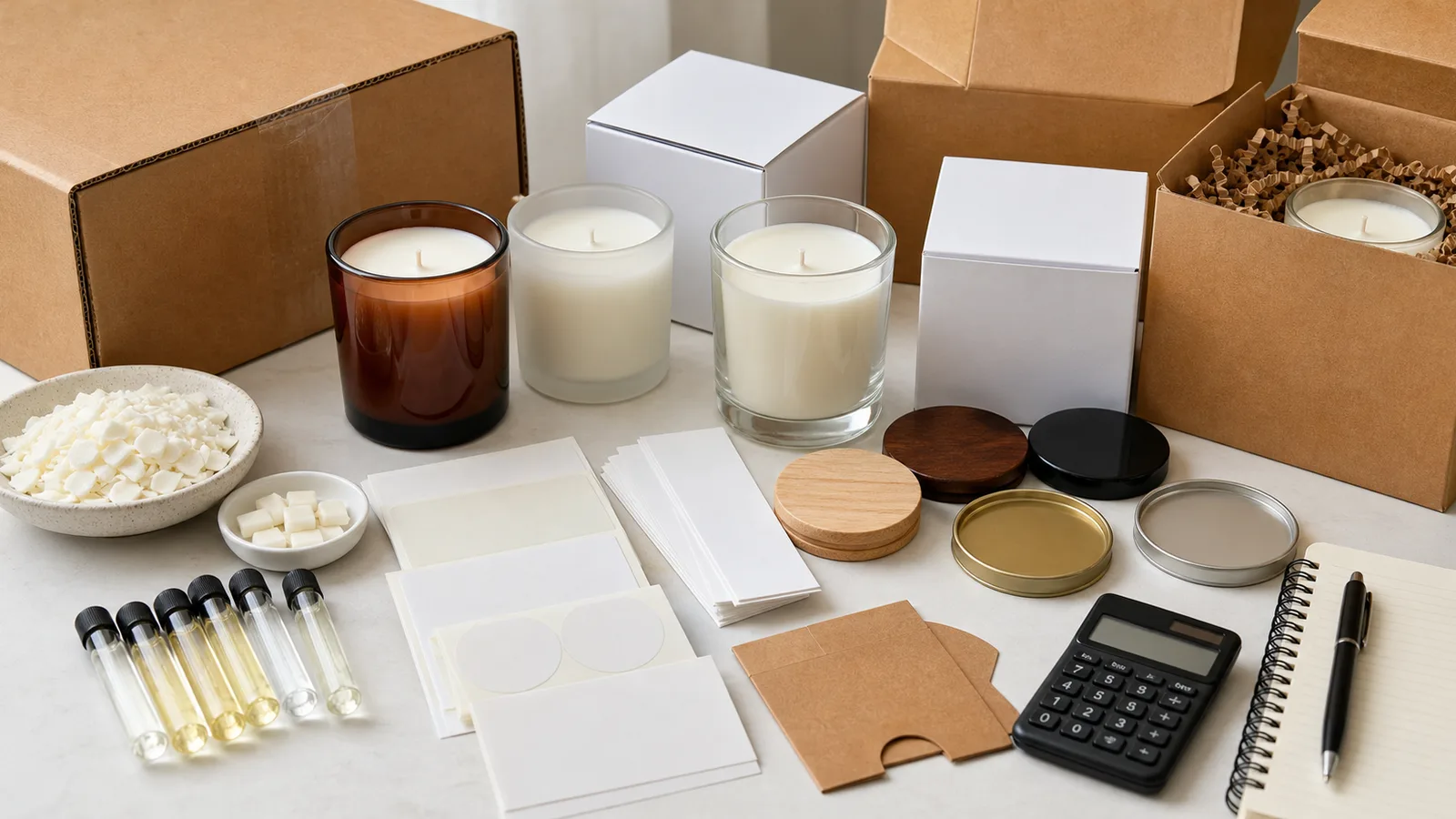
Many buyers start a candle RFQ by asking for the price of a 100 g, 150 g, 200 g, or 8 oz candle. That is understandable, but it can produce misleading quotations. A scented candle is a small system: wax, wick, fragrance, vessel, lid, label, box, insert, carton, and documents all need to work together. A low unit price can become expensive if the glass breaks in transit, the lid does not fit, the label bubbles, or the gift box arrives crushed.
The right way to control private label candle packaging cost is to separate the visible retail parts from the functional protection parts. The customer sees the glass, label, lid, and gift box. The logistics team cares about the insert, dividers, master carton, pallet plan, and drop resistance. Procurement should compare both sides before approving the final specification.
This guide focuses on packaging decisions for B2B buyers: lifestyle retailers, hotel groups, home fragrance brands, online gift companies, and distributors building private label scented candle ranges. For compliance and EU sourcing background, pair this page with our private label candle manufacturer EU guide.
1. Glass Vessel Cost: Weight, Mold, Finish and Stability
The glass vessel is usually the most visible candle component and one of the biggest cost drivers. A standard clear glass jar is often the most efficient launch choice because it uses existing molds and predictable packing. Heavy-bottom glass, colored glass, frosted glass, ceramic-look finishes, electroplating, sprayed color, or custom embossing can create a stronger brand impression, but they usually add setup requirements and longer purchasing lead time.
Glass cost is not only about beauty. Buyers should confirm inner diameter, wall thickness, base thickness, heat tolerance, rim finish, capacity tolerance, and carton packing. The vessel must match the wax, wick, fill weight, and intended burn performance. If the flame creates too much heat for the chosen glass or the wick is not matched correctly, the retail risk is far more serious than a small packaging saving.
A practical sourcing question is: can the brand story work with a proven vessel? If yes, spend budget on label clarity, scent quality, and safe transit packing before paying for a custom glass mold. Custom glass can be worthwhile for mature brands, but first launches often benefit from modular components that can be reordered more easily.
2. Lid and Dust Cover Cost: Decorative Detail or Functional Part?
Candle lids sit in the buyer's hand, so they affect perceived value quickly. Wooden lids feel warm and natural. Metal lids can look clean and modern. Plastic or paper dust covers can reduce cost and keep the wax surface clean. A premium candle line may use a lid as part of the design language, while a value line may choose a simple dust cover and invest more in fragrance or carton efficiency.
Lid cost changes with material, diameter, tolerance, finish, gasket, color, and packing method. A lid that looks good in a photo can still create problems if it scratches easily, fits too tightly, rattles in the box, or reacts poorly during storage. Buyers should ask whether the lid is only decorative or whether it must support storage, shipping, display, or consumer reuse.
Our fragrance expert says: "For candle sourcing, a lid should be treated as a fitted component, not as a decoration added at the end. Approve it with the exact glass jar, label position, gift box, and carton structure."
3. Label Cost: Paper Label, Foil, Screen Print or Direct Decoration
Labels are often the most cost-efficient way to create a private label candle range. A pressure-sensitive label can support multiple scents, seasonal artwork, barcodes, market language, and retailer requirements without changing the glass. For first orders, this flexibility matters because the buyer may still be testing scent preference, channel fit, and repeat demand.
Label cost depends on paper stock, film material, adhesive, finish, print colors, foil, embossing, matte or gloss lamination, water resistance, and label placement tolerance. A simple white label can look premium when the typography and spacing are strong. A foil or textured label can raise shelf value, but it should be tested for rub resistance, edge lifting, storage discoloration, and fit on curved glass.
Direct screen printing, hot stamping, coating, and colored glass decoration can remove the look of a sticker, but they reduce flexibility. They are better when artwork is stable and the buyer expects repeat orders. If a brand wants six scents in small quantities, labels usually provide a more practical starting structure.
4. Gift Box Cost: Folding Carton, Kraft Box or Rigid Box?
The gift box controls first impression, but it also protects the candle. A folding color carton is practical for many retail candles. Kraft boxes support a natural or value-conscious look. Window boxes can show the vessel but need careful protection. Rigid gift boxes feel more premium and are useful for holiday, hotel, spa, and gift channels, but they add material, labor, shipping volume, and sometimes separate component minimums.
Box cost is affected by paperboard thickness, box style, print colors, lamination, hot stamping, window film, inner tray, ribbon, magnetic closure, and carton layout. A beautiful box that increases breakage or takes too much warehouse space can hurt the project. For export, assess the box together with the master carton and dividers, not only the shelf look.
Buyers can often control cost by separating the everyday SKU from the gift SKU. The everyday candle may use a color carton. The holiday set may use a rigid gift box. The fragrance, wax, vessel, and label can stay consistent while the outer package changes by channel.
5. Inserts and Carton Protection: The Hidden Cost That Saves Money
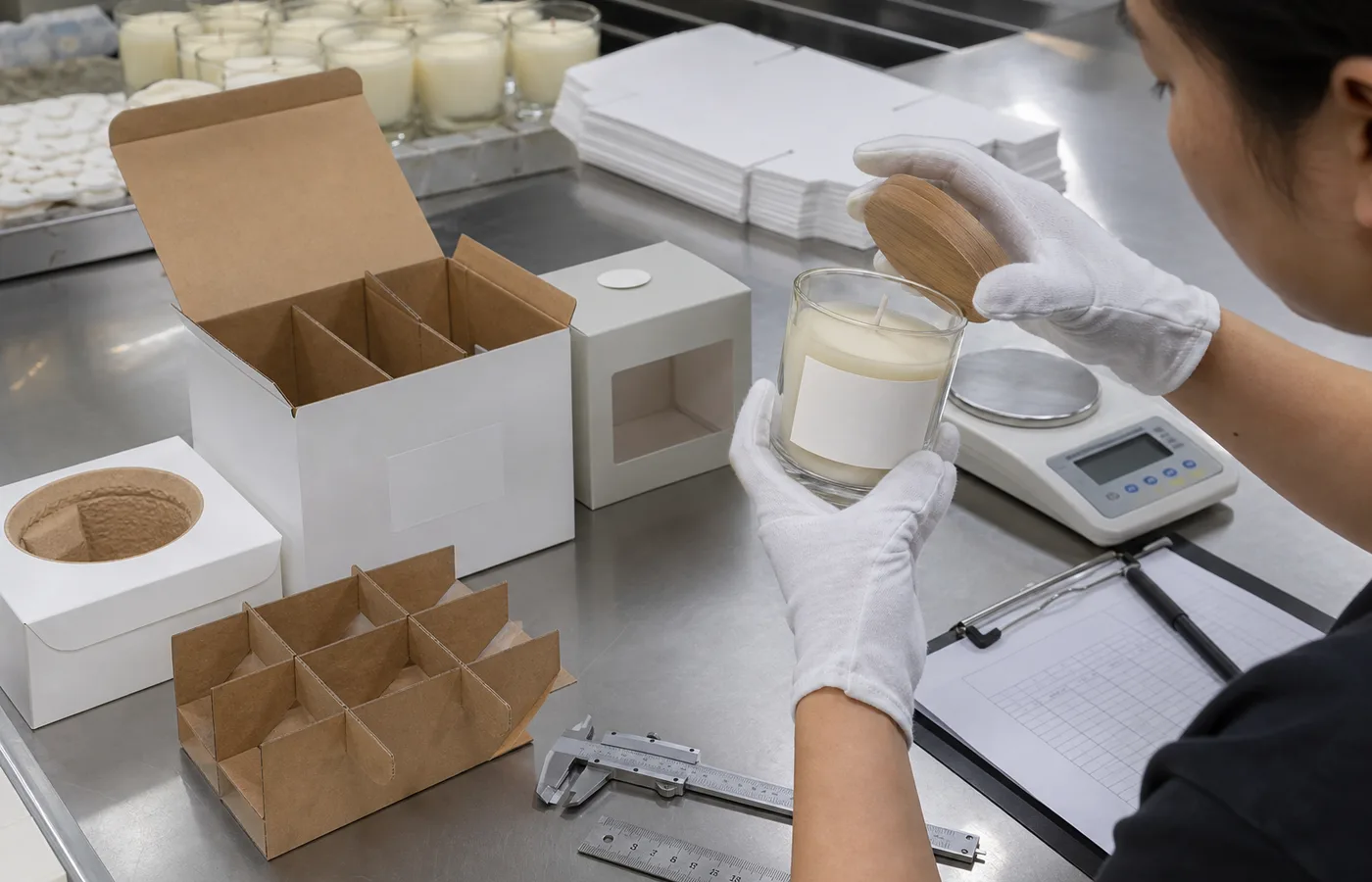
Inner protection is easy to ignore because the consumer rarely sees it for long. But for glass candles, protective packing can save more money than it costs. Inserts, dividers, corrugated sleeves, pulp trays, paper padding, and master carton structure help protect the vessel, lid, label, and gift box during export handling.
The right protection depends on glass weight, box shape, carton size, shipment method, and destination. A heavy glass jar in a thin gift box needs more support than a lightweight jar packed in a snug corrugated sleeve. If the buyer plans e-commerce fulfillment, the candle may face a different handling environment from palletized retail distribution.
A cost comparison should therefore include a basic transit plan. Ask the supplier to show carton layout, units per carton, gross weight, carton dimensions, divider structure, and whether the packing has been reviewed for breakage risk. Saving a few cents on inserts is not helpful if the finished goods create claims or repacking work.
6. Sampling Cost: What Should Be Approved Before Production?
Sampling is part of packaging cost because it prevents expensive mistakes. For candle projects, approval should include fragrance, wax appearance, cold throw, hot throw, wick behavior, fill level, vessel, lid fit, label position, gift box, insert, carton layout, and market label notes. Approving only scent and glass color is not enough for a private label launch.
At LoyalCrafts, stock samples are usually prepared in 1-3 days, with freight paid by the buyer. Custom samples usually take 7-14 days after the brief, sample fee, and freight are confirmed. For custom candle packaging, sample fees and tooling or printing costs depend on how many components need to be made for review. If the buyer places the final order, eligible custom sample fees can be reviewed for refund or credit according to the confirmed project terms.
A strong sample brief should include target fill weight, vessel style, wax preference, scent direction, label artwork or mood reference, lid choice, box style, target market, target quantity per SKU, and any retailer requirements. This helps the supplier quote the real candle, not an imaginary simple version.
7. Compliance and Warning Label Review
Candle packaging also has a safety and compliance role. The IFRA Standards are widely used by the fragrance industry to manage safe use of fragrance ingredients. For candles, buyers should request fragrance documentation appropriate to the formula and intended market, then keep the final product specification aligned with the approved sample.
For the United States, the CPSC candle business guidance points buyers toward lead-core wick restrictions and cautionary labeling when a candle contains a hazardous substance. For the European Union, the European Commission explains that CLP rules require companies to classify, label and package chemicals before placing them on the market. The practical takeaway is simple: candle labels and cartons should be reviewed for the target market before mass production, especially when fragrance concentration, allergens, warning language, and importer details matter.
Do not treat compliance text as a last-minute sticker. If the box is already printed and the warning panel is too small, the buyer may need rework. Leave enough label space for fragrance name, net weight, warning text, company information, barcode, batch code, country of origin, and any market-specific details requested by the importer or retailer.
Candle Packaging Cost Comparison Table
| Component | Cost-Efficient Choice | Premium Upgrade | Buyer Check |
|---|---|---|---|
| Glass vessel | Stock clear glass jar | Heavy, frosted, colored, ceramic-look or custom molded glass | Confirm heat tolerance, capacity and carton fit |
| Lid or cover | Paper dust cover or simple metal lid | Wooden lid, coated metal lid or fitted decorative cap | Check fit, scratch resistance and storage behavior |
| Label | Pressure-sensitive paper label | Foil label, textured label, screen print or hot stamping | Test rub resistance, curve fit and warning space |
| Gift box | Kraft box or simple folding carton | Rigid gift box, window box or seasonal set box | Compare shelf look with transit protection |
| Insert and carton | Corrugated divider and snug master carton | Molded pulp tray, custom insert or e-commerce mailer | Review breakage risk and shipping volume |
Case Example: A Cost-Conscious Candle Range
A North American home decor brand wants three private label scented candles for autumn retail: amber woods, vanilla chai, and white cedar. The first instinct is a heavy frosted glass jar with a wooden lid and rigid gift box. That looks attractive, but the cost and timeline may be too heavy for a first launch.
A more practical version could use a proven clear or amber glass vessel, one lid style across all three scents, a textured paper label, a color folding carton, and a protective corrugated divider. The buyer still gets a retail-ready candle range, but the components are easier to source, inspect, and reorder. Once sales data confirms demand, the brand can upgrade the holiday edition with a rigid gift box or limited color glass.
This is how packaging cost should be managed: not by choosing the cheapest material, but by choosing the component structure that matches the channel, quantity, timing, and brand stage.
RFQ Checklist for Candle Packaging Quotes
- Target fill weight, wax type, fragrance direction, and number of scents.
- Glass vessel size, color, finish, and whether a stock mold is acceptable.
- Lid or dust cover material, color, fit, and packing requirement.
- Label material, size, finish, artwork status, barcode, and market language.
- Gift box style, paperboard thickness, insert structure, and carton packing.
- Target market, warning label needs, importer details, and document request list.
- Estimated quantity per SKU, launch timing, sample deadline, and shipping method.
Need a candle packaging cost comparison?
Send your candle fill weight, glass reference, lid idea, label style, box requirement, target market, and estimated quantity per SKU. LoyalCrafts can help compare a cost-efficient version and a premium version, then reply within 24 hours.
FAQ
What affects private label candle packaging cost the most?
The main drivers are the glass vessel, lid, label or decoration method, gift box, insert, carton protection, number of scents, and sample approval work. Heavy glass, custom molds, rigid boxes, and special finishes usually add more cost and lead time.
Is glass or the gift box usually more expensive?
It depends on the specification. A standard glass jar with a simple carton can be cost-efficient, while heavy custom glass can become the largest cost driver. A rigid gift box with inserts, foil, and special paper can also become expensive, especially for gift programs.
What is the MOQ for custom scented candles?
At LoyalCrafts, custom scented candle projects usually start from 1,000 units, depending on glass, wax, fragrance, label, box, and SKU split. The confirmed quantity should always be tied to the exact product and packaging specification.
Should I choose a lid or a dust cover?
Choose a lid when it supports the brand feel, storage, or reuse expectation. Choose a dust cover when the buyer wants a lighter, more cost-efficient presentation. In both cases, approve the cover with the exact glass vessel and box.
Can one candle packaging design be used for the EU and U.S.?
The same visual direction can often be adapted, but label and carton panels should be reviewed for each target market. Warning language, importer details, fragrance documents, barcode format, and retailer requirements may differ.
You May Also Like
- Scented Candle Product Portfolio
- Private Label Scented Candle Manufacturer
- Private Label Candle Manufacturer EU Guide
- Private Label Fragrance Packaging Cost Checklist
Summary
Private label candle packaging cost should be compared component by component, not as one vague candle price. Glass, lid, label, gift box, insert, carton, samples, and compliance review all affect the final sourcing plan. For first launches, a proven vessel plus strong label, practical gift box, and reliable transit packing is often a better choice than a complex custom package. For mature candle lines, premium glass, custom lids, and rigid boxes can add value when the sales channel supports the upgrade.
LoyalCrafts supports custom scented candle projects with fragrance development, packaging coordination, sample approval, production planning, and export documentation. Send your candle packaging brief with fill weight, target market, quantity per SKU, glass reference, and box idea for a practical quote.