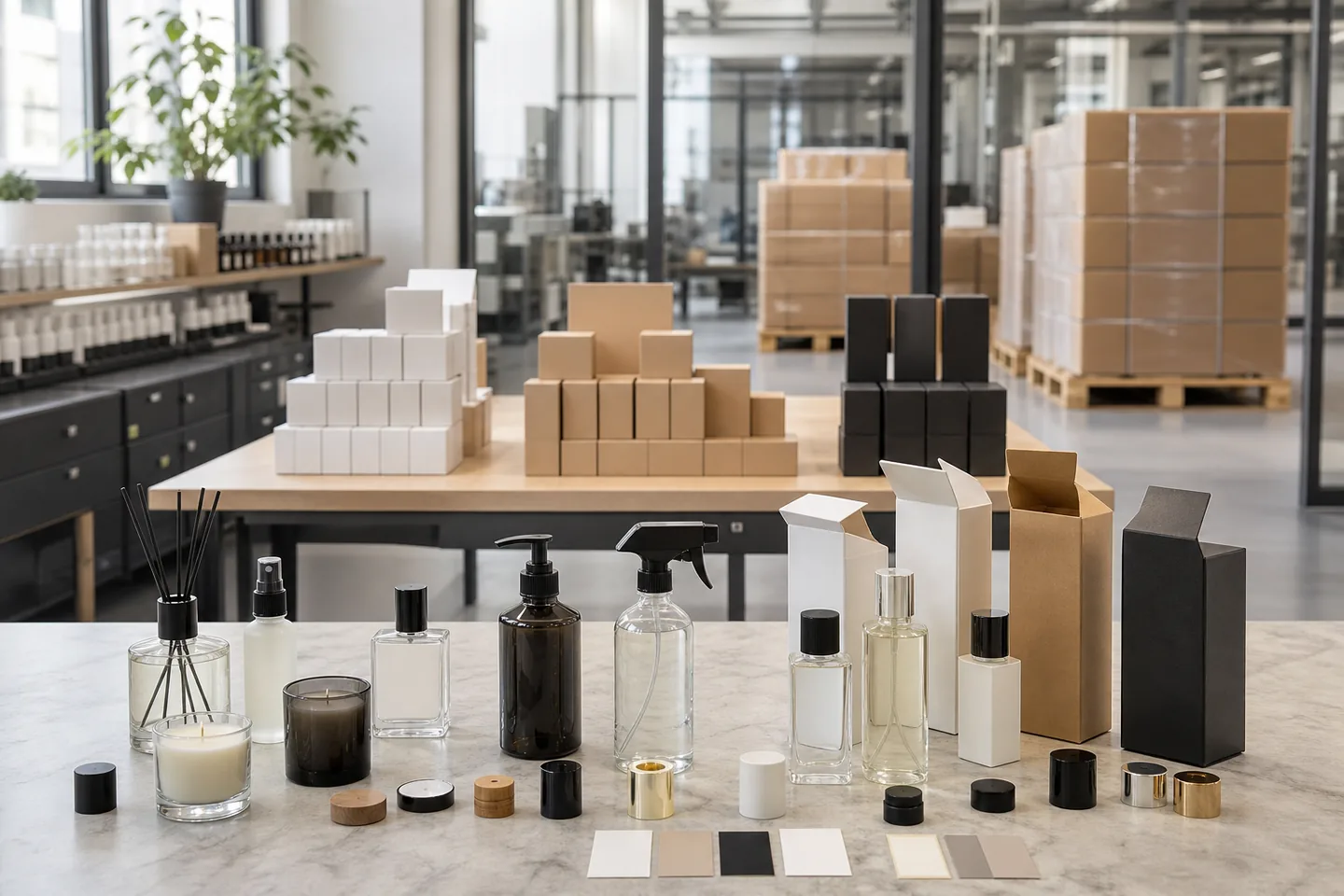
Quick answer: A private label fragrance MOQ of 500 units is usually best for a controlled market test using proven components and limited decoration. At 1,000 units, buyers gain more packaging flexibility and spread setup costs across more sellable units. At 5,000 units, custom components and more efficient purchasing may become practical, but the buyer also takes on more inventory, cash-flow, storage, and forecast risk. The best quantity is not automatically the largest one. It is the lowest quantity that supports the required product specification and a realistic sales plan.
Private Label Fragrance MOQ at a Glance
- 500 units: lower cash exposure, faster market learning, and the highest unit cost of the three tiers.
- 1,000 units: a practical balance for a retail launch with more decoration and packaging choices.
- 5,000 units: stronger purchasing efficiency and more room for custom packaging, provided demand is established.
- Important: MOQ normally applies per SKU, scent, formula, color, or packaging version unless the quotation says otherwise.
What Does Private Label Fragrance MOQ Really Mean?
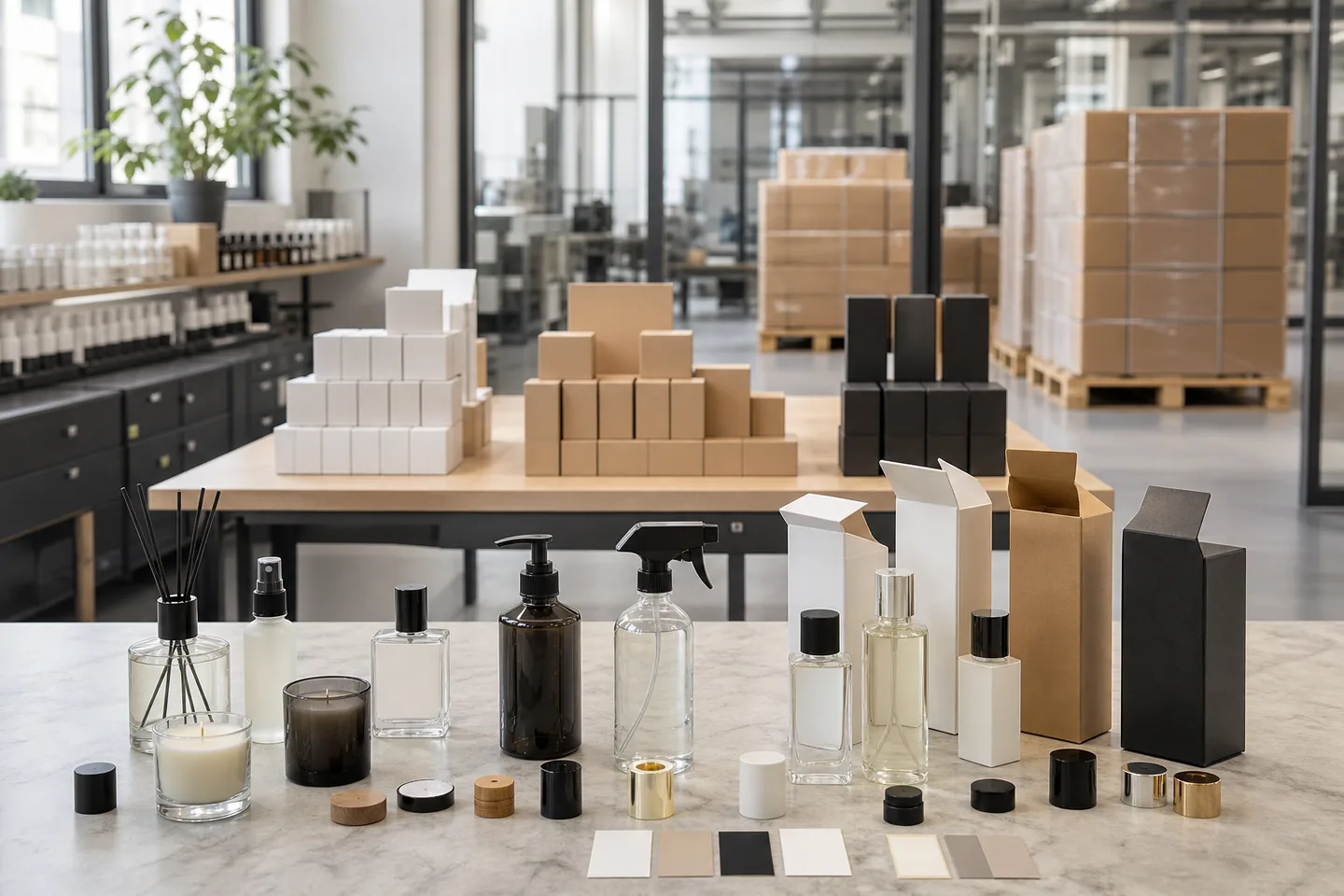
MOQ means minimum order quantity, but the number is incomplete without a specification. A supplier may accept 500 finished units when the buyer chooses an existing bottle, cap, fragrance base, and standard carton. The same supplier may require a higher quantity for a custom-molded bottle, a special pump color, a new ceramic vessel, or printed packaging with a separate production minimum.
Buyers should ask whether the stated MOQ applies to the whole purchase order or to each SKU. One order of 1,000 units split across five scents is not operationally equal to one scent in 1,000 units. Each scent requires separate batching, filling controls, labels, cartons, records, and line changeovers. The same logic applies when one scent uses three bottle colors or market-specific labels.
A useful quote therefore defines the product format, fill size, fragrance, bottle or vessel, closure, decoration, retail carton, case pack, destination market, and quantity per SKU. You can review the main formats in our private label fragrance product portfolio before requesting a quotation.
Why Unit Cost Changes as Order Volume Increases
Factories do not calculate fragrance manufacturing cost from liquid alone. Several one-time or batch-level costs must be allocated across the finished units. Artwork setup, print plates, color matching, fragrance sampling, line cleaning, filling setup, carton configuration, and quality records all take time whether a batch contains 500 units or 5,000 units.
Component purchasing also matters. Bottle, pump, cap, wick, jar, reed, label, and carton suppliers often have their own quantity tiers. A higher finished-product order may allow the manufacturer to buy components more efficiently, but only when the component specification remains the same. Changing the bottle, adding a metal collar, or moving from a label to direct printing can absorb the apparent saving.
Freight is another variable. Larger orders can improve master-carton and pallet utilization, yet the total shipment becomes heavier and may require more warehouse space. A fair comparison uses the same Incoterm and destination. An EXW quote should not be compared directly with a DDP or delivered quote.
Buyer comparison principle: "Do not ask only for the price at 500 and 5,000 units. Ask what changes in the formula, bottle, decoration, carton, inspection plan, and shipping term. A lower price is useful only when the specification stays comparable."
500 vs. 1,000 vs. 5,000 Units: Practical Comparison
| Order Tier | Best Use | Likely Product Choices | Main Trade-Off |
|---|---|---|---|
| 500 units | Pilot order, new channel, scent test, first private label launch | Stock bottle or vessel, proven formula, label decoration, standard carton | Lowest cash exposure but higher unit cost and fewer custom options |
| 1,000 units | Focused retail launch, online range, regional distributor test | More bottle finishes, improved carton presentation, broader decoration choices | Better cost allocation but more inventory and forecast responsibility |
| 5,000 units | Established demand, repeat order, multi-store or distributor rollout | Custom colors, more efficient component purchasing, tooling where justified | Potentially lower unit cost but significantly higher cash, storage, and sell-through risk |
This table is a sourcing framework, not a price promise. A simple 500-unit reed diffuser may cost less in total and per unit than a complex 5,000-unit perfume project. Product format, formula, component quality, decoration, testing, and destination requirements still control the final quotation.
What Makes Up a Private Label Perfume or Home Fragrance Quote?
1. Fragrance and Base Formula
Fragrance concentration, raw-material profile, solvent or carrier system, color, and performance requirements affect formula cost. A standard fragrance direction is usually easier to commercialize at low MOQ than a new signature scent requiring multiple evaluation rounds. For body perfume, the formula and claims also need to match cosmetic requirements in the destination market.
2. Primary Packaging
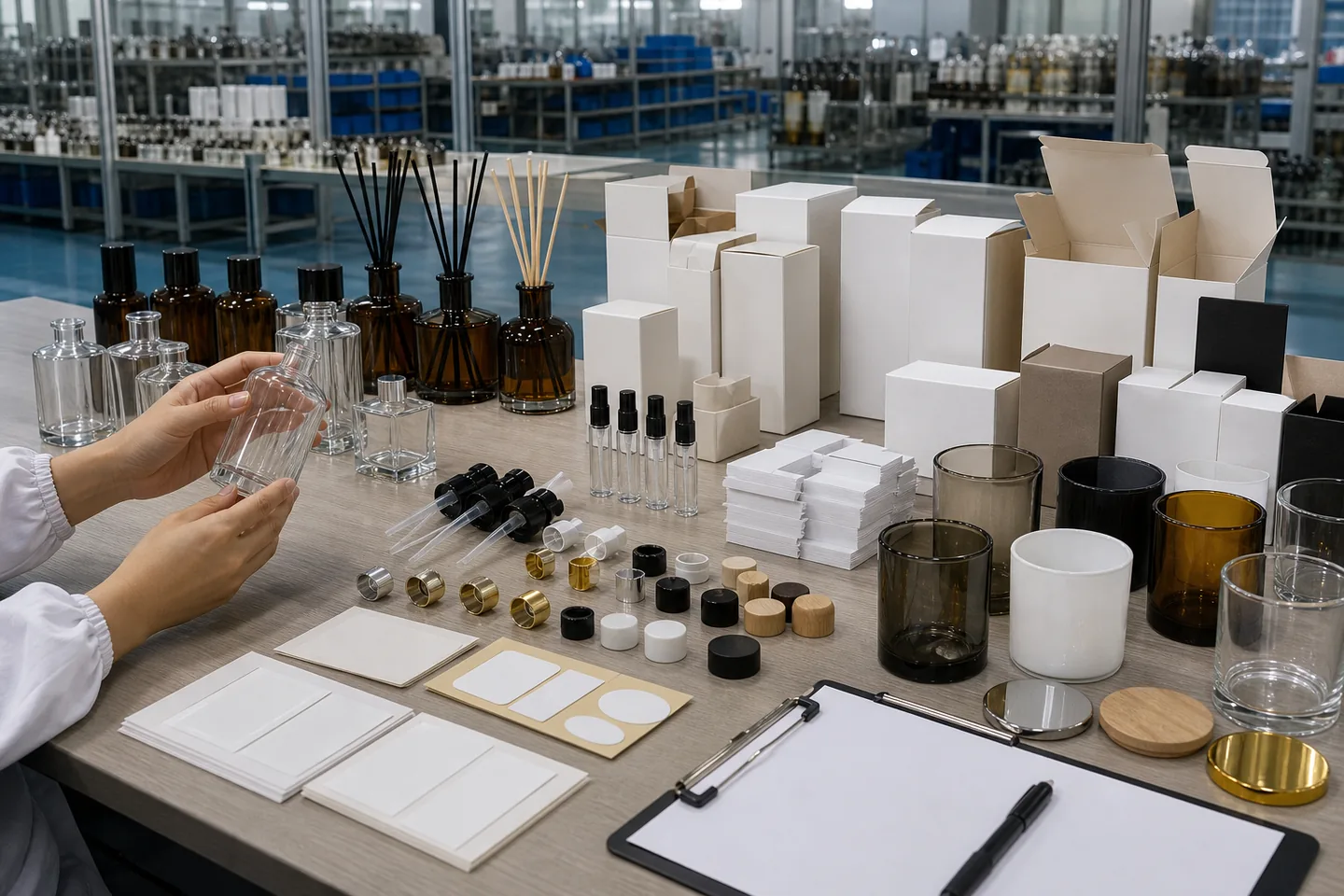
The bottle, jar, pump, cap, collar, stopper, wick, reeds, membrane, or sachet material often represents a large share of the finished cost. Stock components reduce development time and allow smaller launches. Custom molds can create distinction, but tooling, sample approval, component minimums, and replacement parts need to be budgeted.
3. Decoration and Labels
Pressure-sensitive labels are often suitable for a 500-unit test. Screen printing, hot stamping, coating, colored glass, and multi-pass decoration can become more practical as volume increases. Buyers should specify the number of colors, print area, finish, and abrasion expectations instead of requesting "premium packaging" without measurable details.
4. Secondary and Export Packaging
Folding cartons, rigid gift boxes, inserts, barcode labels, master cartons, dividers, and pallet requirements all affect cost. A beautiful retail box that ships poorly can create breakage and repacking expenses. Transit protection should be evaluated alongside shelf presentation.
5. Sampling, Setup, Testing, and Documentation
Custom fragrance development, color matching, print proofs, tooling samples, compatibility checks, and third-party tests may appear as separate charges. Fragrance documentation should be relevant to the final use. IFRA explains that a Certificate of Conformity relates to a fragrance mixture for its intended use and does not replace a safety assessment. Ask what documents are included, what requires external testing, and who pays for market-specific work.
6. Inspection, Freight, Duty, and Import Costs
A factory price is not the landed cost. Add pre-shipment inspection if required, inland transport, export packing, international freight, insurance, customs duty, taxes, brokerage, and delivery to the final warehouse. Confirm the Incoterm in writing so each supplier is quoting the same responsibility.
How Product Format Changes the MOQ Decision
Reed Diffusers
A private label reed diffuser combines liquid, bottle, closure, reeds, label, carton, and leak-resistant transit packing. Stock bottles and label decoration support a smaller first order. Custom glass color, caps, or gift boxes may introduce separate component minimums.
Scented Candles
Candle cost depends on wax, fragrance load, vessel, wick system, lid, dust cover, and carton. Wick and burn testing should be completed for the approved wax, fragrance, vessel, and fill weight. A large quantity does not justify skipping this development work.
Room Sprays and Car Air Fresheners
For sprays, pump compatibility, spray pattern, leakage, and label resistance matter. Car products need extra attention to heat exposure, placement instructions, and packaging integrity. Low MOQ is useful for testing a channel, but the test batch must still use production-representative components.
Body Perfume
Private label body perfume sits within cosmetic rules in many markets. For the European Union, the official cosmetics framework requires an EU Responsible Person and notification through the Cosmetic Products Notification Portal before market placement. The European Commission cosmetics legislation page provides the current framework. Budget for the formula file, safety work, labeling, and market responsibilities rather than treating compliance as a free add-on.
Sample Fees and Production Timing
Samples should answer specific approval questions before the buyer commits to a larger quantity. At LoyalCrafts, in-stock samples are normally prepared in 1-3 days and are free; the buyer pays freight. Customized samples normally take 7-14 days and require the sampling fee plus freight. The sampling fee can be refunded after the final production order is placed. Bulk production is normally 30-40 days after sample approval and payment.
These timings are planning ranges, not a substitute for a confirmed schedule. New molds, special decoration, external tests, holiday capacity, or delayed artwork can extend the project. Ask the supplier to identify the critical approval date for each stage.
How to Compare Fragrance Quotes Fairly
- Send one specification sheet to every supplier. Use the same fill size, formula brief, bottle, closure, decoration, carton, case pack, quantity per SKU, and destination.
- Ask whether MOQ is per scent or per total order. Confirm whether colors and market labels are separate SKUs.
- Separate one-time and repeat costs. Tooling, artwork setup, fragrance development, and testing should not be hidden inside a repeat-order unit price.
- Confirm production tolerance. Ask how overrun or underrun is handled and billed.
- Check spare components. Agree on extra pumps, caps, labels, or cartons for replacements and local repacking.
- Use the same Incoterm. Compare EXW with EXW or FOB with FOB, then calculate landed cost separately.
- Review included documents. Match SDS, fragrance documents, specifications, test reports, and label support to the product and destination market.
Three Illustrative Buying Scenarios
Scenario A: 500-unit market test. A new online brand launches one reed diffuser scent in a stock bottle with a custom label and printed carton. The unit cost is not the lowest available, but the brand limits unsold inventory and gains real customer feedback.
Scenario B: 1,000-unit retail launch. A buyer has completed scent testing and secured a small retail program. The order supports a stronger decoration choice and spreads setup cost further, while keeping the range focused on one or two proven SKUs.
Scenario C: 5,000-unit repeat program. A distributor has sales history, warehouse capacity, and a replenishment plan. Larger component purchases and more efficient production become useful because the buyer can justify the inventory. Custom tooling is evaluated against several repeat orders, not one shipment.

Which Quantity Should You Request?
Choose 500 units when learning is more valuable than the lowest possible unit price. Choose 1,000 when the product and channel have enough evidence for a focused launch. Choose 5,000 when demand, cash flow, storage, and replenishment planning are already in place. Then ask for all three quantity tiers against one unchanged specification. This shows where real efficiency begins and where a cheaper quote depends on changing the product.
Request a Comparable MOQ Quote
Tell us the product type, fill size, target market, packaging direction, quantity per SKU, and expected launch date. We will help you compare practical options at 500, 1,000, and 5,000 units.
Frequently Asked Questions
Is 500 units enough for a private label fragrance launch?
It can be enough for a pilot when the product uses available components, a focused scent range, and practical decoration. Five hundred units gives a buyer real packaging and customer feedback without committing to a large inventory. Highly customized bottles, molds, or finishes may require a higher component minimum.
Does MOQ apply per scent or to the total order?
MOQ commonly applies per SKU, and a new scent, formula, bottle color, or market label may create another SKU. Some components can be shared across the total order, but batching, labels, cartons, and line setup still need to be confirmed for each variation.
Are private label fragrance samples free?
At LoyalCrafts, in-stock samples are free and normally prepared in 1-3 days; the buyer pays freight. Customized samples normally take 7-14 days and require the sampling fee plus freight. The sampling fee can be refunded after the final production order is placed.
Does ordering 5,000 units always reduce the unit cost?
Not always. A larger order can spread setup costs and improve component purchasing, but custom bottles, complex decoration, premium formulas, testing, or special packing may offset that efficiency. Compare the same specification and shipping term at each quantity tier before deciding.
Which documents should fragrance buyers include in the budget?
The document set depends on product and market. Buyers commonly discuss product specifications, SDS, fragrance documentation for the intended use, label files, packaging records, and relevant test reports. Cosmetics may also require a safety assessment, responsible person, notification, and market-specific labeling.
You May Also Like
- Private Label Fragrance OEM/ODM Services
- Custom Reed Diffuser Manufacturing
- Private Label Body Perfume
- OEM Fragrance Sampling Process
Learn more about our production background and quality process on the LoyalCrafts factory profile, or send an inquiry with your target specification.