
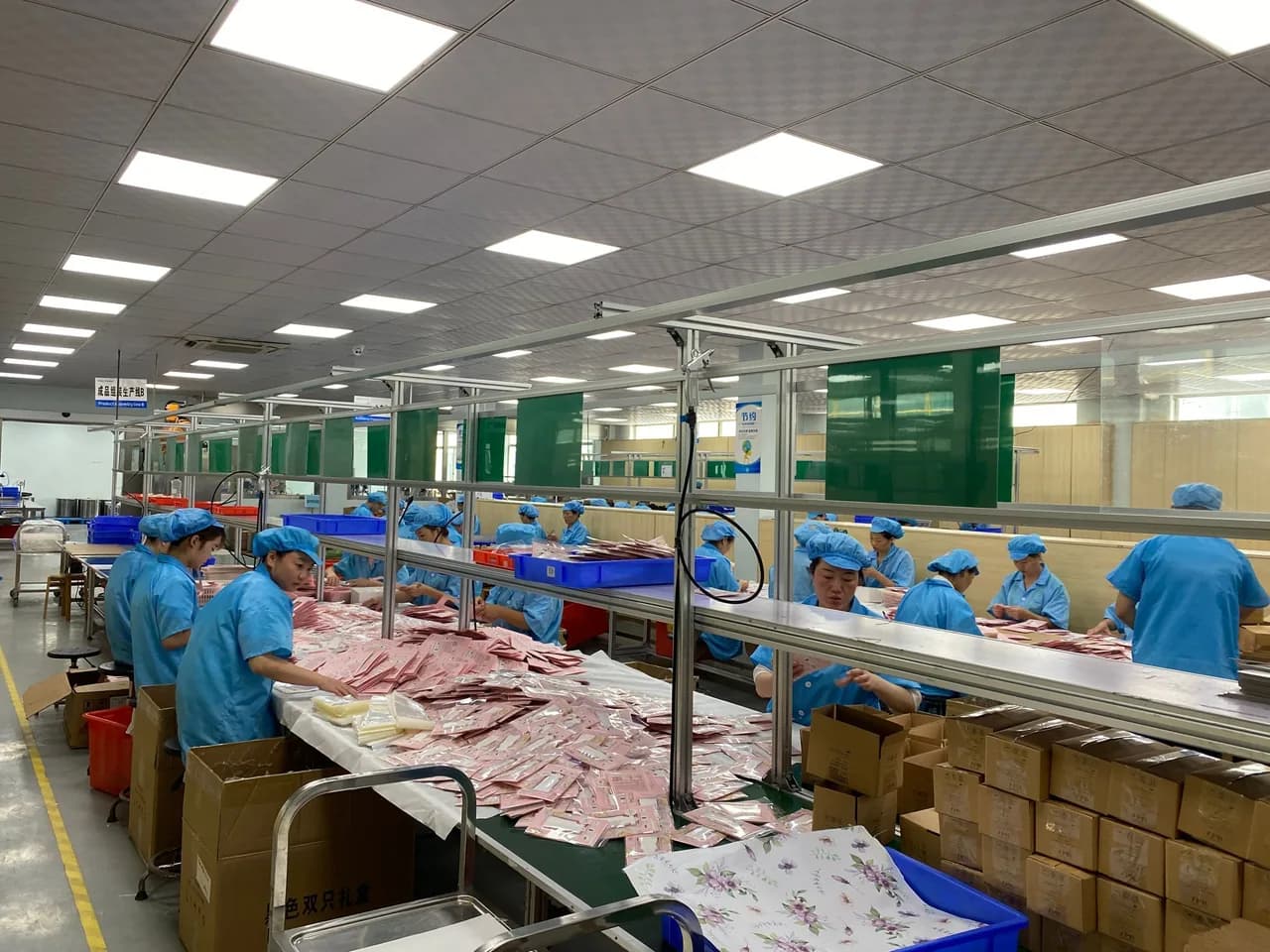
A reed diffuser MOQ is not determined by fragrance filling alone. A finished private label reed diffuser combines fragrance, solvent system, bottle, reeds, closure or decorative components, labels and retail packaging, and each of those elements can create a different production quantity.
Quick answer: Your Private Label Reed Diffuser MOQ depends on the exact configuration being ordered. Using an existing bottle, standard reeds and shared packaging can create a simpler order structure, while custom glass, special decoration, multiple reed specifications, fragrance-specific boxes and several SKUs can introduce separate minimum quantities. Before approving a quotation, ask which component actually determines the MOQ and whether that quantity applies per fragrance, bottle design, decoration, packaging version or total order.
Private Label Reed Diffuser MOQ is the minimum quantity required for one defined diffuser configuration, not a universal number for all reed diffuser projects. In practice, the bottle, decoration, reeds, fragrance batch or printed packaging may each have a different production minimum, so the finished-order MOQ can be driven by the least flexible component.
Why Does the Bottle Often Have the Biggest Effect on Reed Diffuser Order Planning?
The bottle can influence the order structure because it defines the product's dimensions, filling volume, neck specification, decoration area, closure fit, packaging dimensions and overall presentation.
Two projects using the same fragrance can therefore have very different commercial requirements if one uses an existing bottle and the other requires a newly developed glass shape.
Buyers should distinguish between three bottle routes:
1. Existing bottle
An existing bottle shape can simplify development because the basic glass structure already exists.
The buyer still needs to confirm:
- capacity;
- glass color;
- neck specification;
- bottle dimensions;
- closure compatibility;
- decoration method;
- retail-box fit.
Using an existing bottle does not automatically guarantee a particular MOQ, but it removes one potential custom-development variable.
2. Existing bottle with custom decoration
A standard bottle can still become a highly customized SKU through:
- printing;
- labels;
- coating;
- color treatment;
- decorative collars;
- caps or covers;
- other surface finishes.
In this case, the bottle itself may not determine the MOQ. The decoration process may create a separate quantity requirement.
3. New custom bottle
A proprietary glass shape introduces more development decisions.
Before requesting a custom bottle quotation, clarify whether the project requires:
- new mold development;
- custom glass color;
- custom neck or closure;
- dimensional tolerances;
- decoration after glass production;
- dedicated packaging dimensions.
A new bottle can also affect future components. Once bottle dimensions change, the retail box, protective insert, shipping divider and sometimes reed length may need to change as well.
A custom bottle is not one customization. It can create a chain of dependent specifications throughout the finished diffuser system.
Buyers who are still selecting the core format can review the available reed diffuser manufacturing options before building a detailed MOQ request.
How Do Reeds Affect Private Label Reed Diffuser MOQ?
Reeds are often treated as a minor accessory, but they should be specified as part of the finished fragrance-delivery system.
Reed diffuser development depends on the fragrance, solvent system, bottle, reeds, target market and intended use; fragrance percentage alone does not define finished-product quality.
For order planning, the buyer should define:
- reed material;
- diameter;
- length;
- color;
- number of reeds per set;
- whether all fragrances share the same reed specification;
- individual bundling or packaging requirement.
Natural reeds vs fiber reeds
Natural reeds and fiber reeds should not be treated as automatically interchangeable.
Their performance can differ depending on the fragrance system and finished configuration, so the selected reeds should be tested with the actual fragrance and bottle before approving production.
From an MOQ perspective, complexity increases when each SKU uses a different reed specification.
For example:
- Fragrance A uses black fiber reeds.
- Fragrance B uses natural-colored reeds.
- Fragrance C uses longer reeds.
- Gift Set D uses a different reed count.
Although all four may use the same bottle, the buyer has now created several reed configurations that need to be ordered, packed and controlled separately.
If the brand does not require those differences, using one approved reed specification across several fragrances can simplify production planning.
Can Bottle Size and Reed Length Be Planned Separately?
They should be reviewed together.
A taller bottle may require a different visual proportion and exposed reed length from a shorter bottle. The neck opening and fragrance system can also influence which reed specification should be evaluated.
The buyer should therefore avoid finalizing decorative packaging around a bottle before the reed specification has been approved.
A useful development sequence is:
- Select the bottle.
- Confirm the intended fill.
- Select candidate reeds.
- Test the fragrance, solvent system, bottle and reeds together.
- Approve reed length and count.
- Finalize packaging dimensions.
This sequence reduces the risk of ordering cartons or inserts before the final product dimensions are known.
How Do Multiple Fragrances Affect Reed Diffuser MOQ?
Each fragrance can create a separate filling and SKU requirement even when the bottle and reeds are identical.
A buyer may view a collection of six fragrances as one commercial order. From a production perspective, however, those six fragrances may still require separate preparation, identification, filling and packaging control.
The supplier should therefore clarify whether the quoted MOQ applies:
- per fragrance;
- per bottle design;
- per bottle color;
- per artwork;
- per packaging version;
- per SKU;
- or across the complete order.
This becomes especially important when fragrance and packaging variants are linked.
Imagine a project with:
- 3 fragrances;
- 2 bottle colors;
- 3 fragrance-specific boxes.
That could create several different SKUs even though the total order quantity appears substantial.
Total order quantity and quantity per SKU are not the same commercial question.
For a new collection, approving the fragrance range before final packaging production can reduce the risk of creating artwork and packaging for variants that are still being changed.
When Does Packaging Become the Real MOQ Driver?
Packaging can become the limiting quantity when the finished diffuser uses custom printed components produced separately from the filled product.
A typical reed diffuser may include:
- Filled fragrance bottle
- Closure or transport plug
- Decorative cap or collar where applicable
- Reed bundle
- Label or bottle decoration
- Protective insert
- Retail box
- Inner packing
- Export carton
Each layer may follow a different production route.
One box for every fragrance vs shared packaging
Consider two packaging strategies.
| Packaging structure | Order-planning effect |
|---|---|
| Shared box structure with fragrance-specific label | Fewer unique printed components |
| Completely different box artwork for every fragrance | More packaging versions |
| One bottle size across the collection | Shared insert and carton dimensions may be easier to manage |
| Different bottle sizes for different scents | Separate boxes, inserts and packing specifications may be required |
| Standard bottle plus label | Fewer customized physical components |
| Custom decorated bottle plus custom carton | More independent production steps |
A more complex presentation may be commercially justified, but buyers should understand how every new packaging variant affects quantity planning.
Before approving packaging, ask:
Is the package MOQ calculated per structural design, per printed artwork, or across all fragrance variants?
That question can be more important than the headline MOQ for diffuser filling.
Can One Reed Diffuser Collection Share Packaging Components?
Often, this is worth evaluating when the product dimensions allow it, but it must be confirmed for the actual design.
A new brand can ask whether several fragrance SKUs can share:
- the same bottle;
- the same reeds;
- the same box dimensions;
- the same protective insert;
- the same closure;
- a common outer artwork system.
Fragrance differentiation can then be introduced through suitable labels, color references or controlled artwork changes where the project allows.
This does not mean every collection should use identical packaging. The point is to identify which customization supports the brand and which only creates additional SKU fragmentation.
A five-fragrance collection with five completely different bottle colors, reed colors, collars, labels and boxes may be visually distinctive, but it is also five more complex product configurations.
Does Sampling Affect the Final MOQ?
Yes, because the final commercial MOQ should be based on the approved specification, and sampling can change that specification.
An initial quotation may assume:
- bottle A;
- reed specification A;
- fragrance version 1;
- standard label;
- standard retail box.
After sampling, the buyer may decide to use:
- bottle B;
- longer fiber reeds;
- fragrance version 2;
- a decorated bottle;
- a custom insert;
- a different box.
The original MOQ quotation may no longer describe the final product.
Use samples to close MOQ-driving decisions
Before requesting the final production quantity, use sampling to confirm:
- Bottle
Shape, size, color, neck and decoration.
- Fragrance system
Fragrance reference and solvent system.
- Reeds
Material, dimensions, color and count.
- Closure and accessories
Transport closure, cap, collar or other components.
- Artwork
Bottle decoration and labels.
- Packaging
Insert, box and transport protection.
Test the finished system rather than approving each component independently.
LoyalCrafts confirms that customized fragrance projects can involve fragrance selection, material and carrier matching, packaging development, sampling and mass production, with manufacturing controls that can include fragrance-material preparation, filling, leak checking where applicable, label and packaging checks, and transport-protection packaging.
How Should Buyers Structure the First Reed Diffuser Order?
Start by deciding where customization matters most.
For a new brand, there are several possible approaches.
Option A: Standard bottle, stronger fragrance differentiation
Use one bottle and reed configuration across the collection while creating several fragrance variants.
This keeps the physical product architecture relatively consistent while allowing scent to differentiate the range.
Option B: Standard fragrance architecture, stronger packaging differentiation
Use the same bottle family and reed system but vary packaging or decoration between collections.
This can make packaging production a more important MOQ factor.
Option C: Fully customized signature product
Develop a proprietary bottle, decoration and packaging system.
This can support a distinctive physical identity but introduces more interdependent components that need to be sampled, approved and ordered.
There is no universal correct structure. The right choice depends on the buyer's brand strategy, target assortment and intended order plan.
What should remain consistent is the buying discipline:
Decide the SKU architecture before negotiating the final MOQ.
How Should You Compare Reed Diffuser MOQ Quotes From Different Suppliers?
Make sure the suppliers are quoting the same finished specification.
A lower MOQ is not automatically more favorable if it refers to a more standardized product.
Use a comparison table such as:
| Specification | Supplier A | Supplier B |
|---|---|---|
| Bottle shape | ||
| Bottle color | ||
| Custom mold | ||
| Decoration | ||
| Fragrance variants | ||
| Fill specification | ||
| Reed material | ||
| Reed size/count | ||
| Closure/cap | ||
| Individual protection | ||
| Retail box | ||
| Packaging artwork versions | ||
| MOQ per fragrance | ||
| MOQ per artwork | ||
| MOQ per SKU | ||
| Total project minimum |
This prevents buyers from comparing one quotation for a standard stock diffuser against another quotation for a substantially customized finished product.
What Should Be Confirmed Before Approving the Production Quantity?
The final MOQ should be tied to the final approved product version.
Before the purchase order, confirm:
- bottle reference;
- glass color;
- bottle decoration;
- fragrance reference;
- solvent system;
- fill specification;
- reed material;
- reed length and diameter;
- reed quantity;
- closure and accessories;
- label artwork;
- retail-box artwork;
- insert specification;
- quantity per fragrance;
- quantity per artwork;
- quantity per SKU.
Retain the approved reference.
If a repeat order changes the bottle, fragrance, solvent system, reeds, closure, decoration or packaging, review the changed version again and confirm whether the previous MOQ and price structure still apply.
FAQs
What is a typical Private Label Reed Diffuser MOQ?
There is no single responsible MOQ that applies to every reed diffuser project. The minimum depends on the bottle, fragrance variants, reeds, decoration, closures and packaging configuration. Buyers should request the MOQ for the exact finished specification and confirm whether the quantity applies per fragrance, artwork, bottle version or SKU.
Does using a custom diffuser bottle increase the MOQ?
A custom bottle can introduce tooling, glass-production and packaging requirements that do not apply to an existing bottle. Whether it changes the practical minimum depends on the specific project. Ask separately about bottle tooling, glass production, decoration and packaging rather than treating them as one combined customization cost.
Can several reed diffuser fragrances be combined into one MOQ?
Possibly, but this should never be assumed. Multiple fragrances may still require separate preparation, filling, artwork and packaging control. Ask whether the quoted minimum applies per fragrance, per SKU or across the total order, especially when each fragrance also uses different packaging.
Can different fragrances share the same reeds and bottle?
They can use a common physical specification if the finished systems are technically suitable and approved. However, reed diffuser development depends on the fragrance, solvent system, bottle and reeds together. Test each relevant fragrance configuration before assuming one approved reed setup automatically performs the same across every formula.
Why can the packaging MOQ be higher than the diffuser MOQ?
Retail cartons, printed inserts, labels and other packaging components may be produced through separate suppliers or production processes. Each can therefore have its own quantity requirement. Confirm packaging minimums before approving the final artwork so the order is not constrained later by a customized box or insert.
Preparing a Reed Diffuser MOQ Inquiry
LoyalCrafts focuses on finished fragrance products and private-label development, including reed diffuser projects. The confirmed development approach treats the fragrance, solvent system, bottle and reeds as an interconnected finished system rather than judging quality by fragrance percentage alone.
For a useful quotation, prepare the bottle size and shape, fragrance count, approximate fill, reed material and size, bottle decoration, closure, label requirement, retail packaging and expected quantity per SKU.
Buyers with a defined project can submit a technical inquiry so the bottle, reeds, packaging, sampling requirements and applicable MOQ structure can be reviewed together.
Summary
Private Label Reed Diffuser MOQ should be planned around the complete product rather than the fragrance liquid alone.
The bottle can introduce glass, mold and decoration requirements. Reeds create another specification that should be matched to the fragrance system and bottle. Multiple fragrances divide the collection into separate SKUs, while customized cartons, inserts and labels can create their own production minimums.
Before approving an order, identify which component actually controls the MOQ, confirm how the quantity can be divided across fragrances and artworks, and complete representative sampling first.
A clear question produces a clearer quotation: What is the minimum quantity for this exact bottle, fragrance, reed and packaging configuration, and which component is setting that minimum?