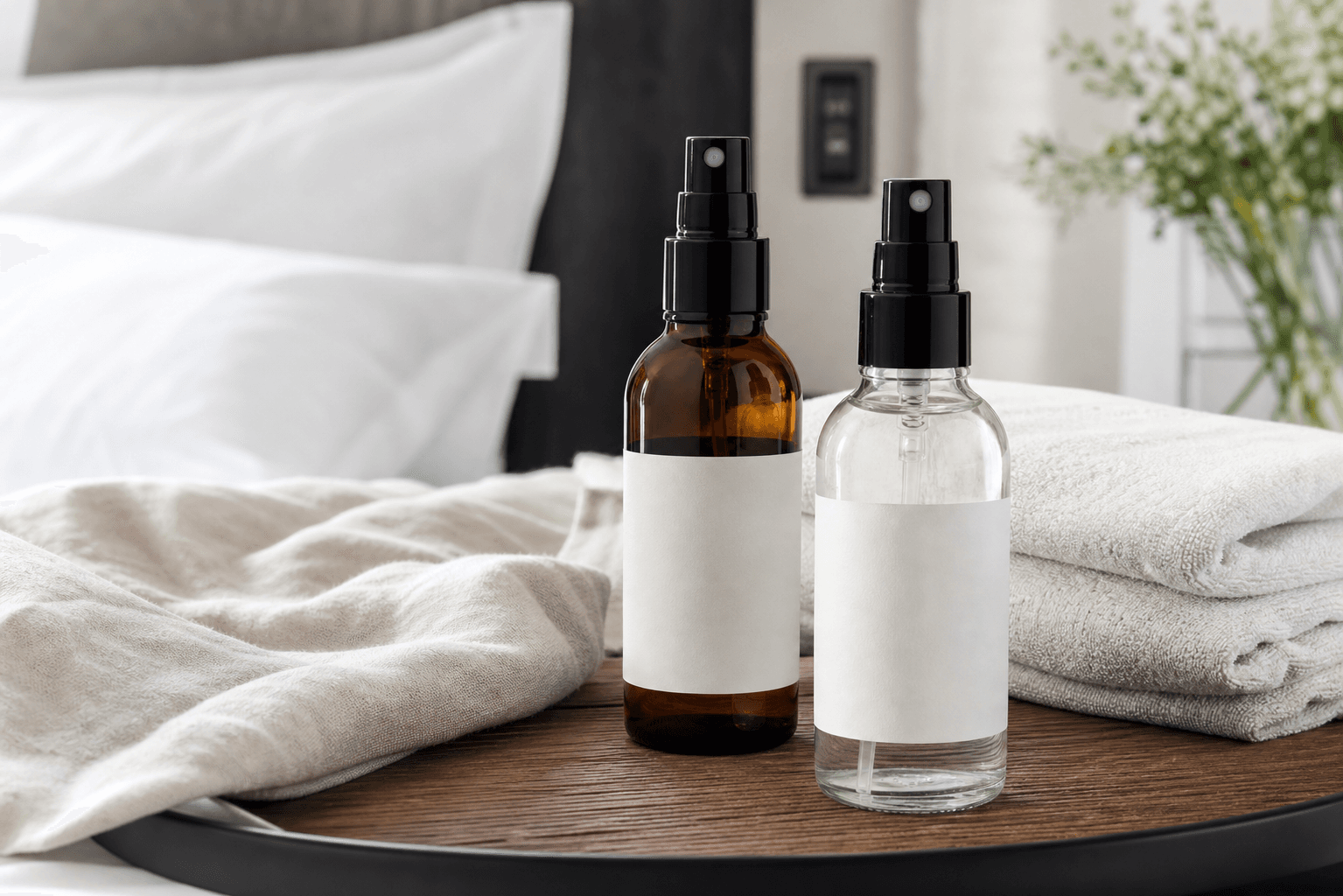
Quick answer: Choose a small spaces air freshener by the job it needs to do: an immediate room refresh, quiet fragrance in a drawer or wardrobe, or ongoing background scent. Start with the space, airflow, placement, surface contact and desired user control, then compare spray, sachet, membrane and diffuser samples in that setting. Once a spray format is chosen, use a separate supplier and sample-acceptance checklist before ordering.
Small Spaces Air Freshener Decision Snapshot
- Best for: hotels, spas, home fragrance retailers, gift brands, linen-care collections, and seasonal private label launches.
- First decision: immediate, user-controlled fragrance or passive background scent.
- Core risk: choosing a format that is too intense, poorly placed or unsuitable for contact with nearby textiles and surfaces.
- Recommended next step: compare finished samples in the intended space and record the preferred format, placement and instructions.
Why Small Spaces Air Freshener Is a Strong Private Label Category
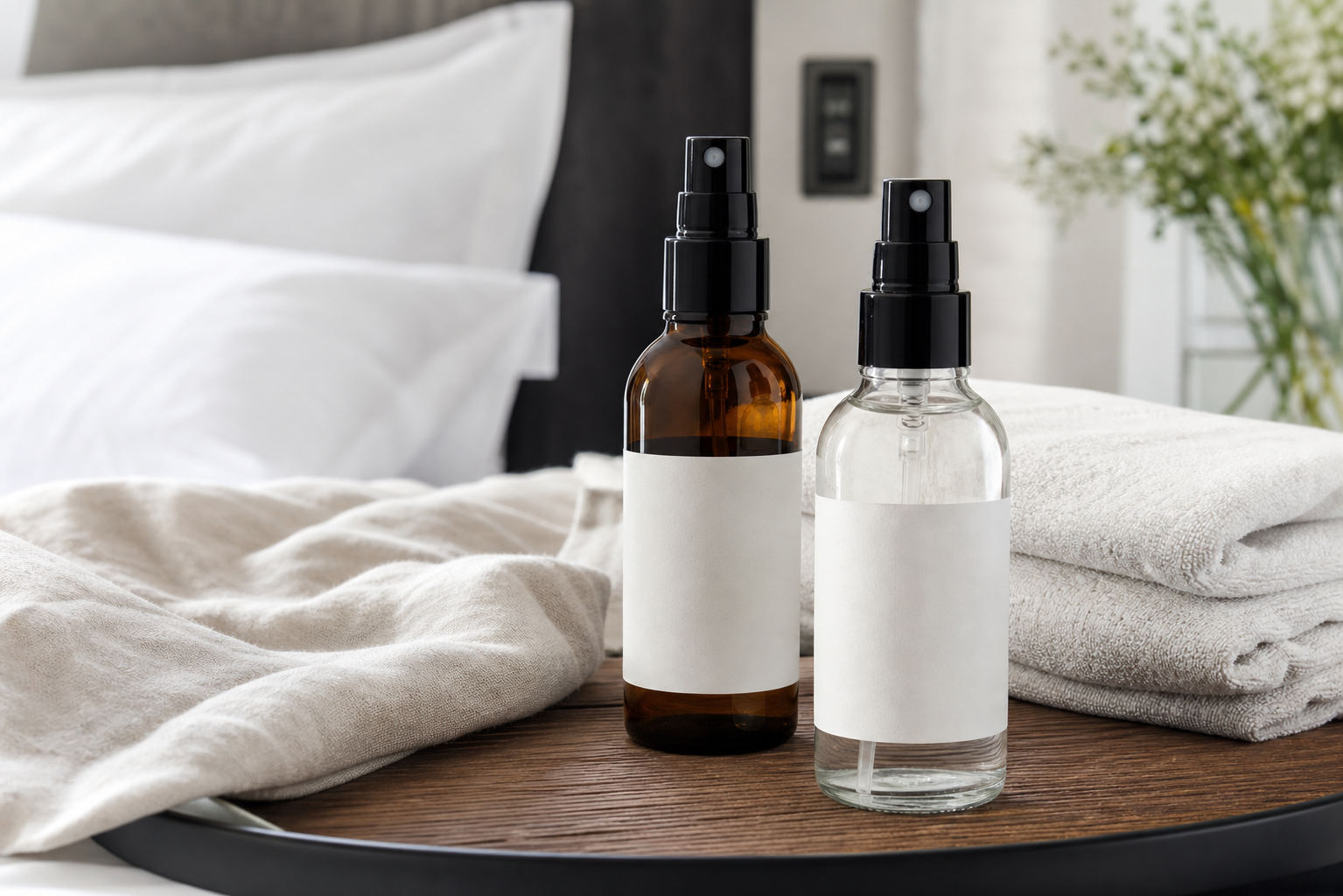
A compact fragrance product can serve very different jobs in a guest room, bathroom, wardrobe, drawer or locker. A room spray lets the user decide when to refresh the air; a sachet or membrane format provides passive scent after placement. For B2B buyers, choosing the intended job first makes it easier to develop a retail, hospitality, closet-care or gift product with clear instructions.
The category also works well with existing home fragrance lines. A room spray can sit beside reed diffusers, scented candles, scented sprays, sachets, and drawer liners. This gives retailers and hospitality groups a clear way to build a scent story across different rooms and price points.
However, small spaces air freshener sourcing is not only about choosing lavender, citrus, or sandalwood. It is a product engineering decision. A spray that works in a quiet showroom may feel too strong in a small hotel room, leave marks on textiles, clog after storage, or leak during ocean freight. A membrane deodorant that performs in a wardrobe may need a different fragrance load from a room mist. The best suppliers treat the delivery format, formula, scent profile, label, carton, and use instructions as one connected system.
What Is a Private Label Small Spaces Air Freshener?
A private label small spaces air freshener is a compact fragrance or odor-care product manufactured by a supplier and sold under a buyer's own brand. It may take the form of a room spray, linen spray, breathable membrane deodorant, solid gel deodorizer, scented sachet, paper card, EVA card, or closet-care product. The buyer may customize fragrance, size, cap color, pump style, label artwork, carton design, scent naming, and usage instructions.
Compared with candles or large reed diffusers, small-space formats have a lower barrier to trial. They are easy to sample, easy to bundle, and easy to ship when the formula and packaging are designed correctly. Compared with aerosol air fresheners, fine-mist pump sprays and compact membrane formats can feel more premium and more giftable. That is why many buyers use them as an entry SKU before expanding into OEM and ODM fragrance manufacturing for a wider product line.
9 Private Label Checks Before Buying Small Spaces Air Freshener Wholesale
1. Define the Real Use Scene
Define the space and who controls the product. A guest-room spray used by housekeeping has a different routine from a sachet placed in a drawer or a passive freshener left in a bathroom. Record the size of the space, usual airflow, proximity to textiles and whether the user should be able to stop or adjust fragrance release.
Write one primary use statement, such as "an occasional air refresh in a compact guest room" or "background scent inside a wardrobe." Avoid adding bedding, skin, pet-area or other uses until the exact product has been reviewed for them.
2. Choose Between Active and Passive Formats
Choose a room spray when the customer wants an immediate fragrance moment and can follow dose instructions. Compare sachets for drawers and wardrobes, or a membrane format for passive release in a suitable housing. A small reed diffuser may fit a stable display area, but it introduces an open liquid and placement requirements.
Compare formats against the same use brief. A spray and a sachet do not need to produce the same initial intensity: the useful question is whether each performs the intended job comfortably and practically.
3. Confirm Fabric and Surface Compatibility
Map where the product and fragrance may touch surfaces. Spray droplets can land on nearby textiles; sachets can rest against clothing; liquid formats can spill or transfer fragrance if placed poorly. Review the intended contact surfaces with the supplier and test the finished sample under those conditions.
Do not treat an air-fragrance product as a linen spray automatically. Instructions should state the intended use and any separation or placement requirements agreed for the finished product.
4. Account for Airflow, Humidity and Daily Use
Compare samples in the intended setting instead of assuming that a showroom or scent strip represents a small room. Record whether doors stay open, ventilation runs continuously, the space becomes humid or the product sits near heat. These conditions can change the user's experience of a spray or passive freshener.
Test placement as well as scent. A wardrobe shelf, hanging rail and drawer may need different formats or instructions; an exposed liquid product needs a stable location where normal use will not knock it over.
5. Compare Scent in the Finished Format
The same scent name can feel different in a mist, sachet or diffuser. Compare the actual finished samples, including the initial impression and background scent during use. Record the fragrance reference, format and placement so the preferred result can be discussed clearly with the supplier.
Use scent names and descriptions that match the sample. Natural, deodorizing or other functional claims need evidence for the exact product; a pleasant smell alone does not establish them.
6. Match Fragrance Strength to Room Size
Compare intensity at the intended dose or placement, with the room's normal ventilation. For sprays, follow the supplier's proposed use instructions during evaluation. For passive formats, record the number of units and location. Do not increase fragrance simply to match a larger showroom's first impression.
The U.S. Environmental Protection Agency explains indoor air quality in relation to health and comfort inside buildings. For fragrance products, this is a useful reminder: good scent design should support comfort, not mask poor ventilation, cleaning, moisture, or source odors that need practical treatment.
7. Build a Scent Ladder for Repeat Orders
One fragrance may start the project, while a later range can offer different scent directions for specific spaces. A hotel collection might compare white tea for guest rooms, fig leaf for public areas and lavender for an evening scent story. These are sample directions to evaluate, rather than proof of guest preference or a sleep benefit.
A clear ladder helps the buyer create bundles, gift sets, discovery kits, and reorder cycles. It also gives sales teams language beyond "nice smell." Buyers can connect each fragrance to a room, mood, season, or customer segment.
8. Make Placement, Opening and Replacement Clear
Review how the customer opens, places, stores and replaces the product. Spray instructions should match the intended use; sachet and membrane packs should explain opening and placement. If a refill or replacement is offered, confirm its fit and instructions with the actual pack. Check that the label remains readable at the intended display size.
9. Record the Real-Space Sample Decision
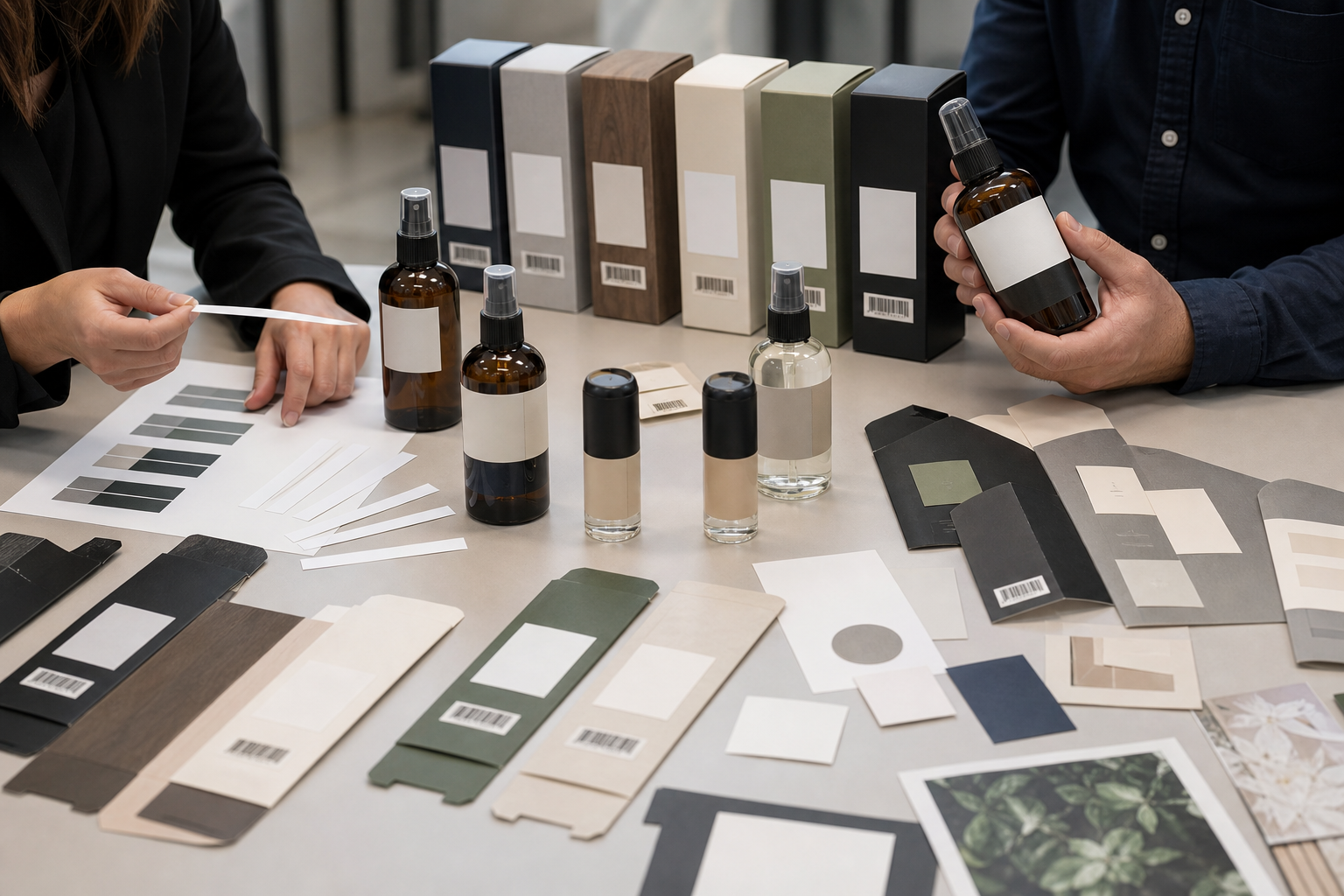
Keep a short comparison record: space, ventilation, format, fragrance reference, dose or placement, surface contact and observations during use. Identify why the chosen format works for the intended routine before approving a supplier's production proposal.
For a spray project, continue with the room spray manufacturer and sample-acceptance checklist for pump compatibility, documents, packaging versions and repeat production. For passive formats, agree the corresponding finished-sample checks with the supplier.
At LoyalCrafts, private label spray development can be coordinated with scented drawer liners, linen sachets, reed diffusers, and candles so buyers can build one coherent home fragrance family instead of disconnected products.
Match the Small-Space Use Scene to a Format
| Use Scene | Format to Compare | Decision Check |
|---|---|---|
| Occasional guest-room or bathroom refresh | Room spray | User control, dose instructions, ventilation and nearby surfaces |
| Drawer, wardrobe or luggage | Scented sachet | Placement, contact with contents, scent transfer and opening instructions |
| Background fragrance in a compact enclosed area | Membrane format | Housing position, release in the actual space and replacement instructions |
| Stable shelf or counter for passive fragrance | Small reed diffuser | Liquid placement, knock-over risk, airflow and scent intensity |
Planning Example: Hotel Small-Space Freshening Launch
A hotel buyer planning a private label small spaces air freshener program may start with a simple brief: "fresh, quiet, clean, premium, not too sweet." A supplier can translate that into three trial directions: white tea and bergamot for daily guest room refresh, lavender and soft musk for evening turndown service, and cedar leaf with green fig for lobby or spa retail.
The buyer should test each option in a real room rather than only on scent strips. Housekeeping staff can check whether the pump is comfortable for repeated use. Managers can confirm whether the fragrance fades smoothly before the next guest arrives. Retail teams can decide which bottle and carton feel giftable enough for the hotel boutique. This practical loop produces better decisions than approving scent from a meeting table alone.

Common Mistakes in Small Spaces Air Freshener Sourcing
- Choosing scent only from blotter strips: test in real rooms, on real textiles, and after storage.
- Choosing the format from appearance alone: compare active and passive use in the intended space.
- Overloading fragrance: stronger is not always better in bedrooms, hotels, or small bathrooms.
- Approving artwork too early: label warnings, ingredients, and market-specific copy may affect design.
- Buying one SKU with no system: a scent ladder and matching products create better repeat-order potential.
FAQ: Small Spaces Air Freshener Wholesale
Which air freshener format should I choose for a small space?
Compare a spray for an immediate, user-controlled refresh and a sachet or membrane format for passive fragrance. Decide using the space, ventilation, surface contact, placement and instructions, then evaluate finished samples there.
Can room spray be used on linen?
Only if the formula is designed and tested for textile contact. A general room spray should not automatically be marketed as a linen spray unless fabric compatibility, residue, and staining risk have been checked.
Can one scent be shared across different formats?
A collection can share a scent direction, but each format needs its own finished-sample review. A fragrance that suits a room spray may feel different in a sachet or diffuser, especially in a small enclosed space.
Does a stronger fragrance solve unwanted odors?
Stronger scent is not a substitute for cleaning, ventilation or addressing moisture and odor sources. Any odor-control claim needs evidence for the exact product and intended use.
Final Buying Advice
Start with the small-space routine, choose an active or passive format and compare samples under the intended conditions. Use that decision to prepare a clear sourcing brief. The manufacturer's production, document and packaging checks follow after the product's job is defined.
LoyalCrafts supports private label room spray, membrane deodorant, sachet, drawer liner, and compact fragrance development for hotels, spas, retailers, and home fragrance brands.
Request Wholesale Pricing Today to develop a small spaces air freshener program with custom fragrance, packaging, sample testing, and export-ready documentation.