Water-Based vs. Alcohol-Free: The Scent Engineering Behind High-Performance Diffusers for B2B Private Labels (2026)
2026 Fragrance Carrier Engineering Highlights
- The Solubility Gap: Solving the polarity mismatch of essential oils in surfactant-free water-based systems.
- Vapor Pressure Control: Utilizing bio-based glycerin derivatives (Augeo™) to achieve 90-day linear scent release.
- Thermal Stability: Calibrating formulas to survive container shipping temperatures (up to 55°C) without molecular separation.
- IFRA 52nd Alignment: Engineering zero-alcohol bases that comply with the latest global safety thresholds for VOC and allergens.
- Capillary Kinetics: Optimizing high-density fiber reed interaction with viscous non-ethanol carriers.
In the high-stakes world of B2B fragrance manufacturing, the year 2026 has marked the official sunset of traditional ethanol-based systems for luxury home scenting. As global brands move toward "Clean Beauty" and "Non-Toxic" labeling, the procurement conversation has shifted from cost-per-kg to Molecular Performance. The primary technical dilemma for private labels today is choosing between Water-Based and Bio-Based Alcohol-Free systems.
At LoyalCrafts' R&D laboratory, we treat this choice not as a marketing decision, but as a technical study in Fluid Dynamics and Molecular Polarity. This guide deconstructs the science behind high-performance diffuser bases and how we engineer them for the global market.
1. Water-Based Fragrance: The Micro-Emulsion Challenge
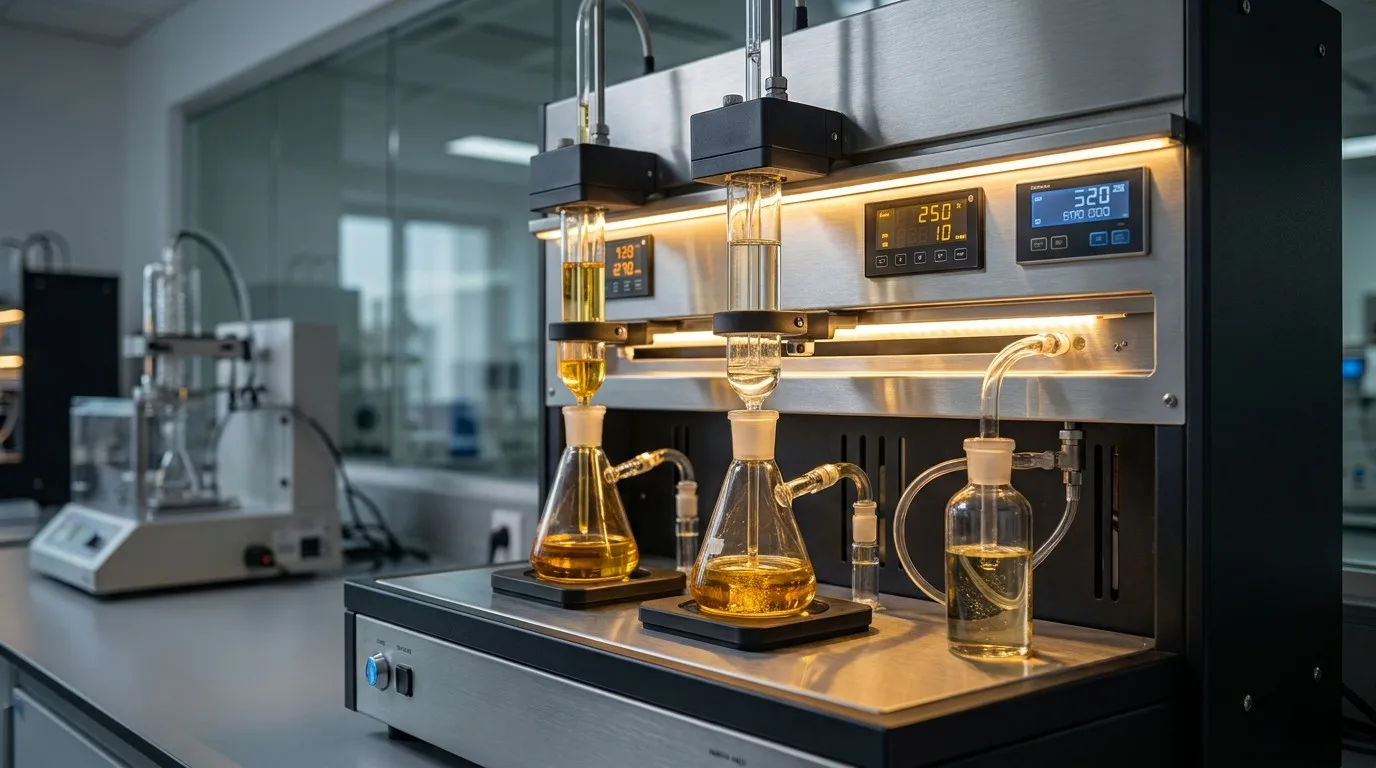
Water-based scents are the holy grail of "Clean" labeling, but they are notoriously difficult to engineer. Since oil and water do not mix, traditional manufacturers often rely on heavy surfactants (solubilizers) that can dull the olfactory profile. At LoyalCrafts, we utilize High-Pressure Homogenization to create stable micro-emulsions. This process breaks fragrance oil droplets down to the nanometer scale, allowing them to remain suspended in water without the need for aggressive chemical binders.
2. Alcohol-Free Solvents: Beyond the "Ethanol Spike"
Traditional diffusers rely on ethanol for its low cost and rapid evaporation. However, ethanol suffers from the "Initial Spike"—where the scent is overpowering in week 1 and non-existent by week 4. In 2026, we have standardized on bio-based carriers like Augeo™ Clean Multi (derived from renewable glycerin). These carriers possess a much lower vapor pressure, resulting in Linear Diffusion. This means the scent throw on day 60 is identical to day 1—a critical metric for luxury brand consistency.
3. Choosing the Right Base for Your B2B Strategy
The choice between water-based and alcohol-free depends entirely on your product format and target market regulations:
- Reed Diffusers: Bio-based carriers are superior due to their compatibility with high-density fiber reeds and superior sillage (scent throw).
- Room Sprays: Water-based micro-emulsions are the 2026 standard for non-staining, ultra-fine misting on luxury linens.
- Automotive Scents: We utilize specialized hydrophobic carriers to prevent molecular separation under the extreme 55°C+ heat of car cabins.
Conclusion: Scaling Science-First Fragrance Lines
In 2026, fragrance manufacturing is no longer a trade secret—it is a data-driven laboratory service. By partnering with Jinhua Loyal Crafts, you gain access to the R&D infrastructure needed to scale globally compliant, high-performance scent lines. Don't just follow the trends—engineer them with LoyalCrafts.