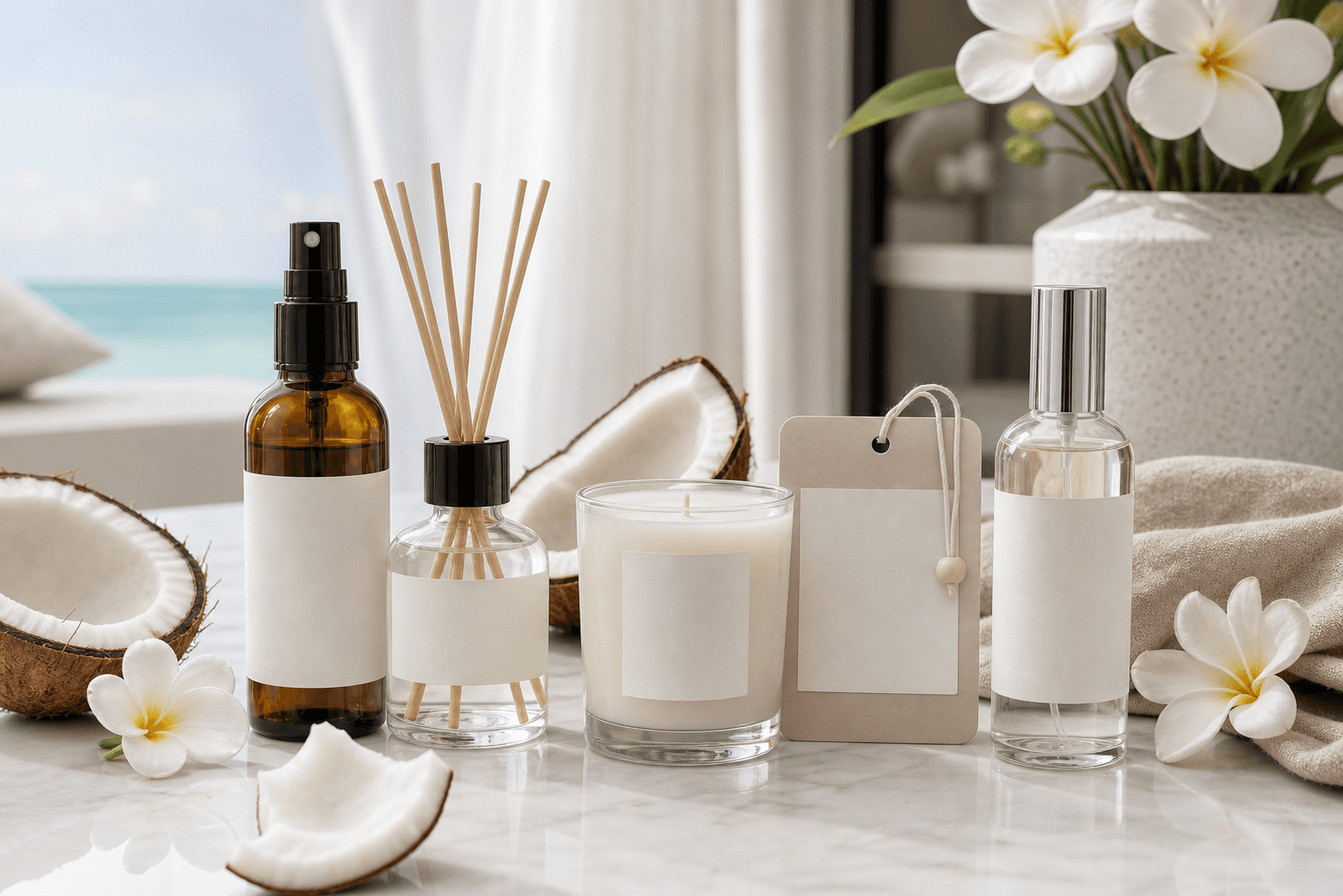
Quick answer: Coconut fragrance is a high-interest scent direction for private label home and personal fragrance because it can feel creamy, sunny, clean, woody, tropical, or spa-like depending on the formula. B2B buyers should treat it as a flexible fragrance family, not a single sweet coconut note.
Coconut Fragrance Opportunity Snapshot
- Planning signal: coconut supports several distinct scent directions and product formats.
- Best product fits: scented candle, room spray, reed diffuser, car air freshener, body perfume, sachet, and drawer liner.
- B2B angle: build a coconut scent ladder for retail, hotel, spa, gifting, summer, and wellness collections.
- Buyer risk: formulas that smell too sweet, too sunscreen-like, or unstable after heat and transit exposure.
Why Coconut Fragrance Is Back in Demand
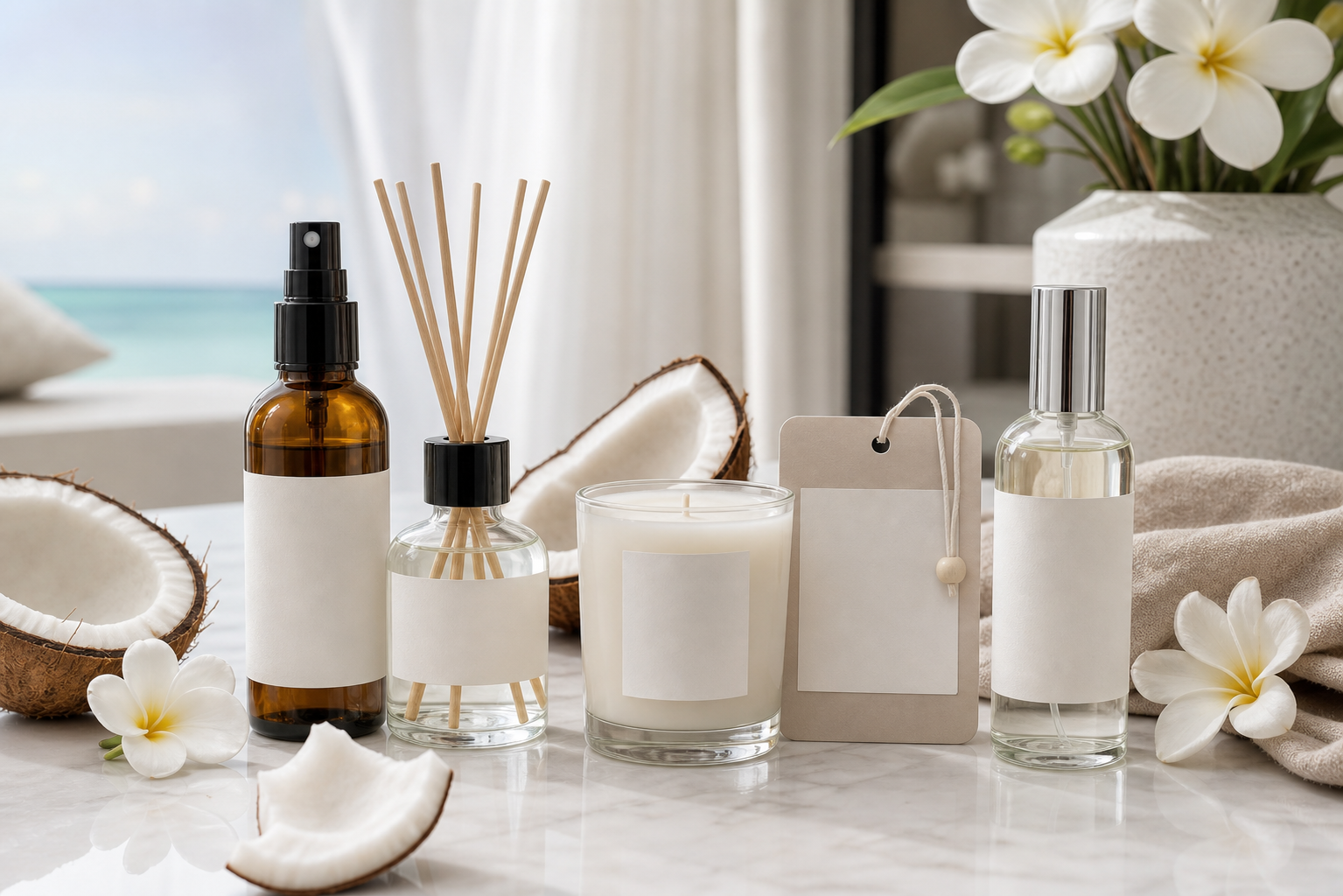
Coconut fragrance has moved beyond a simple beach or sunscreen association. In modern home fragrance and body fragrance, coconut can be creamy, milky, mineral, airy, woody, green, or ambered. That range gives brands more room to create products for different markets without repeating the same tropical story.
Search interest can change over time and does not guarantee sales. Buyers should validate coconut positioning against their own market, channel, season, target customer, and sample feedback before committing to a range.
For a B2B buyer, the opportunity is not only "make something coconut." The better question is: which coconut profile fits your customer, channel, climate, and product format? A hotel linen spray may need a quiet coconut water effect. A candle line may perform better with toasted coconut and vanilla. A body perfume may need coconut milk with musk, salt, and soft woods.
What Is Coconut Fragrance?
Coconut fragrance is a scent family built around coconut-like materials, accords, or impressions. It may smell like coconut water, coconut milk, toasted coconut, coconut cream, beach skin, tropical fruit, or warm coconut wood. In private label fragrance, it is usually blended with supporting notes such as vanilla, sandalwood, amber, white musk, sea salt, jasmine, fig, citrus, or green tea.
This matters because "coconut" is not one fixed smell. A sweet coconut can work in a candle but feel too heavy in a wardrobe sachet. A clean coconut water accord may work in a room spray but feel too light in a reed diffuser. B2B fragrance development should match the coconut profile to the product format.
7 Private Label Coconut Fragrance Product Ideas
1. Coconut Fragrance Scented Candles
A scented candle is one of the strongest formats for creamy coconut notes. Warm wax supports coconut cream, vanilla, tonka, amber, and soft sandalwood. The result can feel cozy rather than purely tropical. For premium retail, test both cold throw and hot throw because a coconut candle that smells rich in the jar may become too sweet when burned.
B2B idea: build a three-SKU candle set: Coconut Milk & Sandalwood, Toasted Coconut & Vanilla Bean, and Coconut Water & White Tea.
2. Coconut Room Spray or Linen Spray
A room spray needs a lighter coconut expression. Heavy coconut cream can feel sticky in the air, especially in small rooms. Coconut water, sea salt, white musk, citrus peel, and soft floral notes are easier for bedrooms, bathrooms, spas, and hotel rooms. For linen positioning, textile compatibility and residue testing are essential.
B2B idea: create a hotel room spray with coconut water, neroli, white tea, and clean musk for a fresh coastal mood.
3. Coconut Reed Diffuser
A reed diffuser releases fragrance slowly, so the formula must keep coconut present without becoming flat after the first week. Fiber sticks may help maintain a cleaner release profile for some formulas, while natural rattan can suit softer decorative collections. Buyers should test fragrance load, base viscosity, stick count, and room size together.
Sample check: compare the coconut character at the start and during continued diffusion in the chosen base and bottle. Record whether the scent remains balanced rather than approving only the first impression.
4. Coconut Car Air Freshener
Coconut can work well in car fragrance, but it must be balanced carefully. A hot car interior can make sweet notes feel heavier. For car diffusers, vent clips, or scented cards, a clean coconut profile with citrus, marine, mint, green tea, or soft woods is usually safer than a heavy dessert accord.
B2B idea: test Coconut Lime Clean, Coconut Sea Salt, and Coconut Tea Leaf as three mass-market car fragrance options.
5. Coconut Body Perfume
Coconut has become popular in personal scent because it can feel intimate, warm, and skin-like. For body perfume, coconut pairs well with musk, vanilla orchid, sandalwood, amber, solar floral notes, or mineral salt. This makes it useful for brands that want a summer fragrance, a skin-scent collection, or a softer wellness-inspired body mist.
B2B idea: develop a Coconut Skin Musk body mist or eau de parfum for summer gifting, spa retail, or lifestyle brands.
6. Coconut Scented Sachets and Drawer Liners
For enclosed spaces, coconut fragrance should be soft and dry rather than creamy and dense. A scented linen sachet or drawer liner can use coconut with clean cotton, white tea, cedar, or powdery musk. This creates a wardrobe-friendly profile that feels fresh rather than edible.
B2B idea: create a Coconut Cotton closet-care set with sachets, drawer liners, and a matching small room spray.
7. Coconut Breathable Membrane Deodorant
For compact odor-control products, coconut should support freshness instead of covering odor with sweetness. A breathable membrane deodorant or solid gel can use coconut water, green citrus, eucalyptus, tea, or mineral notes. The goal is a clean background scent for wardrobes, bathrooms, lockers, and cars.
B2B idea: develop Coconut Mineral Fresh as a compact deodorant for small spaces, paired with a refill or multipack program.
Coconut Fragrance Profiles by Product Format
| Product Format | Best Coconut Direction | What to Avoid |
|---|---|---|
| Candle | Toasted coconut, coconut cream, vanilla, amber, sandalwood | Weak hot throw or overly sugary burn profile |
| Room spray | Coconut water, white tea, neroli, sea salt, clean musk | Heavy oiliness, wet marks, or fabric residue |
| Reed diffuser | Coconut milk, fig leaf, sandalwood, soft musk | Flat drydown after one week of diffusion |
| Car fragrance | Coconut lime, coconut tea, marine coconut | Sweet notes that become harsh in heat |
| Body perfume | Coconut skin musk, vanilla orchid, solar floral, amber woods | Sticky sunscreen effect unless that is the intended style |
How to Source Coconut Fragrance for Global Markets
Global buyers should test coconut fragrance across climate, culture, and channel. North American lifestyle brands may accept warmer vanilla coconut. Japanese and Korean buyers may prefer cleaner coconut water, tea, cotton, and soft musk. European home fragrance buyers may respond better to coconut with fig leaf, mineral salt, sandalwood, or neroli rather than a very sweet tropical profile.
Documentation also matters. The International Fragrance Association is widely referenced in relation to IFRA Standards for fragrance safety. For private label projects, buyers should ask suppliers for formula suitability, SDS/MSDS, IFRA-related documentation where applicable, allergen information for target markets, and stability testing before final artwork approval.
If the product is used indoors, remember that scent should improve comfort, not hide a source problem. For fragrance products, that means buyers should avoid overloading fragrance to cover poor ventilation, moisture, or cleaning issues. A better approach is to choose a suitable fragrance load, clear use instructions, and a format that matches the room size.

B2B Development Checklist
- Define the coconut style: coconut water, milk, cream, toasted coconut, skin musk, or tropical fruit.
- Match the format: candle, reed diffuser, room spray, car air freshener, sachet, membrane deodorant, or body perfume.
- Test real use: room size, fabric contact, heat exposure, small-space intensity, and long diffusion time.
- Build a scent ladder: fresh, creamy, woody, floral, tropical, and clean options for different channels.
- Prepare documentation: SDS/MSDS, IFRA-related documents, allergen details, label claims, and batch records.
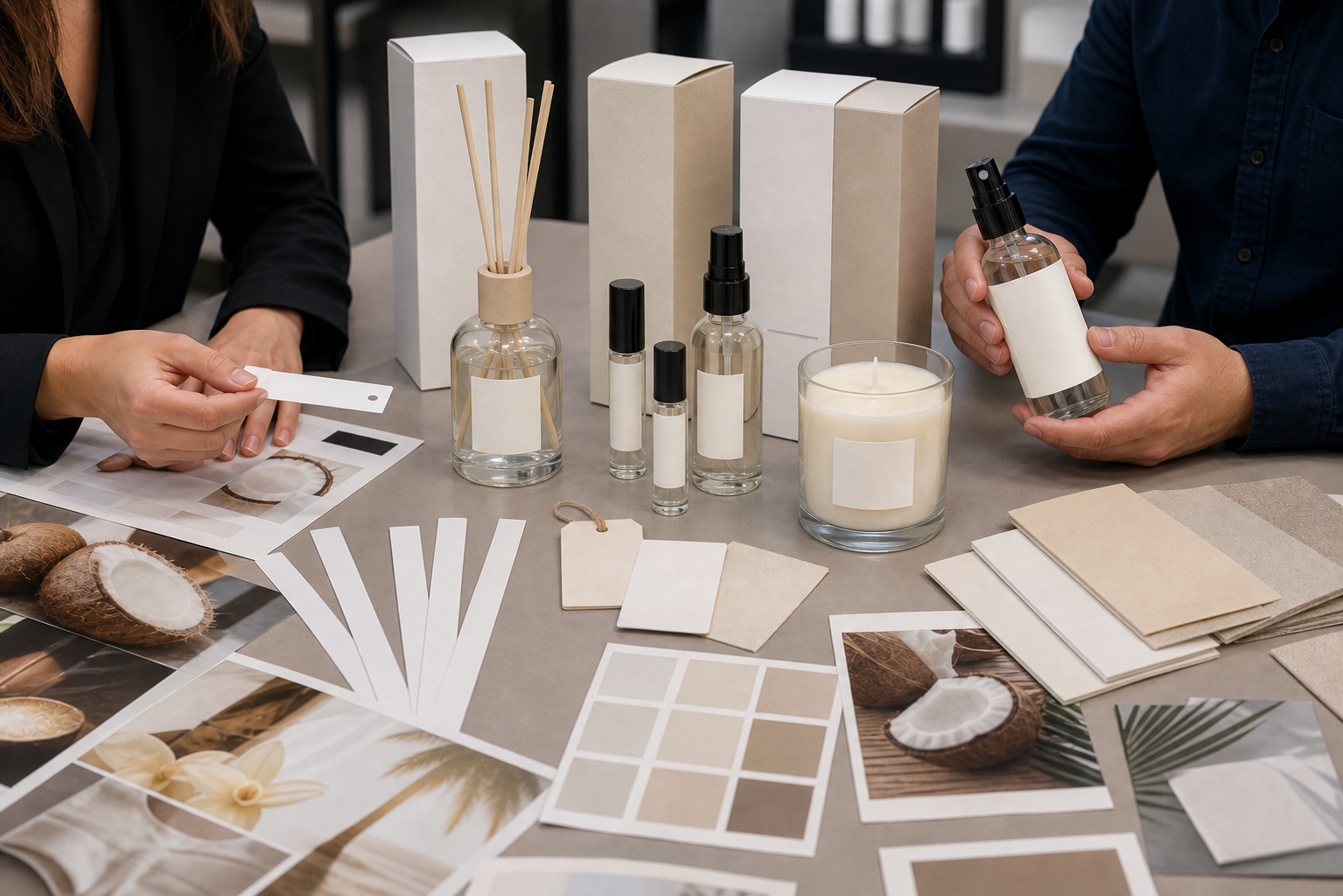
- Approve packaging together: bottle, pump, cap, carton, label, barcode, sample kit, and export carton.
FAQ: Coconut Fragrance for Private Label Buyers
Is coconut fragrance only suitable for summer products?
No. Coconut can be seasonal, but it can also work year-round when paired with musk, sandalwood, amber, fig leaf, white tea, or clean cotton. The key is choosing the right coconut style for the target channel.
Which coconut fragrance profile is best for candles?
Toasted coconut, coconut cream, vanilla, amber, and soft woods usually work well in candles because warm wax supports creamy notes. Buyers should still test hot throw, wick behavior, discoloration, and jar scent after storage.
Can coconut fragrance work in car air fresheners?
Yes, but it should be cleaner and less sweet than many home fragrance versions. Coconut lime, coconut sea salt, coconut tea, and coconut musk profiles often feel fresher in hot, enclosed vehicle interiors.
What should buyers test before approving a coconut fragrance formula?
Test scent stability, color change, heat exposure, fabric contact, packaging compatibility, pump or wick performance, and final-use intensity. A coconut accord can smell excellent in a sample bottle but behave differently in wax, spray, diffuser base, or paper.
Final Advice
Coconut fragrance is valuable because it can be fresh, creamy, clean, tropical, woody, or skin-like. For B2B buyers, the winning move is to treat coconut as a fragrance platform: one trend can become candles, room sprays, reed diffusers, car air fresheners, sachets, and body perfume when the formula is adapted to each format.
LoyalCrafts supports OEM and ODM fragrance manufacturing for coconut fragrance collections, including scent development, sample testing, packaging, and export-ready documentation.
Request Wholesale Pricing Today to develop a private label coconut fragrance collection for your market.