Quick answer: neither fiber nor rattan is automatically the better diffuser stick. The suitable choice depends on the final fragrance base, bottle opening, stick dimensions and count, desired appearance, packaging, room conditions, and buyer-approved sample.
For private label buyers, there are two separate decisions: which material fits the collection, and which finished combination delivers the intended experience. Shortlist on appearance, then compare the materials under recorded conditions before approving production.
Why the Stick Must Be Tested as Part of the Finished Diffuser
A reed diffuser works as a system. The bottle, usable neck opening, fragrance formula, stick material, stick count, exposed length, fill level, and room environment all affect how liquid moves and evaporates. A stick that performs well in one formula or vessel may behave differently when another component changes.
For private label sourcing, compare complete samples rather than loose sticks. Record the component versions used in the approved sample so the same combination can be reviewed during production and repeat orders.
Rattan Diffuser Sticks
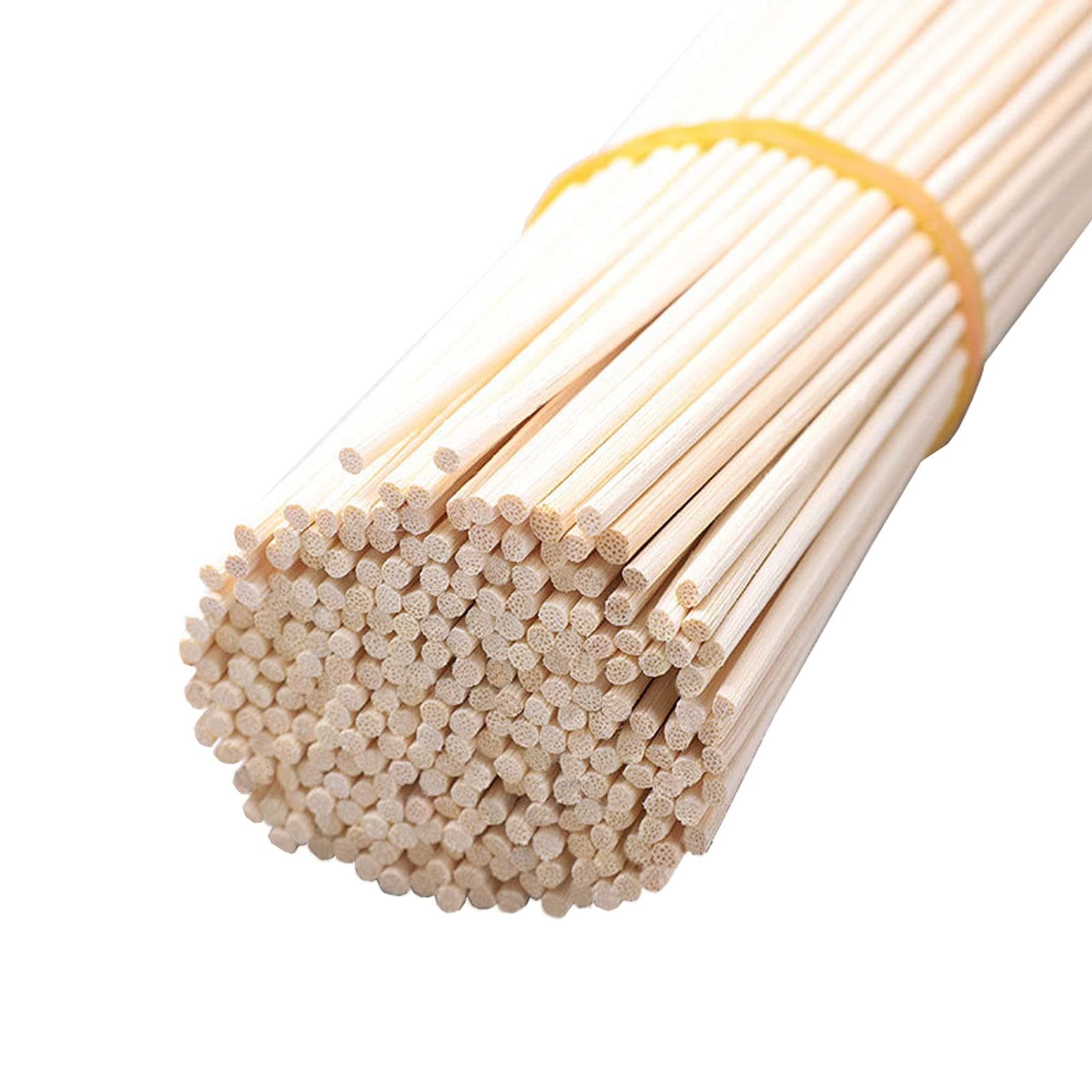
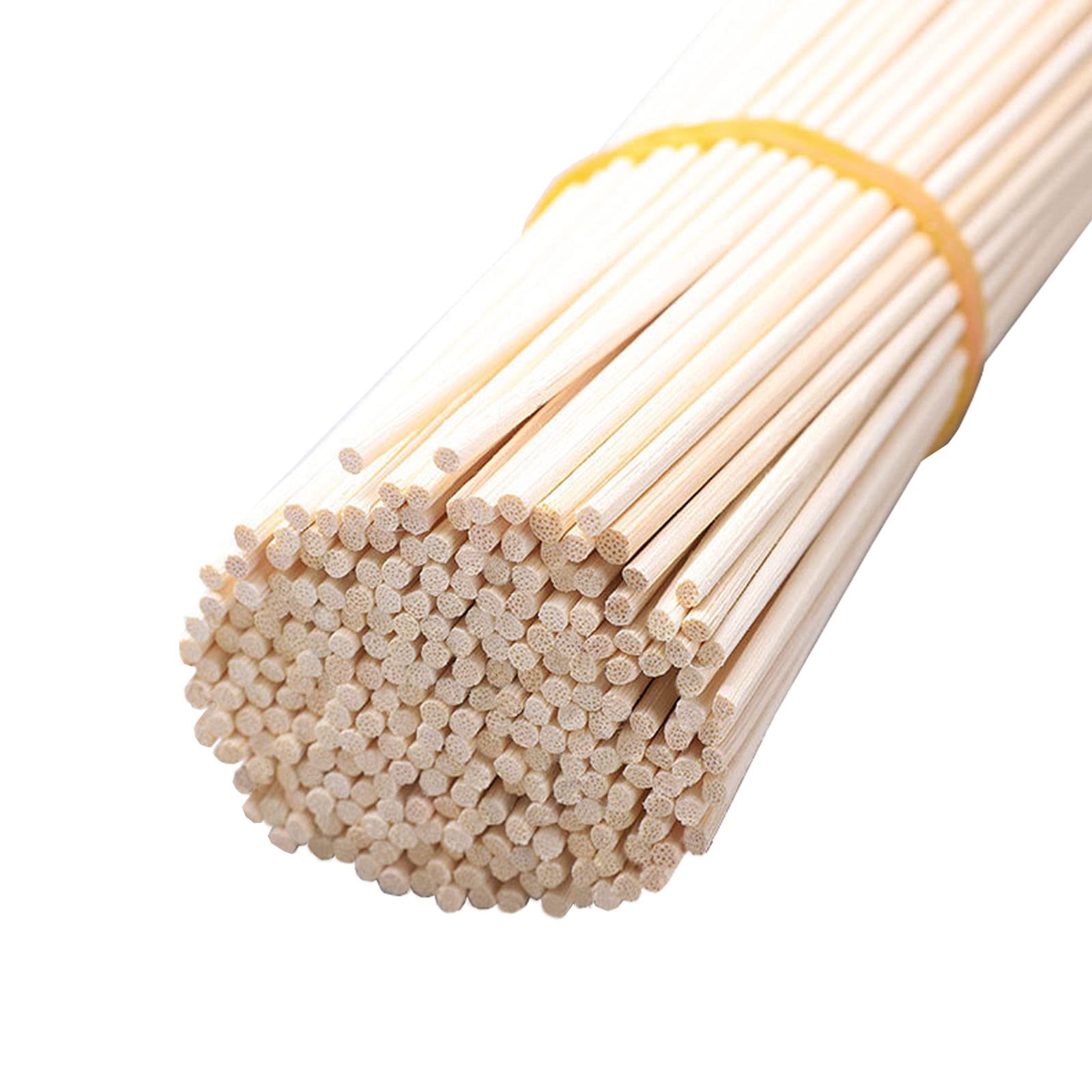
Rattan is a natural material with internal channels that can carry liquid upward. Its organic appearance can suit botanical, craft-led, or natural visual positioning. Because it is a natural material, colour, surface, straightness, and internal structure can vary.
Buyers should check the selected rattan with the actual formula, especially when the fragrance direction, base, colour, or viscosity changes. Instructions about turning the reeds should be based on the finished sample and intended consumer use. CandleScience's reed diffuser guide describes rattan's liquid-carrying channels and highlights cleanly cut ends as a selection point.
Fiber Diffuser Sticks
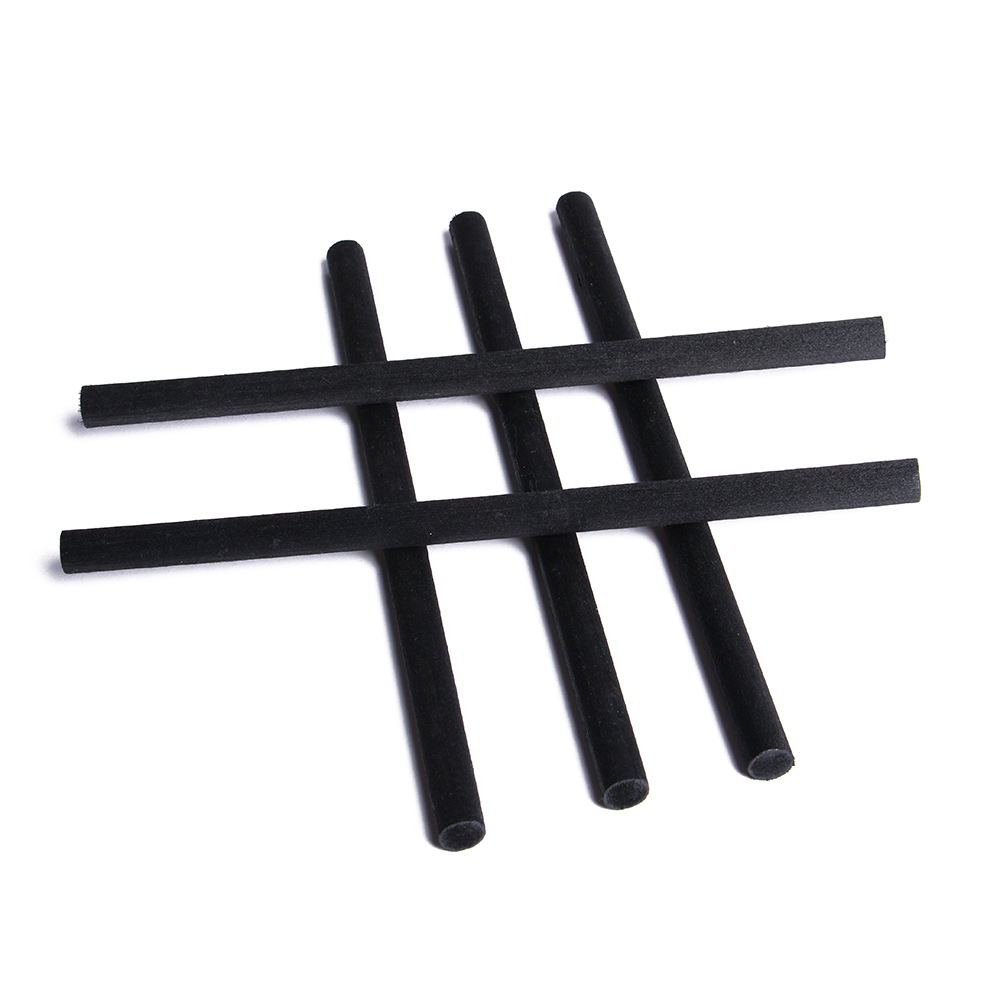
Fiber sticks are manufactured materials available in different colours, finishes, dimensions, and structures. They can suit brands seeking a uniform or contemporary appearance. Performance still depends on the selected fiber specification and the complete diffuser system; a material name alone does not establish scent strength or product life.
If coloured sticks are selected, review their appearance with the final liquid and packaging. Any colour-transfer or compatibility expectation should be confirmed from the actual sample rather than treated as a universal property. For example, Candle Shack warns that perfume oil can discolour its pale fiber reeds. This is a supplier-specific warning and a useful check to include, not a finding about every fiber stick.
Fiber vs. Rattan: What a Buyer Can Compare
| Decision point | Rattan | Fiber | Approval evidence |
|---|---|---|---|
| Visual direction | Natural texture and variation. | More uniform appearance and colour options. | Physical samples and an agreed appearance reference. |
| Material specification | Identify the natural material, finish and acceptable variation. | Identify composition, construction, finish and colour. | A supplier specification for the selected item. |
| Scent release | Compare with the final formula and vessel. | Compare with the same formula and vessel. | Recorded observations from a controlled comparison. |
| Liquid and colour compatibility | Check stick condition and liquid appearance. | Check stick condition, liquid appearance and colour change. | Dated sample observations, not an assumption from colour. |
| Production consistency | Agree on dimensions, appearance limits and packing. | Agree on dimensions, appearance limits and packing. | An approved specification and retained reference sample. |
CandleScience reports faster initial diffusion and stronger throw from fiber reeds in its own testing. That result supports including fiber in a comparison; it does not establish a universal advantage for another supplier's sticks, formula or bottle. A material comparison should state what was tested and under which conditions.
Available Dimensions and the Specification to Request
LoyalCrafts offers rattan and fiber diffuser sticks in diameters from 2 mm to 20 mm, with custom lengths. This is a supply range, not a recommendation that every diameter suits a standard reed diffuser. Select the material, diameter, length and count against the actual bottle and required presentation.
Confirm the nominal dimensions and acceptable tolerances on the sample specification. Include the usable neck opening, bundle fit and packing position. For bottle proportions and carton fit, use the separate reed diffuser stick size guide; keep the material trial focused on performance and compatibility.
How to Run a Useful Fiber-versus-Rattan Comparison
The following is a proposed purchasing trial, not a published laboratory standard or a report of LoyalCrafts test results. Agree on the sample quantity, duration, observations and acceptance criteria with the supplier before starting.
- Match the starting setup. Use the same fragrance and base revision, fill, bottle and neck, stick diameter, length and count. If equivalent dimensions are unavailable, record the difference and compare finished systems without attributing the result solely to material.
- Record the environment. Note the room, placement, temperature, relative humidity and airflow. Keep samples away from changing conditions as far as practicable. Avoid placing different fragrances together in a way that confuses the scent assessment.
- Set checkpoints in advance. Record first noticeable scent release, later scent impressions, stick condition, liquid appearance and any handling such as turning the sticks. Use the same assessment approach for both samples.
- Separate consumption from scent. If tracking mass, weigh the complete assembly on the same scale, record elapsed time and account for spills or handling losses. Mass loss alone does not prove stronger scent or longer useful life.
- Retain the approved combination. Keep its component record and reference sample. Repeat relevant checks after a change to the formula, reeds, bottle or packaging.
| Field | Rattan sample | Fiber sample |
|---|---|---|
| Sample and formula references | Record | Record |
| Diameter × length in mm; stick count | Record | Record |
| Bottle, usable neck opening and fill | Record | Record |
| Date/time; temperature °C; relative humidity %; airflow | Record | Record |
| Assembly mass in g, if measured; elapsed days | Record | Record |
| Scent observations; observer; assessment position | Record | Record |
| Liquid/stick changes; turning or other handling | Record | Record |
| Acceptance criteria, outcome and follow-up | Record | Record |
What to Investigate When a Sample Disappoints
| Observation | Checks before changing the material |
|---|---|
| Weak scent | Verify the sample identity, formula, elapsed time, stick wetting and room conditions. Ask another assessor to record an independent impression. |
| Liquid disappears quickly | Check airflow, temperature, fill, exposed bottle opening, stick count, turning and leakage. Assess scent separately from consumption. |
| Stick or liquid colour changes | Compare dated photographs and the original liquid. Review the selected finish or dye with the formula; do not assume one universal cause. |
| Replacement sticks behave differently | Check material, dimensions, finish and supplier revision against the approved record before accepting them as equivalent. |
These checks identify what to investigate. They do not diagnose the cause without sample evidence.
What to Send a Reed Diffuser Supplier
Send the bottle reference and usable neck opening, fill volume, fragrance direction, preferred stick appearance, dimensions and count. Add the target market, quantity by item, retail pack and launch timing. Request the selected material specification and a matched sample comparison.
Use brand positioning to shortlist the material, then use the complete sample to make the final decision. Explore the diffuser stick portfolio, review our reed diffuser manufacturing page, or request a project-specific sample discussion.
Frequently Asked Questions
Are fiber sticks always stronger than rattan reeds?
No. Some suppliers report stronger performance from their fiber reeds, but that finding belongs to the tested setup. Compare the selected materials with the same formula, fill, bottle, dimensions and stick count, and record the environment. A material name alone is not a scent-strength guarantee.
Which material lasts longer?
Neither can be assigned a fixed lifespan from material alone. Define whether “lasts” means liquid remaining, detectable fragrance or an acceptable scent level, then measure that outcome in the finished diffuser. A bottle that retains liquid for longer has not necessarily delivered a better scent experience.
Do fiber sticks eliminate the need to turn the reeds?
Do not promise a universal turning schedule or no-turn performance. Use observations from the selected finished diffuser to write the instructions. Record turning during the comparison because it changes the use conditions, and follow the finished product's handling guidance.
Can the stick material change after sample approval?
It can change only after the affected performance, appearance and packaging checks are repeated. A different stick material should not inherit the approved result from the previous finished sample. Record the new component version so production and repeat orders can be compared against the correct reference.