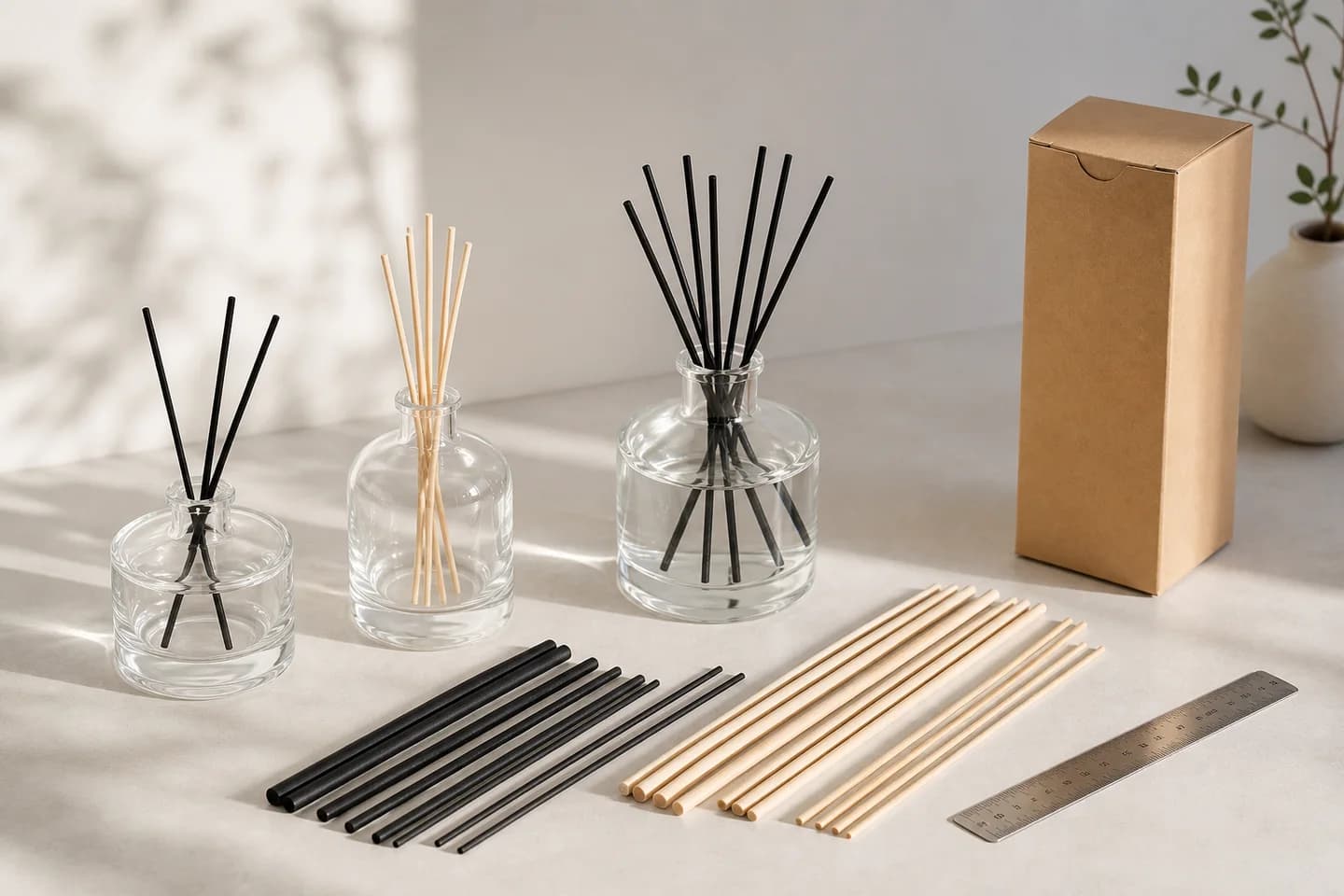
Quick answer: Reed diffuser sticks should be specified as part of the whole diffuser system, not as an afterthought. The practical choice depends on the bottle neck, liquid base, target scent strength, intended room, carton dimensions and retail look. Diameter influences how many sticks can sit comfortably in the neck and how much liquid reaches the exposed surface. Length changes visual proportion, shipping fit and how the sticks fan above the bottle. Fiber sticks can give a consistent, clean presentation, while rattan remains a natural option. The reliable route is to approve the final bottle, liquid, sticks and pack together.
Private label planning snapshot
- Choose by system: bottle neck, fragrance base, stick material, stick count and carton must work together.
- Samples: stock samples can be prepared in 1-3 days; custom samples usually take 7-14 days after the brief, fee and freight are confirmed.
- Production timing: bulk orders normally take 30-40 days after final sample approval and payment.
- Best first test: assess the finished diffuser after storage in its intended bottle and retail pack, not only an open fragrance oil.
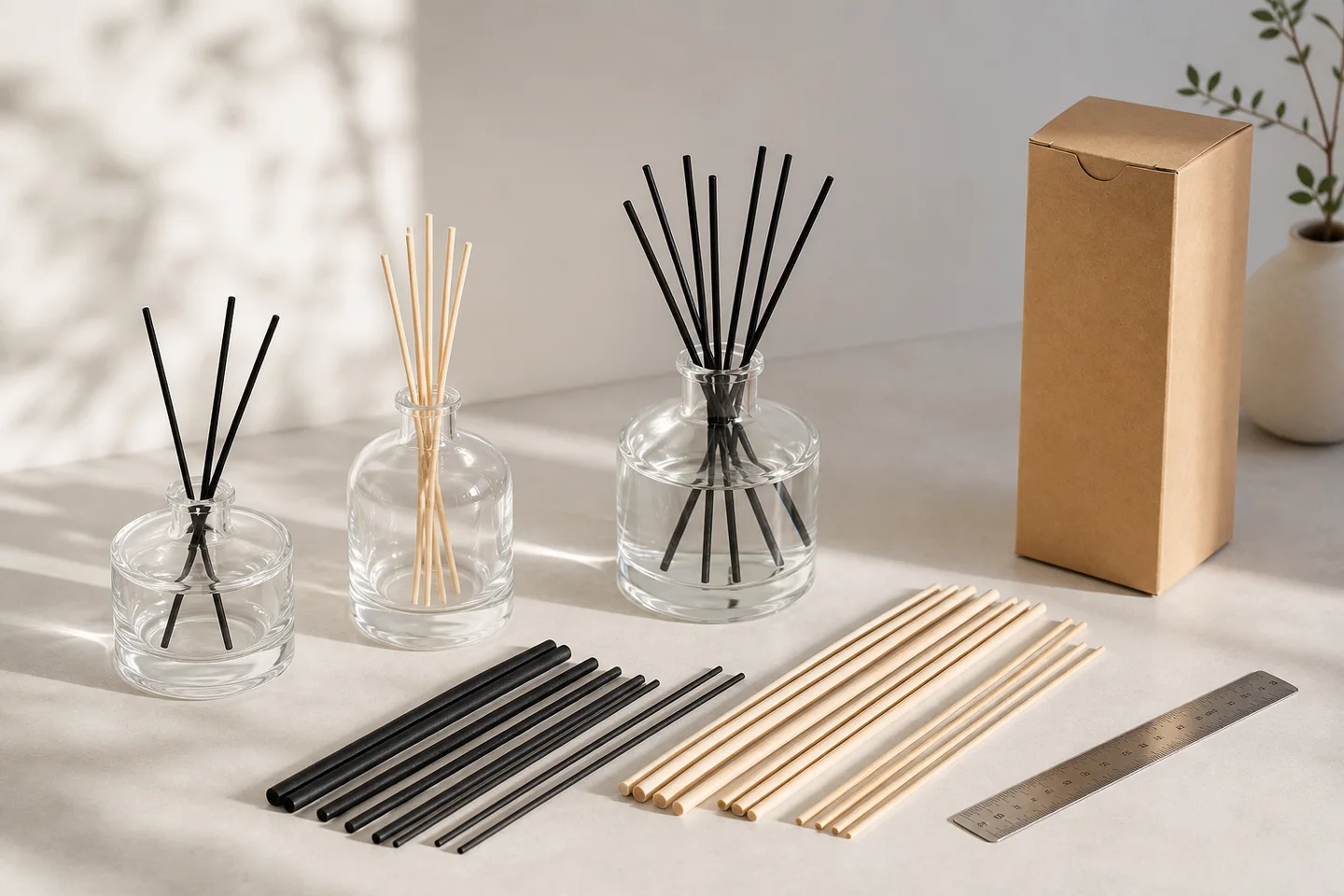
Why Reed Diffuser Stick Size Matters
A reed diffuser can look simple: a bottle, fragranced liquid and a bundle of sticks. In practice, each component affects the next. The bottle neck determines how the bundle sits. The liquid base and fragrance influence how reliably liquid moves through the sticks. Stick length and count affect the visual height, exposed surface and carton size. If one part changes late in development, the approved scent experience may change too.
For a private label buyer, this is useful because it changes the sourcing question. Instead of asking only for "black diffuser sticks" or "long reeds," send the bottle reference, fill volume, neck dimensions, scent direction, target market and packaging idea. That lets the supplier recommend a sensible sample combination rather than guessing from a product photo. Our diffuser stick portfolio shows the fiber and natural rattan directions that can be matched to a project.
This guide focuses on proportion, bottle matching and sample approval. For a deeper material comparison, read our separate fiber vs. rattan diffuser sticks guide.
Start With Four Inputs Before Choosing a Stick
1. Bottle neck and inner opening
Measure the usable inner opening, not only the outside neck. The chosen bundle needs enough space to sit naturally without being forced into a tight cluster. A crowded neck can make the diffuser look heavy, make stick replacement awkward and alter how the liquid contacts the bundle. A very open neck can be visually suitable, but it also changes the balance between exposed liquid surface and the reeds.
2. Bottle height, fill level and desired silhouette
Length is a design decision as well as a practical one. Short sticks can suit compact gift sets and lower bottles. Taller sticks can make a wider or taller vessel feel more balanced and visible on a shelf. The goal is not to make the sticks as long as possible. They should create an intentional fan above the bottle while still fitting the retail carton, master carton and shipping protection.
3. Fragrance base and expected use scene
One fragrance direction may behave differently in two bases or two stick constructions. A buyer should state whether the diffuser is intended for a small bedroom, bathroom, reception area, hospitality room or open living space. The desired impression matters: a quiet background scent and a stronger first-use throw do not need the same sampling plan. Test results, rather than a generic claim about a reed material, should decide the final set.
4. Retail pack and replenishment plan
Sticks may be packed loose, tied as a bundle, wrapped in paper, placed in a sleeve or protected inside an insert. The length must be checked against the inner carton height, and the bundle diameter should not crush the sticks or distort the box. If the brand will sell replacement reeds, the replacement pack should use the same approved specification and clear compatibility information.
Diameter: Balance Bottle Fit, Stick Count and Scent Release
Diameter is normally specified in millimetres, but a number alone is not a performance promise. A slimmer stick allows more individual sticks to fit through a smaller opening and can create a lighter visual fan. A thicker stick gives more visual presence and may suit a wider-neck bottle or a more substantial design. The result still depends on the material structure, number of sticks, formula and actual bottle geometry.
A useful sampling method is to compare two nearby diameter options with the same bottle, liquid, stick count and storage condition. This keeps the test focused. Changing diameter, length, material, count and fragrance base at the same time makes it difficult to know which factor caused the result.
| Project situation | What to check before approval |
|---|---|
| Narrow-neck or compact bottle | Bundle insertion, spacing, visual balance and whether the sticks can be removed cleanly. |
| Wide-neck statement bottle | Whether a larger bundle looks intentional, stays evenly arranged and matches the expected scent level. |
| Gift set or travel-friendly carton | Stick protection, carton fit, breakage risk and presentation after the consumer opens the pack. |
| Refill or replacement reed program | Compatibility with the original neck, labeling clarity and repeatable packing dimensions. |
Our fragrance expert says: "Do not approve a stick by holding it next to an empty bottle. Fill the exact vessel, insert the full intended bundle, close the final carton and check it again after storage. The finished system is what your buyer will receive."
Length: Match the Reed to Bottle Height and Carton
Length changes the character of a reed diffuser immediately. When sticks are too short for the vessel, the product can feel unfinished or visually compressed. When they are too long, they can dominate a small bottle, bend more easily in transit or require an unnecessarily tall carton. The best proportion is the one that looks balanced from the intended shelf distance and still fits production packing without stress.
Measure from the liquid contact point to the top of the reed, then compare the visible height above the neck with the bottle body. A square or low, wide bottle may need a different visual solution from a tall cylindrical bottle even when both use the same fill volume. Buyers should also confirm whether the carton holds sticks beside the bottle, above it, or in a separate sleeve. These choices change the usable length.
For a range with multiple bottle sizes, avoid assuming one reed length can serve every SKU. A coordinated collection can share material, colour and finish while using appropriately matched lengths for each bottle. This preserves the collection look without forcing poor proportions.
Fiber Stick Selection: Keep the Material Decision Practical
Fiber sticks are often chosen when the buyer wants a uniform diameter, a clean contemporary appearance or a consistent coloured bundle. They can be useful for minimalist packaging, black or coloured reed sets, hotel amenities and brand programs that need repeatable visual presentation across many units. Natural rattan can be the better visual fit when the collection emphasizes botanical, rustic or natural material cues.
The key is not to treat fiber as automatically stronger or rattan as automatically more natural. Both need to be tested with the final liquid. Ask to see the material, diameter, length, colour, cut quality, straightness and bundle packing. For dark sticks, also review whether the finished system stays visually clean with the fragrance liquid and bottle. For natural sticks, check colour variation and whether the retail look remains consistent across bundles.
Because diffusion performance is affected by the whole product, a sample should use the intended quantity of sticks. A test with a different count can overstate or understate the scent impression. If a buyer expects customers to turn the sticks, this instruction should be tested and written consistently for the retail market.

Approve the Bottle, Reeds and Packaging as One Sample Set
The right moment to approve a reed diffuser is after the final bottle, cap or collar, sticks, liquid and pack are assembled. A bottle without liquid does not show the real visual fill level. Reeds in an open sample bottle do not show what happens after sealed storage. A beautiful mock-up does not prove the carton protects the sticks. Bring the pieces together before the production decision.
Use a simple sample review sheet with the bottle SKU, inner neck opening, fill volume, reed material, diameter, length, count, colour, fragrance code, label revision and carton reference. Photograph the assembled sample from the front and side. This record helps prevent a seemingly small reed substitution from being missed when an order is repeated later.
Fragrance safety documentation is also tied to intended use. The IFRA Standards are a risk-management system for fragrance ingredients, while brands and manufacturers still need to assess the finished product and relevant local requirements. Keep the product claim, fragrance use and market documentation aligned before final artwork is printed.
A Focused Sample Checklist for Private Label Buyers
- Confirm the bottle: final bottle dimensions, usable inner neck opening, fill volume and closure parts.
- Choose two controlled reed options: for example, two nearby sizes or two material directions, while keeping other conditions the same.
- Check the full bundle: count, fan shape, ease of insertion, visible height and consumer handling.
- Assess scent and appearance after storage: check clarity, colour, bottle presentation and scent impression under the planned storage conditions.
- Check packaging: stick protection, carton height, insert fit, scuffing, empty space and opening experience.
- Record the approved configuration: preserve the reed specification with the bottle and fragrance reference for reorders.
There is no need to overcomplicate a first launch. A strong opening brief often starts with one bottle style, one or two fragrance directions, a defined packaging route and a small number of controlled reed samples. Add more finishes or replacement sets only after the core system has been approved.
Need help matching reeds to your bottle?
Send your bottle reference, fill volume, preferred stick appearance, scent direction, target market, packaging idea and project timing. LoyalCrafts can recommend a practical sample route and reply within 24 hours.
FAQ
What size reed diffuser sticks should I use?
Use a size that fits the usable bottle opening, looks balanced against the bottle height and fits the retail carton. The final choice should be sample-tested with the intended fragrance base, stick count and packaging.
Do thicker diffuser sticks make a stronger scent?
Not by themselves. Diameter can change the bundle and exposed surface, but scent performance also depends on material structure, number of sticks, fragrance base, bottle opening, room conditions and how the finished diffuser is used.
How long should reeds be compared with the bottle?
Choose a visible height that is proportionate to the vessel and still fits the carton safely. Check the assembled, filled bottle rather than comparing a loose reed with an empty container.
Should I choose fiber or rattan sticks for private label reed diffusers?
Choose by the desired appearance, material story, bottle design and performance in the final formula. Fiber can suit a uniform, contemporary or coloured look; rattan can suit a more natural visual direction. Both should be tested in the final system.
What information should I send before requesting reed diffuser samples?
Send the bottle photo or drawing, fill volume, usable neck opening, scent direction, target market, preferred reed look, packaging reference, quantity per SKU, artwork status, document needs and launch timing.
You May Also Like
- Private Label Reed Diffuser Portfolio
- Fiber and Rattan Diffuser Stick Portfolio
- Fiber vs. Rattan Diffuser Sticks
- How Long Do Reed Diffusers Last?
Summary
A reed diffuser stick size guide is most useful when it helps buyers approve a complete product system. Match diameter and length to the bottle, check the material with the final fragrance base, confirm the bundle count and retail carton, then keep a record of the approved configuration for repeat orders. This gives a private label collection a more intentional appearance and a more reliable sampling path.
LoyalCrafts supports private label reed diffuser projects with bottle, reed, fragrance, packaging and sample coordination. Send your bottle and packaging brief for a practical recommendation.