
Cover image: AI-generated editorial illustration of fragrance samples and document review; not an actual test or certification record.
Quick answer: Fragrance compliance documents should match the finished product, formula or material version, intended use and destination market. Before ordering, request a document register covering specifications, relevant safety and fragrance files, labels, test evidence, packaging and market responsibilities. Record what is available, what needs review and who will close each gap.
A folder of certificates can still leave a buyer without the file needed for a particular order. An English-language SDS might describe the fragrance concentrate rather than the finished diffuser. A transport report may cover a sachet, while the new shipment contains a liquid spray. Check the identity and scope before counting a document as complete.
This checklist helps private label buyers prepare a project review. Requirements depend on the product and market; use the responsible importer, cosmetic responsible person or qualified regulatory adviser for the decisions relevant to your order. Official sources below were checked on 30 September 2026.
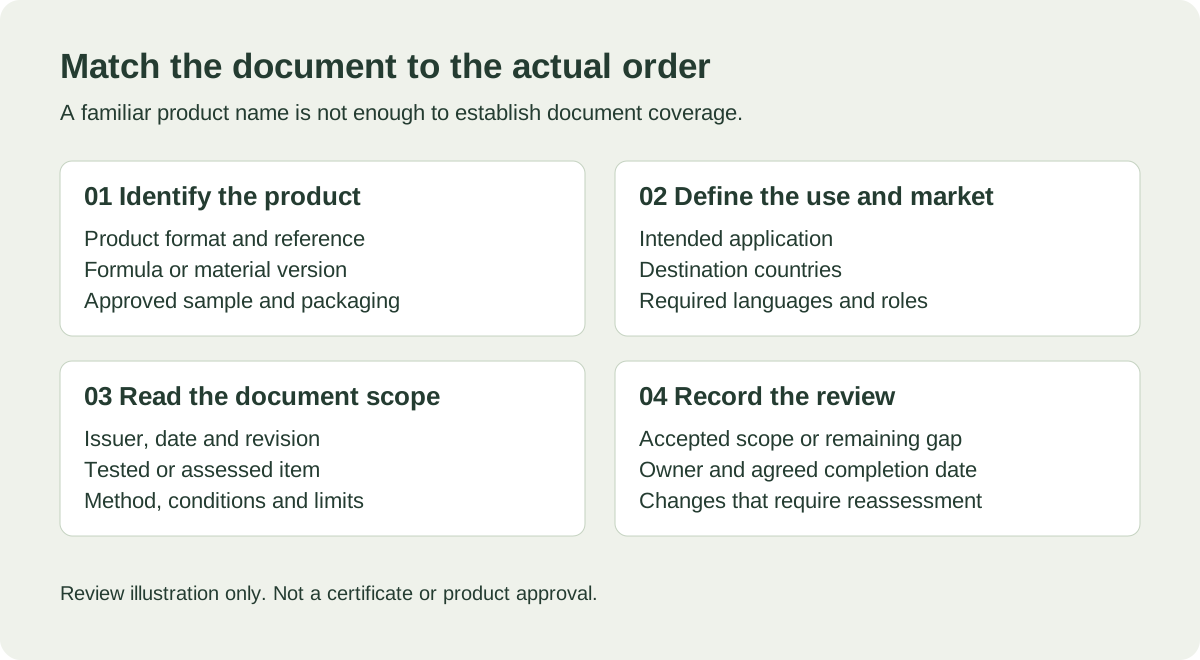
Match fragrance compliance documents to the order first
Create a short identity record before asking the supplier for files. The same fragrance name can appear in different formulas and product formats. A reference code and revision are more useful for document matching than the name alone.
- Product: item or sample reference, product format, intended use and any proposed claims.
- Composition or materials: finished-formula reference and fragrance version where relevant; substrate, wax, container or other component specifications.
- Market: countries of sale, required languages, sales channel and the responsible legal entities.
- Order version: approved sample, artwork revision, packaging specification and the production or batch reference when available.
Handle confidential composition information through the appropriate supplier and regulatory process. A buyer-facing checklist does not require publishing a formula or a customer's private records.
What each document can establish — and what it cannot replace
| File | What to check | Limit of the evidence |
|---|---|---|
| Product and packaging specification | Item reference, materials, dimensions, fill quantity, pack configuration and approved revision | A specification describes the order; it does not by itself demonstrate legal compliance or test performance. |
| IFRA Certificate of Conformity, where relevant | Fragrance-mixture reference, applicable Standards, intended-use category and stated limits | It supports a defined fragrance use. It is not a complete finished-product safety assessment or government approval. |
| Safety data sheet (SDS) | Product identity, supplier, revision, relevant market format, hazard classification and required language | A raw-material SDS does not automatically describe the finished mixture. A document named “MSDS” needs the same scope review. |
| Laboratory test report | Tested sample, method or standard, result, issue date and any stated limitations | A result supports the tested scope. It is not approval of every scent, colour, material or future production change. |
| Transport classification or appraisal | Exact goods, composition where relevant, transport mode, applicable rules and validity conditions | Shipping evidence does not replace consumer labelling, product safety or market-registration requirements. |
| Labels and artwork | Warnings, identity, responsible-business details, language, claims and any applicable identifiers | Graphic approval alone is not a regulatory assessment. Keep the reviewed version linked to the product. |
| Packaging technical documentation and declaration | Packaging unit, component evidence, responsible manufacturer and applicable PPWR requirements for EU projects | These concern packaging. An SDS or a national packaging-registration record does not replace them. |
Read IFRA documentation as intended-use evidence
The International Fragrance Association (IFRA) explains that Certificates of Conformity are prepared by fragrance-mixture suppliers, rather than issued by IFRA itself. The certificate addresses conformity with the Standards for identified uses. It does not replace a full safety assessment or the laws of the destination market.
When the fragrance is used in a candle, diffuser or body perfume, confirm the relevant category and conditions for that use. Do not assume that a document supporting one application approves every product carrying the same fragrance name.
Check the SDS format, mixture and language
An English SDS is not automatically an EU-market SDS. Compare its stated regulatory basis and product reference with the order, and confirm the language required by the destination country. SDS guidance from the European Chemicals Agency (ECHA) explains the role of safety data sheets under REACH. Whether a sheet is legally required, and to whom it must be supplied, depends on the applicable conditions.
A fragrance concentrate, finished diffuser liquid and scented substrate should not be treated as interchangeable identities. Have a competent person assess the finished product and prepare or review the relevant files. A previous supplier document can be an input to that work without being the final deliverable.
Check the regulatory route for the actual product
Use the product's intended function and composition, not its marketing name, to decide which route needs review.
| Product | Questions for the project review |
|---|---|
| Reed diffuser or room spray | What is the finished-mixture classification? Which SDS, CLP labels, transport assessment and packaging evidence apply? Is poison-centre notification required? |
| Scented candle | Which chemical-classification and labelling duties apply to the finished candle? What burn-safety and container or packaging checks are needed for the design and market? |
| Scented sachet or card | What is the regulatory status of the scented material and construction? Which fragrance-use, labelling, containment and transport evidence matches it? |
| Body perfume or body mist | Does it fall within cosmetics legislation? For an EU cosmetic, who is the responsible person and who handles the safety assessment, product information file and notification? |
For EU hazardous mixtures, check PCN and UFI separately
Poison-centre notification (PCN) generally concerns in-scope mixtures classified for human-health or physical hazards. A mixture classified only for environmental hazards does not fall within that obligation on that basis; other duties can still apply. Product exclusions also matter. Use ECHA's explanation of who must notify to check the actual case.
A Unique Formula Identifier (UFI) printed on a label does not establish that a valid notification has been submitted. ECHA's UFI guidance explains the connection between composition, notification and the identifier. Match the label to the appropriate finished-mixture information and required submission; do not simply copy a raw-fragrance identifier onto a new finished product.
For EU cosmetics, confirm the responsible-person process
Where a body fragrance is an EU cosmetic, the EU cosmetics framework includes a responsible person, a cosmetic product safety assessment and report, a product information file and notification through CPNP. Notification is not a product approval. A home-fragrance document pack should not be reused as a substitute for this process.
Build a document register before paying a deposit
A simple register makes an incomplete file set visible. Use “available for review”, “needs update”, “needs new assessment” or “not applicable — reason recorded”. Reserve “accepted for this order” for a completed review.
| Field | What the buyer records |
|---|---|
| Document and revision | File name, issuer or preparer, document reference and issue or revision date |
| Order match | Covered product, formula or material version, intended use, packaging and market |
| Coverage and gaps | Requirement supported; unresolved mismatch, test, translation or missing evidence |
| Owner, cost and timing | Who prepares, supplies and reviews it; what is included in the quotation; agreed completion date |
| Review decision | Reviewer, outcome, approved artwork or sample link, and changes that trigger another review |
Agree which files must be accepted before sample approval, printing, shipment or market placement. These are project milestones, not interchangeable legal deadlines. If the formula, wick, substrate, closure or supplier changes, review which evidence is affected before using the earlier approval.
What to confirm with LoyalCrafts
LoyalCrafts has existing SDS/MSDS files and transport assessment records for some product types. Their availability does not mean that every new fragrance, formula, packaging choice or destination is already covered. Ask us to match the relevant existing records to your project and identify anything that needs updating or additional work.
Include your product reference, intended use, destination countries, requested languages and retailer requirements. Confirm in writing which documents can be supplied, which need third-party work, which depend on buyer-side arrangements, and the agreed cost and timing. IFRA documentation for the selected fragrance and intended use should also be confirmed for the specific project.
Start with our product portfolio, use the EU PPWR packaging procurement checklist for the packaging review, or send your product and document brief. This gives both sides a defined file list before production decisions are made.
Common questions about fragrance compliance documents
Does an IFRA certificate mean a product is approved for sale?
No. It addresses conformity with IFRA Standards for the fragrance mixture and the specified uses. It does not replace the finished-product safety assessment, market-specific legislation or other applicable documentation. Match the fragrance reference and intended use, then review the remaining product and market obligations separately.
Can an old test report be used for a new order?
Possibly, if its tested sample and scope still support the new order and applicable requirements. Check product identity, material or formula changes, the method, stated limitations and any validity conditions. The age of the file alone does not establish either that it has expired or that it remains sufficient.
Does a transport appraisal prove that a fragrance is safe for consumers?
No. A transport appraisal answers a shipping-classification question within its stated scope and conditions. Consumer use, chemical labelling, cosmetic safety where relevant, and packaging requirements require their own review. Confirm the product and transport mode before relying on the report for a particular shipment.
Does factory certification cover every finished product?
No. A management-system certificate or factory audit concerns its stated organisation, site and audit scope. It does not automatically establish the conformity of a particular finished fragrance product, formula or package. Request product-specific evidence as needed and verify the status and scope of any organisational certificate separately.