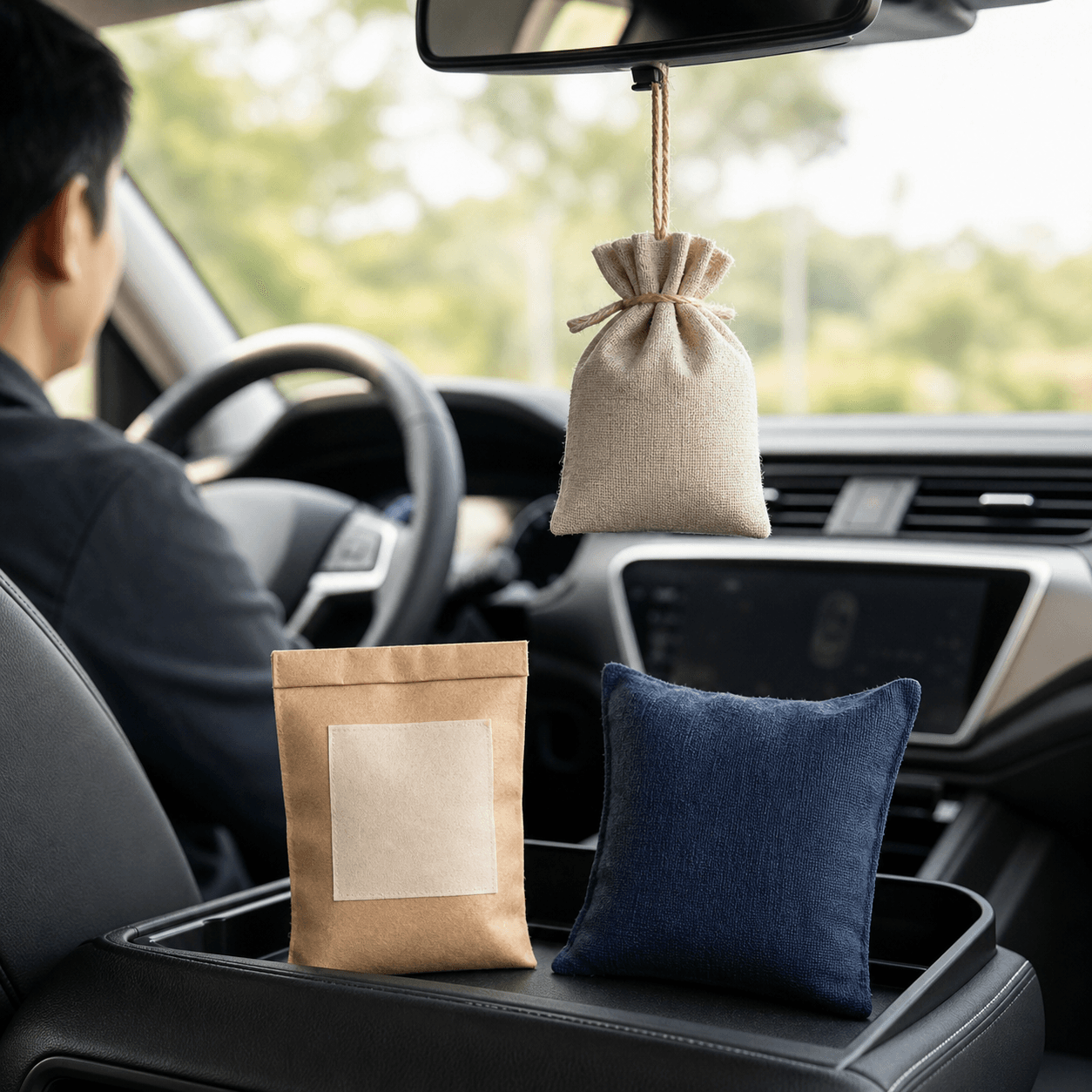
Quick answer: An in-car deodorizing sachet OEM project is not only a choice of fragrance. Buyers need to match the carrier material, pouch construction, fragrance load, placement method, barrier packaging, and intended market before approving samples. A small fabric or paper sachet can make a car feel fresher, but a reliable private label product must also stay clean in a warm cabin, avoid leaking or staining, fit the intended placement, and arrive with clear packaging and practical instructions.
Buyer Planning Snapshot
- Main keyword: in-car deodorizing sachet OEM.
- Common formats: hanging linen sachets, fabric pouches for a console or seat pocket, paper sachets, and sealed refill packs.
- Sample policy: in-stock samples are normally prepared in 1-3 days with freight paid by the buyer; custom samples usually take 7-14 days after the brief, sample fee, and freight are confirmed.
- Bulk timing: normally 30-40 days after final sample approval and payment.
- Most important approval: test the fragrance in the final carrier and final retail pack, not only from an open fragrance bottle.
What Is an In-Car Deodorizing Sachet?
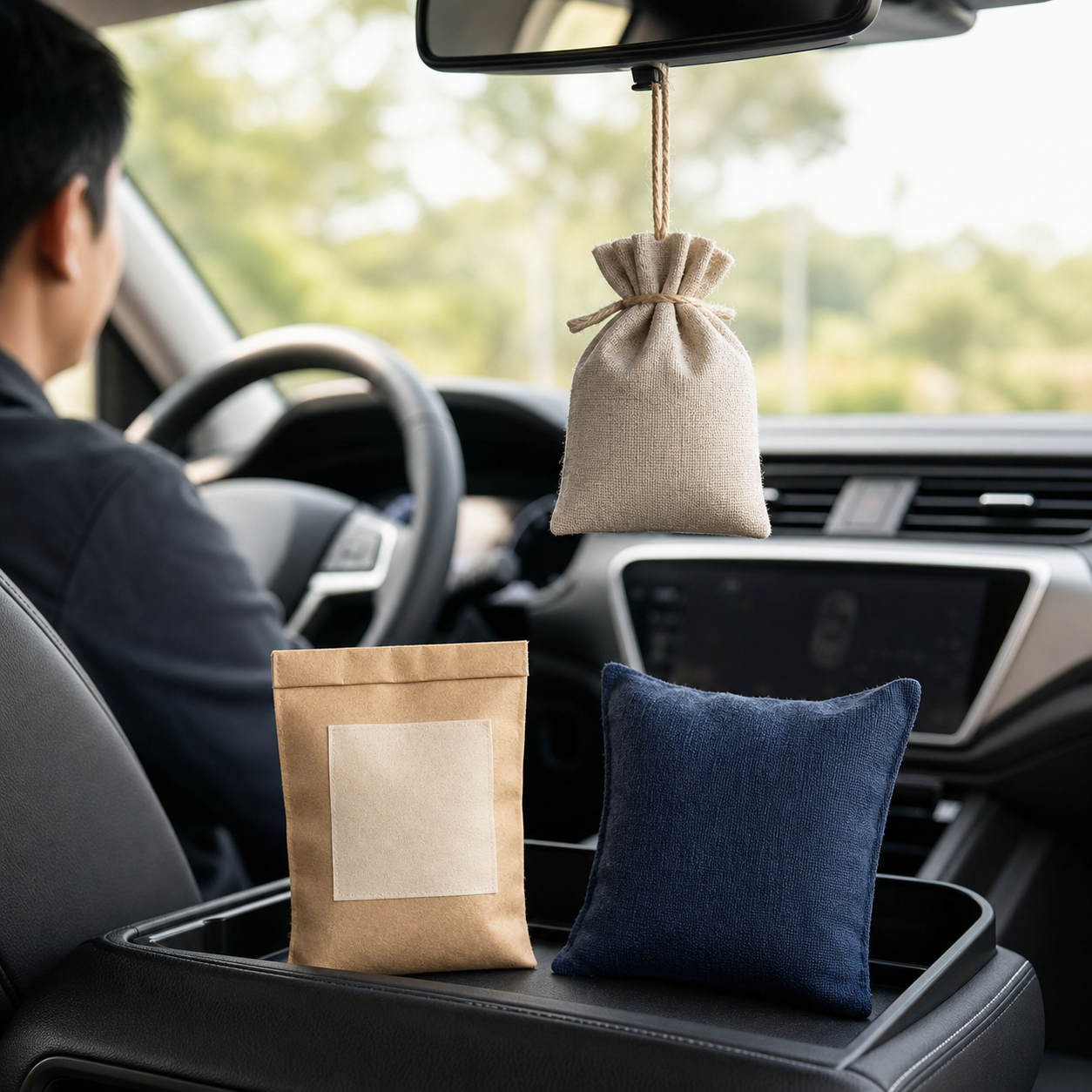
An in-car deodorizing sachet is a compact fragrance product designed for a vehicle interior. It may hang from a rear-view mirror, sit in a center-console compartment, rest in a door pocket, tuck under a seat, or be supplied as a sealed retail refill. The outer pack can be fabric, linen-look textile, nonwoven material, paper, or a laminated pouch. Inside, the fragrance can be carried by beads, porous granules, paper, a fragranced pad, fiber, or another dry carrier selected for the product design.
For B2B buyers, the word deodorizing needs careful use. A sachet can be positioned around fragrance and freshness in a car interior. It should not automatically be described as killing bacteria, removing allergens, preventing mold, or solving a persistent vehicle odor source. Those claims can create a different product and labeling review. A safer brief states the intended scene, such as a hanging car freshness sachet, a glove-box fragrance pouch, or a car-care gift-set item, then tests the final consumer wording before printing.
This format belongs in a broader custom car air freshener OEM program. A buyer may launch one sachet first, then add a car vent diffuser, a hanging liquid bottle, or a scented paper card under the same scent family and artwork direction.
Choose the Material System Before Choosing the Artwork
A good product image may make every sachet look simple, but the material system controls how the product feels, releases fragrance, travels, and survives handling. The best route depends on whether the sachet is decorative, hidden in storage, hung in view, or sold as a low-profile refill.
| Material Route | Best Use in a Car | Buyer Advantage | Checks Before Approval |
|---|---|---|---|
| Linen-look or fabric pouch | Hanging item, console pouch, gift set | Soft premium feel and room for ribbon, tag, label, or embroidery | Seam strength, filling leakage, oil migration, cord pull, fabric staining |
| Nonwoven pouch | Value retail, car wash, service giveaway | Lightweight and practical for printed or heat-sealed packs | Texture, heat seal, dust control, pouch stiffness, scent release |
| Paper sachet or scented card pack | Flat refill, visor pocket, promotional insert | Efficient packing, strong print surface, low-profile retail presentation | Oil marks, curl, pouch barrier, die-cut strength, print rub |
| Beads, granules, fiber, or fragranced pad inside a pouch | Textile sachet or sealed car-care refill | Allows different hand feel, scent profile, and product weight | Carrier consistency, dust, fragrance retention, leakage, pack compatibility |
There is no universally best filling. Beads can look tidy in a visible fabric pouch. Porous granules may suit a soft sachet when particle control is good. A fragranced pad can make a flatter item possible. Paper can be a practical route when the product should be compact and highly printable. The decision should be made from final-use testing rather than a generic material name.
Our fragrance expert says: "For a vehicle sachet, start with the user touchpoint. If the consumer sees it every day, the pouch must look good and feel clean. If it stays in a glove box or under a seat, packaging protection and scent retention can matter more than decoration."
Fragrance Load: Stronger Is Not Always Better
Vehicle interiors are compact, warm, and often exposed to direct sunlight. A fragrance that feels pleasant in a large showroom can become heavy in a closed car. For this reason, fragrance loading should be tested at the intended pouch size, carrier weight, and retail pack. The buyer should approve the product after it has been sealed, stored, opened, and placed in a vehicle-like environment.
Fresh citrus, tea, marine, linen, soft musk, light woods, and clean herbal directions are often easier to live with in a small cabin than dense gourmand or extremely sweet profiles. This is a design preference, not a universal rule: the target market, season, and brand position still matter. The key is to compare several scent directions in the actual carrier, because a dry pouch, a paper substrate, and a bead filling will release the same fragrance differently.
Ask the supplier to record the carrier type, fill weight, fragrance direction, pouch size, outer pack, and test date for each sample. That makes the final choice reproducible. It also prevents a common sourcing mistake: approving a loose scent strip, then expecting exactly the same impression from a sealed car sachet months later.
Placement and Hanging Design Change the Product Brief
Before selecting a pouch shape, decide where the product will be used. A rear-view-mirror sachet needs a cord or loop that is strong, balanced, and short enough not to interfere with driving visibility. A console pouch needs a compact size and clean surface that will not snag. A glove-box or seat-pocket sachet may use a flatter sealed pack. A multi-sachet car-care set may benefit from individual barrier pouches inside a printed carton.
For hanging designs, test the knot, cord, eyelet, hang hole, and pouch weight together. A decorative ribbon may look attractive in a product photo but pull loose after warm storage or repeated movement. For loose placement, consider whether the pouch can slide, create noise, or contact sensitive surfaces. Practical instructions should tell the consumer where to place the item and when to remove it if the pouch is damaged.
Buyers who want a visible automotive accessory may also compare a textile sachet with the hanging styles on our car diffuser portfolio. The appearance is different, but the same planning questions apply: scent direction, safe placement, packaging protection, and the intended price level.
Packaging Protects the Scent Before It Reaches the Car
For a fragranced sachet, packaging is not a final decoration step. It controls scent retention before opening, protects the product from dust and moisture, separates scent from other goods in transit, and gives the buyer space for artwork and instructions. A pouch that smells good on the factory table can disappoint at retail if the outer bag lets fragrance fade too quickly.
A practical packaging brief normally covers the inner barrier pouch, outer card or carton, retail count, barcode area, batch code area, directions, warning space, and shipping carton. If the sachet is supplied as a hanging product, check whether the sealed pack lets customers see the pouch without weakening protection. If the item is a refill, the retail pack can be simpler, but the seal still needs to protect the product until first use.

MOQ and Sampling: Quote the Final Combination, Not a Generic Sachet
MOQ is useful for order planning, but it should not be treated as a single number for every in-car sachet. A textile pouch, a flat paper sachet, a special printed bag, a ribbon, a box, and multiple fragrances can each change the practical minimum. For a custom textile car sachet, LoyalCrafts commonly plans from a 1,000-unit reference; a paper-based or highly customized pack may follow a different minimum. The confirmed quantity should always be tied to the final material, scent, decoration, packaging, and SKU split.
For a first order, reduce variables where possible. Use an available pouch shape, select one or two fragrance directions, choose a proven outer pack, and keep the artwork treatment clear. A smaller set of well-tested variations is usually easier to sample, quote, ship, and reorder than a large launch with too many minor changes.
In-stock samples are free at LoyalCrafts and normally prepared in 1-3 days, while the buyer pays freight. Custom samples normally take 7-14 days once the design brief, sampling fee, and freight are confirmed. The sampling fee can be refunded after the final production order is placed. Bulk production is normally 30-40 days after final sample approval and payment.
Quality Checks for an In-Car Sachet OEM Order
A buyer should approve a sealed golden sample before mass production. The check should cover the complete product, not only the fragrance. For a fabric or linen pouch, inspect fill weight, seam strength, loose threads, cord pull, filling leakage, oil migration, and color consistency. For a paper item, inspect print, die-cut edges, string hole strength, pouch seal, and oil marks. For every format, check scent after storage in the final barrier pouch.
- Compare the approved scent direction after the product has remained sealed for several days.
- Check pouch seams, heat seals, cords, hang holes, and ribbon attachments under normal handling.
- Verify that the filling does not leak, create visible dust, or stain the pouch or retail packaging.
- Review pack count, label panel, barcode area, directions, batch code space, and shipping carton protection.
- Test the product for the expected car environment, including warmth, movement, and the intended placement method.
Documentation and Claim Control
Document needs depend on the material, fragrance, target market, customer, and product claims. Buyers should describe the intended use and destination market early, then ask which product specifications, packing details, safety information, and fragrance documents can support the project. The IFRA Standards are a fragrance safety risk-management system that suppliers and buyers commonly reference when discussing a fragrance mixture for a specified intended use. They do not replace all finished-product, label, transport, or local market obligations.
Use claims that can be supported by the final product. "Adds a fresh scent to the car" or "for car interiors" is a different statement from antimicrobial, mold-control, allergy, or health claims. Conservative language reduces avoidable artwork changes and lets the product team focus on the customer experience: a pleasant scent, practical placement, and a neat retail pack.
Example: A Simple Car-Care Sachet Launch
A car-accessory buyer wants a small private label product for convenience-store counters and online bundles. The first brief asks for five scents, two pouch shapes, a ribbon, a gift box, and a custom display. That can be workable, but it is a lot to approve before the buyer knows which scent and placement consumers prefer.
A more practical first launch uses one fabric hanging sachet, two clean scent directions, a neutral sealed pouch, and a printed outer card. The buyer approves the sealed samples in a warm-car trial, then decides whether to add a flat refill pouch or a matching scented paper card. The result is a clearer price ladder and fewer moving parts in the first production order.
Planning an in-car deodorizing sachet project?
Send the placement method, pouch material, scent direction, target market, quantity per SKU, packaging reference, and launch timing. LoyalCrafts can recommend a practical sample route and reply within 24 hours.
FAQ
What materials are used for in-car deodorizing sachets?
Common outer materials include linen-look fabric, nonwoven material, paper, and laminated pouches. The inside may use fragrance beads, porous granules, a fragranced pad, paper, fiber, or another dry carrier. The best system depends on placement, scent target, hand feel, packaging, and testing results.
What is the MOQ for custom in-car deodorizing sachets?
There is no one MOQ for every design. At LoyalCrafts, a custom textile car sachet commonly starts from a 1,000-unit reference, while paper formats, special packaging, artwork, and SKU splits can change the practical minimum. Confirm the quantity against the final specification.
How should a car sachet be packaged?
Use a barrier pouch that protects fragrance before opening, then add an outer card, carton, or display pack as needed. Approve the complete packaging system with the final sachet because scent retention, oil migration, visibility, and shipping protection are all affected by the pack.
Which fragrance direction is best for a vehicle sachet?
Clean citrus, tea, marine, linen, soft musk, light woods, and gentle herbal profiles are often comfortable in an enclosed vehicle. The final choice should be tested in the finished carrier and pouch because heat and material can change how a scent is perceived.
Can an in-car sachet be hung from a rear-view mirror?
Yes, when the cord, pouch size, and product weight are designed for hanging and do not interfere with driving visibility. The sample should be checked for cord strength, knot security, swing, and placement instructions before production.
What should I send before asking for a quotation?
Send the preferred placement, pouch material, scent direction, target market, quantity per SKU, packaging reference, artwork status, document needs, and launch timing. This lets the supplier recommend a realistic sample and production plan.
You May Also Like
- Custom Car Air Freshener Manufacturer
- Car Diffuser Portfolio
- Car Vent Diffuser Portfolio
- Car Air Freshener OEM Cost Comparison
Summary
An in-car deodorizing sachet works best when it is developed as a complete system: the final carrier, pouch, fragrance load, placement, barrier pack, and claim language all need to fit together. Start with a clear use scene, test the finished sample in the intended pack, keep the first SKU plan manageable, and confirm the exact order terms only after the product specification is agreed.
LoyalCrafts supports private label car fragrance projects with fabric and paper sachet options, scent direction, packaging support, sampling, and production planning. Send your in-car sachet brief for a practical OEM recommendation.