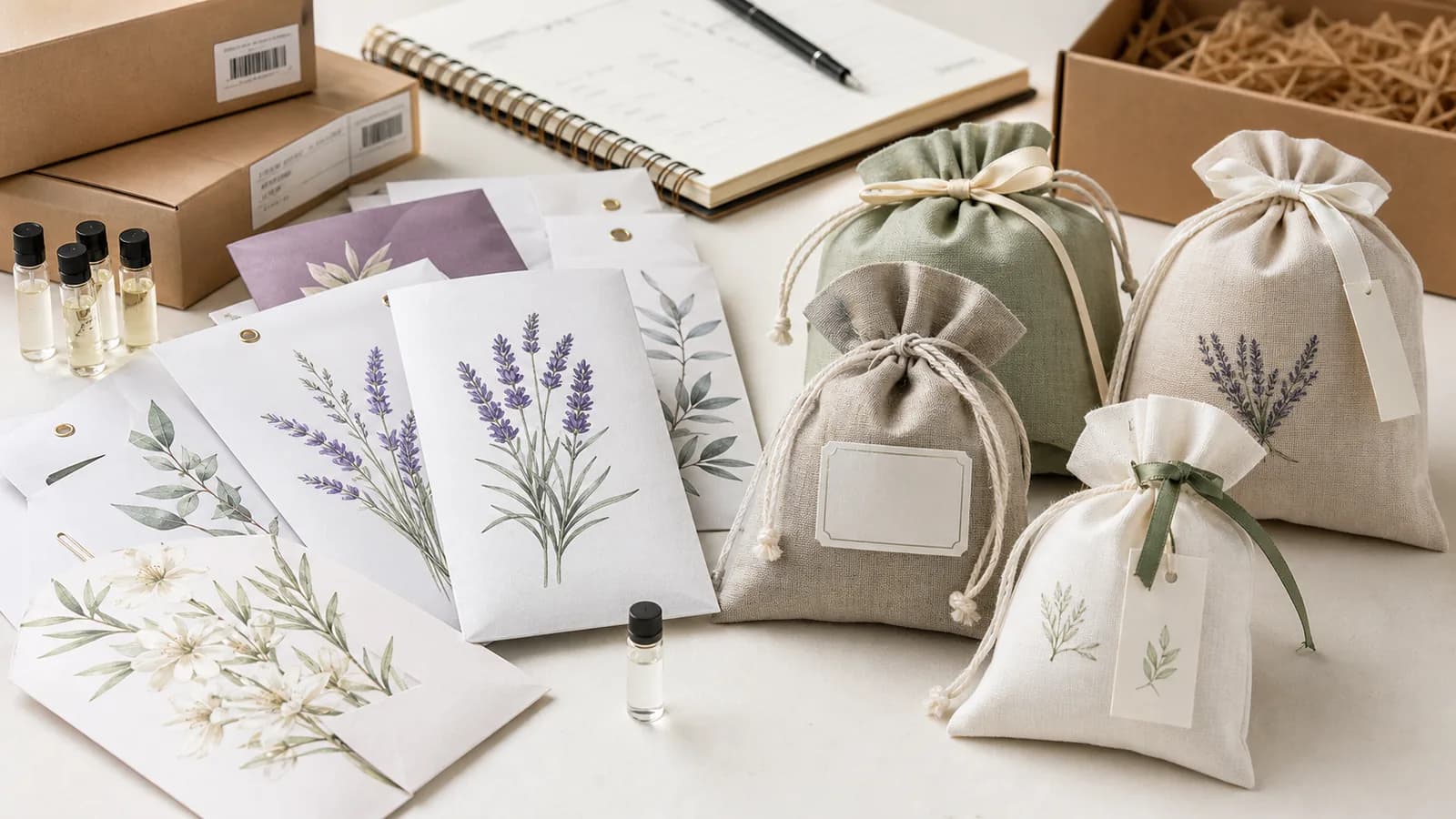
Quick answer: Paper vs fabric scented sachets is mainly a decision about channel, packaging feel, cost structure, and use case. Paper scented sachets are usually stronger for flat retail packs, multipacks, mailers, subscription boxes, and value-focused drawer fragrance programs. Fabric scented sachets are usually stronger for gift sets, wardrobes, hotel amenities, home textile brands, and premium closet-care lines. At LoyalCrafts, custom scented paper sachets start from 3,000 units, while custom scented linen sachets start from 1,000 units. Final quotation still depends on scent, size, material, print, filling, packaging, and SKU split.
Sachet Sourcing Snapshot
- Primary keyword: paper vs fabric scented sachets.
- Best paper fit: low-weight multipacks, drawer sachets, printed retail cards, wardrobe fresheners, and promotional fragrance inserts.
- Best fabric fit: linen sachets, cotton pouches, organza gift sachets, hotel wardrobe amenities, and premium closet-care bundles.
- Custom MOQ reference: paper sachets from 3,000 units; linen sachets from 1,000 units, confirmed by specification.
- Sample timing: stock samples 1-3 days; custom samples usually 7-14 days after brief and sample cost are confirmed.
- Bulk lead time: normally 30-40 days after sample approval and payment.
What Are Paper and Fabric Scented Sachets?
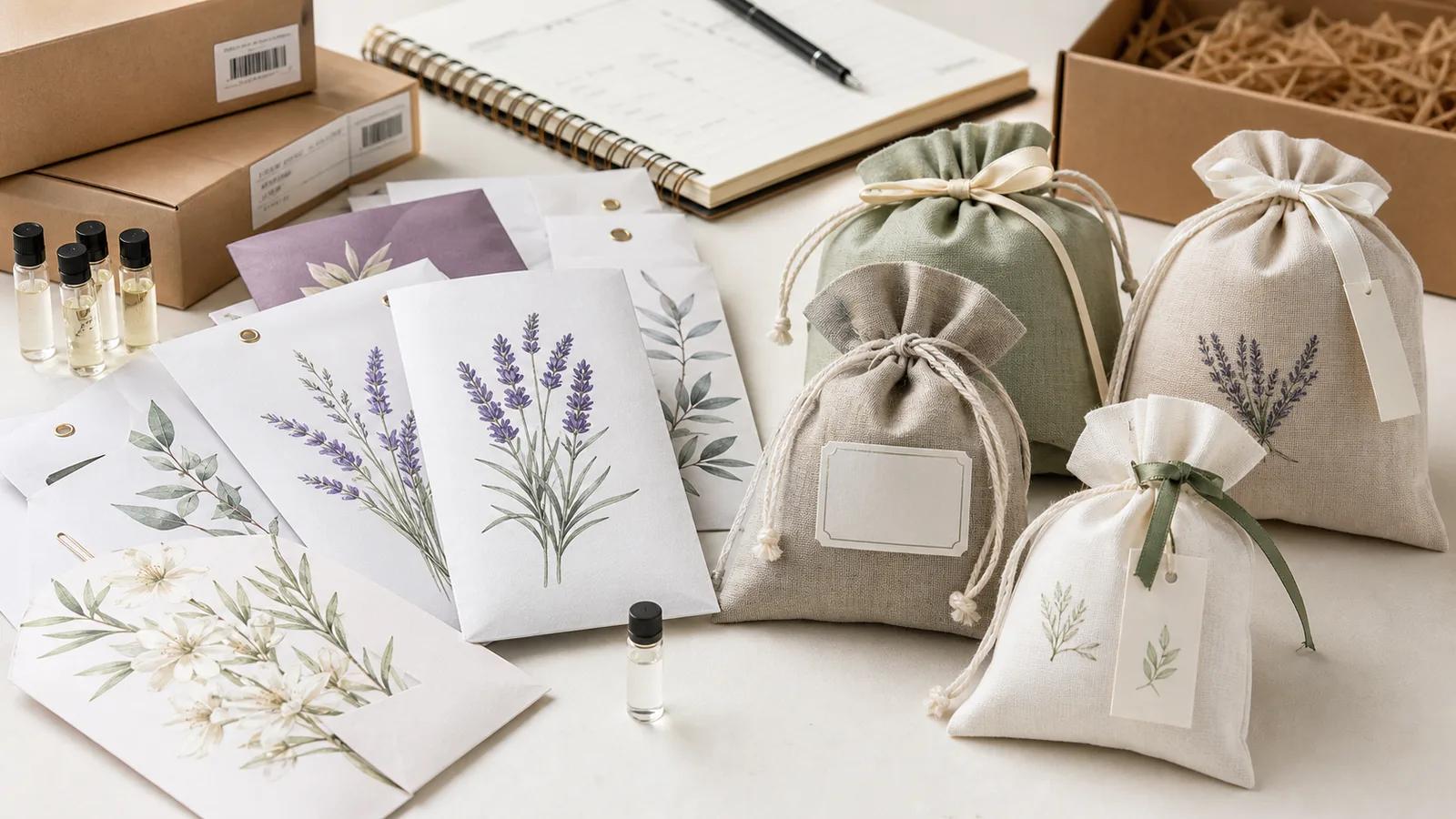
A scented sachet is a small fragrance carrier placed in drawers, wardrobes, closets, luggage, shoes, gift boxes, cars, or storage areas. The outer format may be printed paper, non-woven material, linen, cotton, organza, or another breathable pouch material. The inside may use fragrance-infused paper, scented beads, vermiculite, aroma powder, botanical filler, or another carrier selected for the target scent life and product feel.
For B2B buyers, the important point is that "sachet" is not one fixed product. A flat paper sachet sold in a supermarket multipack has a different cost logic from a drawstring linen pouch used in a hotel wardrobe. Both can carry fragrance, but the material, artwork, sealing method, filling process, packing labor, and retail story are different.
That is why a sourcing brief should compare paper and fabric formats by use case first, then by cost. A very cheap fabric pouch may still be wrong for a mailer because it is bulky. A beautiful printed paper sachet may still feel too simple for a luxury bedding brand. The right choice is the one that matches the buyer's channel and customer expectation.
Paper vs Fabric Scented Sachets: The Buyer Comparison
| Decision Point | Paper Scented Sachets | Fabric Scented Sachets |
|---|---|---|
| Typical custom MOQ | From 3,000 units at LoyalCrafts, depending on print, scent and pack. | Linen sachets from 1,000 units at LoyalCrafts; other fabric formats depend on material and decoration. |
| Packaging cost driver | Paper stock, printing, lamination, sealing, fragrance carrier, and outer pouch or carton. | Fabric, cutting, sewing, filling, ribbon, embroidery or label, hang tag, and labor. |
| Best retail use | Drawer multipacks, wardrobe packs, online bundles, mailers, and promotional inserts. | Gift sets, closet pouches, hotel amenities, home textile programs, and premium sachet refills. |
| Branding strength | Large printable surface for artwork, scent name, barcode, claims, and instructions. | Tactile feel, ribbon color, woven label, hang tag, embroidery, and reusable pouch impression. |
| Main risk to test | Seal quality, scent retention, paper oil staining, print durability, and pouch barrier. | Fragrance transfer, seam strength, dust leakage, fabric color stability, and scent uniformity. |
When Paper Scented Sachets Are the Better Choice
Choose paper scented sachets when the buyer needs a slim, efficient, print-heavy product. Paper works well for supermarket pegs, dollar stores, lifestyle retail multipacks, online refill packs, sample mailers, drawer sachets, and seasonal fragrance drops. The flat shape makes carton packing easier, and the broad printable surface helps brands explain scent, use scene, warnings, barcode, and replacement guidance.
Paper is also practical when a brand wants several scent stories without developing many physical components. A buyer can keep the same sachet dimensions and update color, botanical illustration, scent name, and outer bag. This makes paper sachets useful for seasonal sets such as lavender closet care, cotton linen freshness, rose wardrobe sachets, or cedar drawer fresheners.
The tradeoff is tactile value. A paper sachet can look clean and polished, but it does not feel as soft or giftable as fabric. If the buyer sells bedding, luxury laundry care, boutique hotel amenities, or premium home decor, paper may need stronger outer packaging to avoid looking too functional.
For product details, see the scented paper sachet portfolio. If you are building a broader wardrobe range, the scented sachet manufacturer page also summarizes paper and fabric options.
When Fabric Scented Sachets Are the Better Choice
Choose fabric scented sachets when the product needs a warmer, more decorative, more tactile impression. Linen, cotton, organza, and non-woven pouches are common in closets, wardrobes, luggage, guest rooms, spa gifts, wedding favors, and home textile packaging. The pouch itself becomes part of the experience: the customer sees the drawstring, touches the fabric, and often expects a softer scent profile.
Fabric is especially strong when the sachet sits close to clothes or towels. A linen-look pouch can feel natural and home-friendly. A translucent organza bag can show botanical filler or scented beads. A cotton pouch can carry a woven label, simple print, or hang tag. For gift companies, a fabric sachet can be packed with candles, reed diffusers, drawer liners, soaps, or body perfume as a small add-on that raises perceived value.
The tradeoff is production complexity. Fabric may require cutting, stitching, filling, closing, ribbon work, hang tag tying, and more manual packing. Even when the unit material is simple, labor and consistency checks matter. Buyers should confirm fabric weight, seam strength, filling weight, dust control, and whether the fragrance can transfer to delicate textiles.
For examples, review the scented linen sachet portfolio. Fabric sachets also pair well with scented drawer liners in a closet-care or hotel amenity set.
Packaging Cost: What Actually Changes the Price?
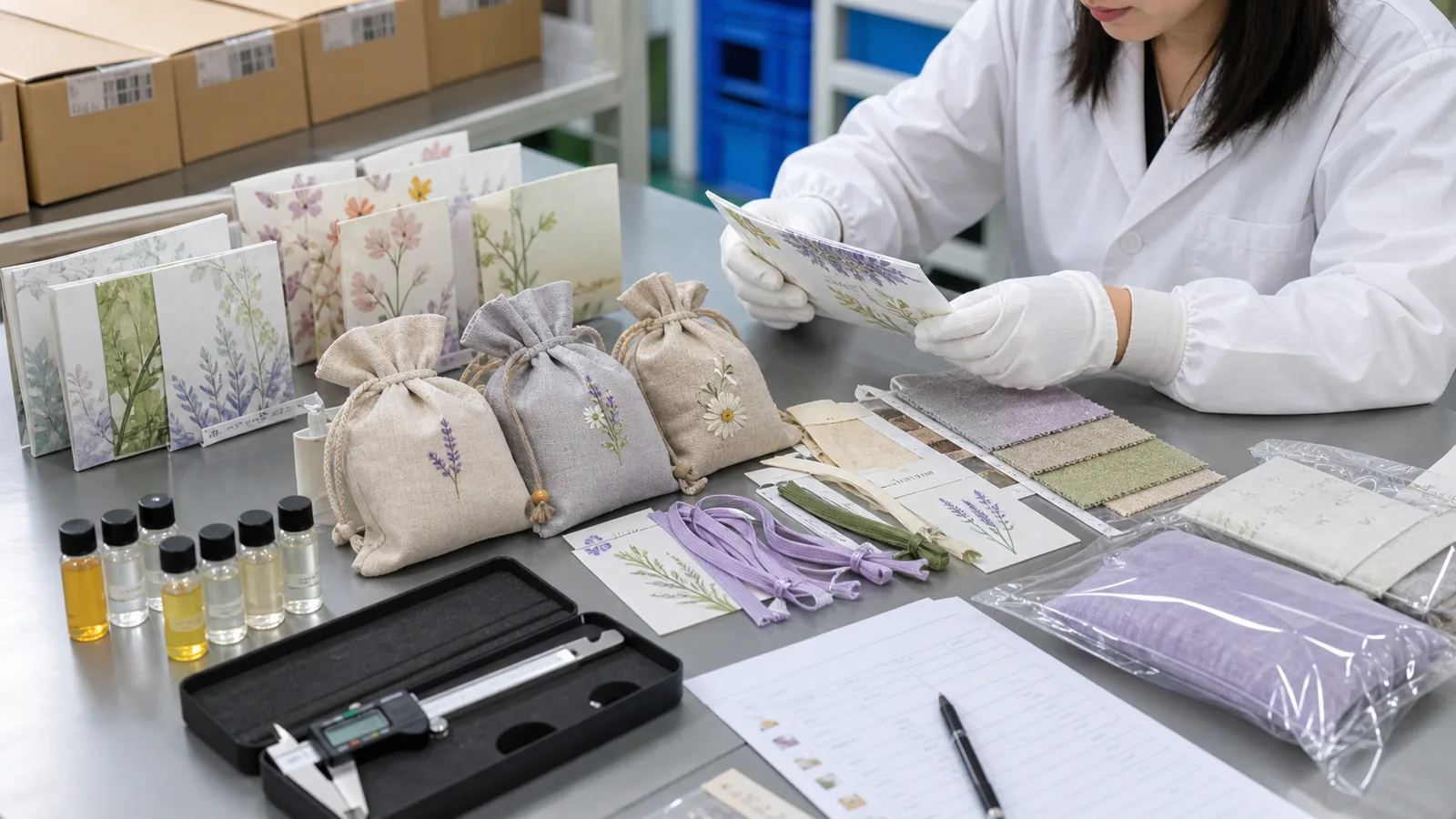
Packaging cost is rarely about one material alone. A paper sachet may be cheaper than a fabric pouch in simple form, but a complex paper project with metallic print, individual barrier pouches, display cartons, barcode labels, and multi-scent sorting can become more expensive than expected. A fabric sachet may look premium, but a plain pouch with a stock ribbon and shared hang tag can stay practical for mid-volume buyers.
For paper sachets, the main cost drivers are paper stock, size, print colors, surface finish, sealing method, fragrance carrier, fill weight, inner barrier pouch, outer carton, and display packing. Buyers should ask whether the fragrance is applied to the carrier, sealed in a pouch, or held inside a separate inner substrate. This affects scent life, oil migration, and shelf presentation.
For fabric sachets, cost changes with fabric type, pouch size, cutting method, sewing quality, ribbon or cord, label, embroidery, hang tag, filling material, and packing method. Small decorative changes can create labor cost. For example, tying a ribbon, adding a metal eyelet, or attaching a tag may look small in the design file, but it can affect production time across thousands of units.
A useful RFQ should ask for at least two versions: a cost-efficient version and a brand-enhanced version. This lets the buyer compare what the upgrade actually buys: better scent life, nicer fabric, better artwork, stronger outer pack, or simply decoration that does not affect performance.
MOQ: Use It as a Planning Number, Not a Promise
MOQ matters because it affects component purchasing, print setup, filling efficiency, and SKU planning. But it should not be treated as a universal claim across all scented sachets. The same buyer may order paper sachets, linen sachets, organza pouches, drawer liners, and gift boxes in one program, and each line can carry a different production logic.
At LoyalCrafts, the practical custom MOQ reference is straightforward: custom scented paper sachets start from 3,000 units, and custom scented linen sachets start from 1,000 units. If a buyer adds special fabric, embroidery, unusual pouch shape, multiple scent splits, display cartons, or retailer-specific packing, the final plan may need to be reviewed again. This avoids the common mistake of comparing two quotations that are not based on the same SKU structure.
Our fragrance expert says: "For sachet projects, MOQ is only useful when it is tied to the exact SKU. One scent in one standard pouch is different from five scents, five labels, two carton languages, and a display tray."
Best Use Cases by Buyer Type
1. Supermarkets and Value Retailers
Paper sachets usually work better here. They are slim, clear, easy to hang or pack, and suitable for multi-scent value packs. The front can show scent name, usage scene, and barcode clearly. Buyers should focus on shelf clarity, pouch sealing, carton efficiency, and honest scent-duration wording.
2. Home Textile and Laundry Brands
Fabric sachets often feel more aligned with bedding, towels, closets, and laundry care. A linen or cotton pouch can sit naturally beside fabric softeners, laundry perfumes, drawer liners, or wardrobe organizers. The fragrance should be soft, clean, and textile-friendly in positioning, with transfer testing before final approval.
3. Hotels, Spas and Hospitality Buyers
Fabric sachets are strong for visible guest-room details: wardrobe hangers, drawers, spa lockers, amenity boxes, and turndown gifts. Paper sachets can still work for housekeeping refill packs or discreet drawer inserts. For hospitality, replacement schedule and scent intensity matter more than a dramatic fragrance story.
4. Subscription Boxes and E-commerce Bundles
Paper sachets are often easier to mail because they are thin and stable in a pack. Fabric sachets are better when the unboxing moment needs a gift-like object. Many e-commerce brands use both: paper sachets for refill and fabric sachets for first-purchase kits.
5. Gift and Seasonal Programs
Fabric sachets usually win for tactile value, especially with ribbons, botanical colors, or holiday tags. Paper sachets can work well in advent calendars, greeting-card inserts, small drawer fragrance sets, and themed multipacks. Seasonal programs should lock artwork early because printing and packing changes can affect schedule.
Compliance and Labeling Checks Buyers Should Not Skip
Scented sachets are simple products, but fragrance documentation still matters. IFRA describes its Standards as a risk-management system for safe fragrance ingredient use, and states that the final responsibility for placing safe products on the market remains with companies. That means a buyer should request fragrance documentation appropriate to the product category and intended market, not rely on marketing words alone.
For U.S. consumer products, the CPSC labeling overview is a useful reminder that labeling requirements vary by product type, design, components, and intended user. For EU beauty or cosmetic-adjacent launches, fragrance allergen labeling rules may also become relevant if the product is positioned as a cosmetic or body-use item. For drawer and wardrobe sachets, buyers should confirm usage instructions, warning language, destination-market expectations, and retailer-specific label requirements with their importer or compliance partner.
Practical documents to request include product specification, fragrance information, SDS or MSDS support where relevant, artwork approval file, packaging specification, carton marks, and destination-market label notes. Avoid unsupported claims such as therapeutic, medical, mold-removing, or guaranteed odor elimination unless the product and market documentation support them.
Sample Approval Checklist
- Confirm sachet material, size, filling weight, scent name, and fragrance direction.
- Check scent intensity in the real use scene: drawer, wardrobe, luggage, or gift box.
- Test oil migration, staining risk, print durability, seam strength, and dust leakage.
- Review inner pouch, outer box, barcode, warning text, and replacement instructions.
- Check carton packing, SKU split, shipping marks, and display requirements.
- Approve a sealed reference sample before mass production starts.
Case Example: One Closet-Care Range, Two Sachet Formats
A home organization brand wants a fresh wardrobe collection for North America and Japan. The buyer needs an affordable refill pack for online sales and a giftable closet pouch for retail shelves. A practical line could use paper sachets for three-scent drawer multipacks and linen sachets for a two-piece hanging wardrobe set. Both use related clean scent directions such as cotton musk, white tea, lavender cedar, and green fig.
This approach keeps the brand story consistent while letting each format do a different job. Paper handles volume, refill, and price. Fabric handles touch, gifting, and visible wardrobe placement. The quotation should separate the two formats, then combine carton planning, scent development, and documentation so the buyer can manage the full range without mixing up costs.
Need paper and fabric sachet samples?
Tell us your target market, sachet format, scent direction, packaging style, and estimated quantity per SKU. Our team can suggest a practical paper or linen sachet plan and reply within 24 hours.
FAQ
Are paper or fabric scented sachets cheaper?
Paper scented sachets are often more cost-efficient for flat multipacks and high-volume retail programs. Fabric sachets may cost more because of cutting, sewing, filling, ribbon, tag, and packing labor, but they can create a more premium gift or wardrobe experience.
What is the MOQ for custom scented sachets?
At LoyalCrafts, custom scented paper sachets start from 3,000 units and custom scented linen sachets start from 1,000 units. Final order planning depends on scent, size, material, print, filling, packaging, and how many SKU variations are included.
Which sachet format is better for wardrobes?
Fabric sachets usually feel better for visible wardrobe use because they look softer and more decorative. Paper sachets still work well inside drawers, shoe boxes, luggage, and refill multipacks where flat packaging and printed information matter more.
Can paper and fabric sachets use the same fragrance?
They can share the same scent direction, but the formula and fragrance load should be tested in each carrier. Paper, fabric, beads, vermiculite, and powder release fragrance differently, so approval samples should be checked in the final material.
What should buyers send before requesting a quotation?
Send the target format, size, material, scent direction, market, quantity per SKU, artwork or style reference, packaging type, document needs, and expected timeline. This helps the supplier compare paper and fabric options on the same basis.
Conclusion: Choose by Channel, Not by Material Alone
The best paper vs fabric scented sachets decision starts with the buyer's sales channel. Paper is practical for printed, slim, repeat-purchase fragrance packs. Fabric is stronger when touch, gifting, wardrobe placement, and premium perception matter. Many private label brands use both formats in one closet-care range: paper sachets for refills and fabric sachets for presentation.
LoyalCrafts supports custom paper sachets, custom linen sachets, drawer liners, scented moisture absorbers, and matching home fragrance products. Request samples or send an OEM inquiry with your product type, target quantity, market, and packaging reference.
You May Also Like
- Scented Sachet Manufacturer for Private Label Buyers
- Scented Paper Sachet Product Portfolio
- Scented Linen Sachet Product Portfolio
- Drawer Sachets for Dresser vs. Scented Drawer Liners
- Private Label Fragrance Packaging Cost Checklist
Sources: IFRA Standards; U.S. CPSC Labeling Requirements Overview; European Commission fragrance allergens labelling.