
AI-generated concept cover; it does not show a completed LoyalCrafts refill system or demonstrate testing.
Refillable candles for private label brands need a matched vessel, refill, wick and consumer-use route. A wax refill fitting inside a jar is only the starting point. Define compatible references, assess the complete candle, and plan how the retained vessel is inspected and reused. Separate first-use evidence from the checks needed for the refill configuration before making safety, reuse or environmental claims.
This guide is for brand owners and buyers evaluating a candle refill project. LoyalCrafts can discuss custom development of a matched refillable candle system; a complete test package for such a system is not currently available. Project specifications, samples and the required validation scope must be agreed before any production commitment.
1. Treat Refillable Candles as a Defined Product System
A refillable candle keeps a specified vessel in use while replacing a defined candle component. One route uses a formed wax refill with its own wick; another could use a designed insert. Those routes are not equivalent. Specify which construction is being developed and which part the consumer retains rather than using “refillable” as a general name for any reused container.
Current retail products illustrate the need for compatibility control. Diptyque identifies a classic candle refill as compatible with its new jar, not its old jar. This supports a specific purchasing lesson: even a familiar product family may have different compatible versions. It does not establish compatibility with an unrelated vessel or demonstrate LoyalCrafts production capability.
Keep the initial filled candle, refill-only SKU and retained vessel linked through their references. Decide whether all scent variants share the same tested construction or whether changes require separate evaluation. A common outside shape is not sufficient evidence that wax, wick and fragrance changes can be grouped together.
2. Match the Vessel, Refill and Wick by Revision
The specification should identify geometry and functional components as well as appearance. Ask the technical team to define the dimensions, clearances and acceptance limits required by the actual design. Do not copy tolerances or temperatures from another brand's instructions into a new system.
| Item | Record | Question to resolve |
|---|---|---|
| Vessel | Material, supplier reference, internal geometry and revision. | Is it designed and supported for the intended candle use and reuse route? |
| Refill | Construction, dimensions, wax specification and net content. | How is it seated, retained and identified for this vessel? |
| Wick system | Wick reference, number, positioning and relevant attachment details. | Does the approved configuration keep the wick arrangement as designed? |
| Fragrance | Formula reference, scent variant and revision. | Which variants need their own finished-system assessment? |
| Use route | Preparation, refill placement, limits and inspection instructions. | Can the intended consumer follow the route with the actual supplied items? |
A lid, decoration or sleeve also belongs in the record when it affects use or relevant assessment. Keep transport protection and any material removed before lighting clearly identified. Review substitutions before accepting them, including a vessel from another supplier that appears identical in a photograph.
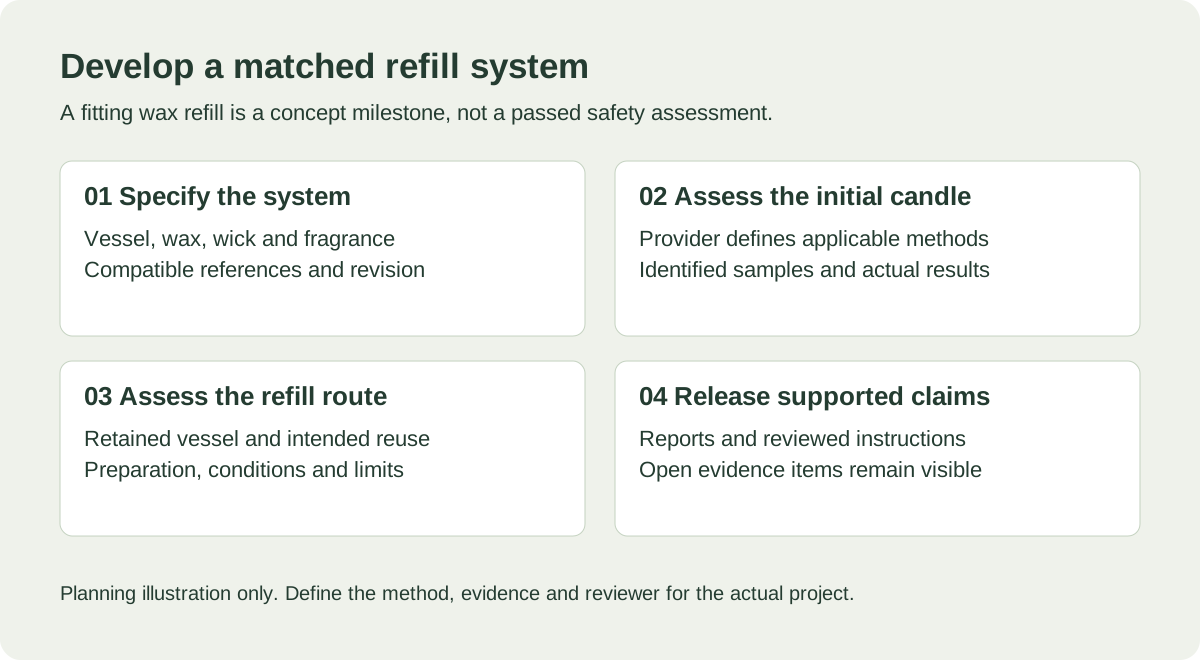
3. Plan Evidence for First Use and the Refill Configuration
Ask a competent testing provider to identify the applicable standards, current editions, sample grouping and market requirements for the exact product. Public summaries help define questions, but they do not provide the full test method or acceptance limits. Budget the required work and record what remains unverified before committing to a launch date.
For example, ASTM F2417 addresses candle fire safety, while ASTM F2179 concerns glass containers produced for candle use. These cover different aspects; a container record does not replace assessment of the finished candle. Check the current applicable edition with the provider rather than assuming a historical report covers a new refill design.
| Stage | Scope to define | Evidence to retain |
|---|---|---|
| Initial candle | Actual vessel, wax, wick, fragrance, decoration and intended use. | Identified specimens, applicable method, conditions, findings and unresolved points. |
| Refill configuration | Retained vessel condition, preparation route, compatible refill and intended reuse conditions. | Reuse assumptions, evaluated configurations, findings and any limits established by the assessment. |
| Consumer handling | Inspection, preparation, placement, warnings and disposal or retirement instructions. | Instruction revision, reviewer and observations from the agreed handling review. |
Do not infer an unlimited refill count from a reusable vessel. The development team should define how reuse is assessed, what conditions make a vessel unsuitable, and which claims the evidence supports. If that information is missing, record it as an open development item rather than turning a design intention into a lifespan guarantee.
A practical record should distinguish appearance observations, sensory evaluation, handling review and formal safety testing. Write “planned,” “in progress” or “completed with identified results” beside each item. An empty test checklist, successful wax fit or photograph of a sample is not a passed safety report.
4. Design Instructions and Refill Packaging Together
The customer needs to identify the correct refill, understand the system's approved preparation route and recognize when the vessel should no longer be used. Instructions should come from the developed and assessed product. This guide deliberately does not prescribe a general hot-water, scraping or melting procedure for arbitrary jars.
Review the refill protection before opening as well as its placement afterward. Confirm that the transport pack protects the wax or insert, keeps the compatible reference readable and carries the relevant information for the destination market. Record which protective parts must be removed before use and how those instructions appear on the actual pack.
| Topic | Buyer question | Owner or record |
|---|---|---|
| Compatibility | Can the customer identify the vessel version this refill fits? | Product references and approved compatibility statement. |
| Preparation | Is the preparation route consistent with the assessed system? | Technical instruction and revision. |
| Inspection and limits | Does the user know when to reject or retire the vessel? | Defined criteria and reviewed wording. |
| Use and warnings | Are candle directions and relevant warnings clear for this market? | Market reviewer and final artwork. |
| Claims | Does evidence support the exact reuse or packaging statement? | Claim scope, supporting record and responsible reviewer. |
A refill can change the packaging used for a repeat purchase, but that alone does not substantiate “zero waste,” lower carbon impact or a universal environmental advantage. Define the comparison, materials, transport assumptions and actual reuse behavior before making a quantitative claim. Keep packaging evidence separate from finished-candle safety evidence.
5. Send a Development Brief With Visible Open Items
Include the target market and channel, vessel reference, preferred refill route, fragrance variants, decoration, quantity plan and intended consumer instructions. State whether the vessel already exists or is also being developed. Identify any required reports or retailer conditions before the team quotes samples or selects components.
For a LoyalCrafts project, custom development can be discussed, while complete refill-system testing remains to be arranged for the chosen configuration. Confirm which party commissions and reviews tests, how sample costs are handled, and which approvals must precede production. No general MOQ, lead time or test outcome is implied by the availability of development discussions.
Keep a release list with the vessel and refill revisions, evaluated fragrance variants, reports, final artwork and retained sample references. Record the effect of later changes before accepting them. A changed wick or wax specification should not be approved on the strength of an earlier sample photograph.
For conventional candle sourcing details, use the private label candle sourcing guide. For the separate liquid-refill route, read the refillable reed diffuser guide; the same word “refill” does not mean the two products share a validation method.
FAQ
Can a candle refill be used in any empty jar?
No. Define the refill and compatible vessel as one product system. Geometry, vessel material, wax, wick arrangement and intended use all require review. A refill that fits inside an unrelated jar is not evidence that the combination is suitable, safe or covered by the original product's assessment.
Does a candle-glass report prove a refillable candle is safe?
A container record addresses its stated scope; it does not replace evaluation of the finished candle and refill configuration. Match each report to the actual specimen and specification. Ask the testing provider to define the applicable methods, current editions and additional evidence needed for the intended reuse route.
How many times can the candle vessel be refilled?
Use only a limit or statement supported by the assessed system. Define the vessel condition, preparation route and reuse assumptions during development, including when the vessel should be retired. Without that evidence, do not promise an unlimited number of refills or copy another manufacturer's reuse claim.
Can LoyalCrafts supply a fully tested refillable candle now?
LoyalCrafts can discuss custom development, but a complete test package for a matched refillable candle system is not currently available. The vessel, refill, wick, fragrance and instructions must be defined, sampled and assessed for the project before a production commitment or a test-based claim is made.
Start with the system: provide the vessel reference, refill concept, destination market and required evidence through the candle project page. Use that brief to establish the development and validation scope before ordering a refillable candle range.