Cover image: AI-generated editorial illustration of packaging components; not a photograph of a specific product or evidence of compliance.
Quick answer: An EU PPWR checklist for home fragrance should connect each packaging component to its material, weight, supplier evidence and responsible business. PPWR has applied since 12 August 2026, but several design and labelling requirements have later dates. Start with the rules already applicable, then plan future changes against the exact provision.
The Packaging and Packaging Waste Regulation (PPWR) is Regulation (EU) 2025/40. A reed diffuser order can include a bottle, closure, label, insert, retail box and shipping carton. Asking for one “PPWR certificate” does not explain which of those items was assessed, who is responsible, or which version the documents cover. A useful procurement brief identifies the packaging unit first and gathers the evidence behind it.
This guide covers packaging procurement for home fragrance placed on the EU market. It reflects official material checked on 30 September 2026. Use it to prepare a project review with your importer or regulatory adviser; it does not determine the legal classification of an individual product.
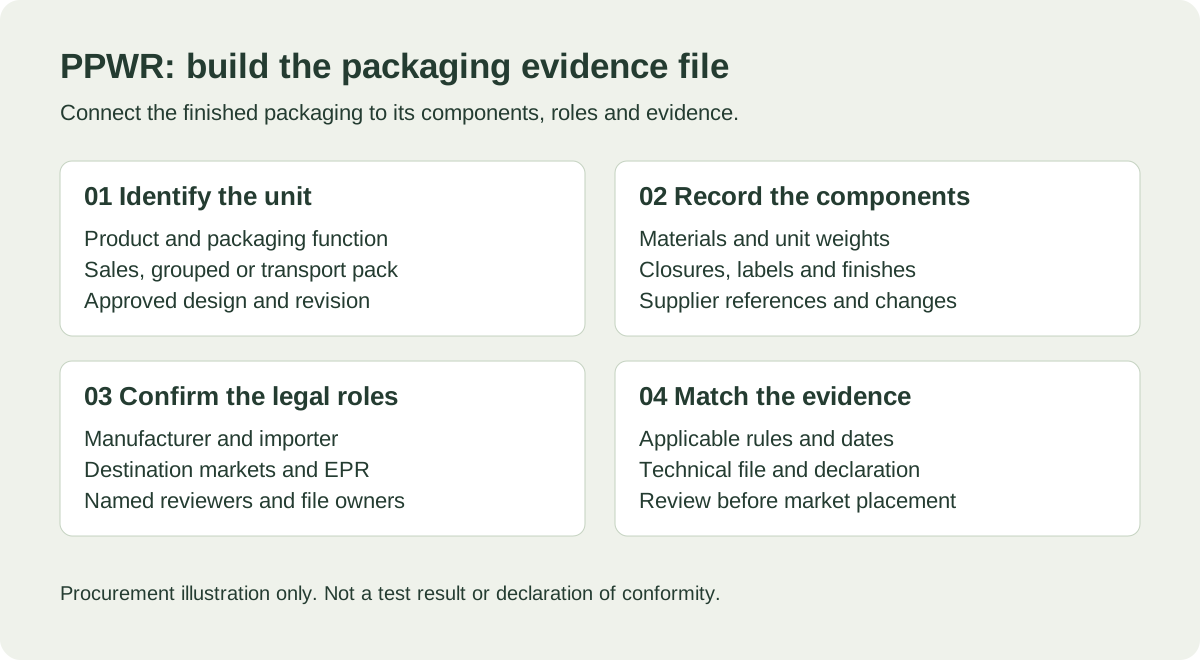
Which PPWR dates matter for home fragrance packaging?
The European Commission confirmed the general application date of 12 August 2026. That date does not make every future target immediately due. Equally, a 2030 target does not postpone the manufacturer and importer obligations that already apply.
| Requirement | Timing | Procurement action |
|---|---|---|
| Manufacturer and importer duties; conformity documentation for applicable requirements | 12 August 2026, with the substance assessed according to each requirement's application date | Confirm the responsible manufacturer, packaging identification, technical documentation and EU declaration of conformity. |
| Harmonised material-composition labels — Article 12(1) | 12 August 2028 or 24 months after the relevant implementing acts enter into force, whichever is later | Check whether the packaging is covered. Keep artwork editable; do not invent a final harmonised symbol. |
| Design-for-recycling assessment criteria — Article 6 | 1 January 2030 or 24 months after the relevant delegated acts enter into force, whichever is later | Record materials, coatings, adhesives and how components separate. Existing applicable requirements still need assessment. |
| Packaging minimisation — Article 10 | 1 January 2030 | Document why packaging size and weight are necessary for the product and its protection. |
| Maximum 50% empty space for grouped, transport and e-commerce packaging — Article 24 | 1 January 2030 or three years after the relevant implementing act enters into force, whichever is later | Identify the packaging category and measurement method before calculating. Do not apply this percentage to every bottle or retail gift box. |
The dates above come from the PPWR text, particularly Articles 6, 10, 12, 15, 18, 24 and 71, read with the Commission's August 2026 FAQ. Recycled-plastic requirements also have their own scope, dates and exceptions under Article 7. A single recycled-content percentage is not a rule for every fragrance pack.
Build a packaging component list before requesting documents
Start with the approved product and pack drawing. Separate the contents from the packaging, and distinguish sales packaging from grouped and transport packaging. The status of a container depends on its function and the definitions in Article 3 and Annex I, not simply on whether it is glass, plastic or paper.
For a diffuser, record the bottle and closure separately from the fragrance mixture and diffuser sticks. For a candle, have the container's role assessed rather than assuming every candle vessel has the same legal status. A gift set can also combine more than one packaging unit.
| Component | Record | Question to resolve |
|---|---|---|
| Bottle or container | Material specification, empty unit weight, dimensions, finish and supplier reference | Does the evidence cover the actual colour, coating and design? |
| Closure, liner or pump | Separate materials, individual or assembly weights, attachment method | Are hidden liners, springs or bonded parts included? |
| Label and decoration | Substrate, adhesive, ink, coating and artwork revision | Did the supplier assess the decorated version or only a plain sample? |
| Insert and retail box | Material grades, weights, dimensions, windows, lamination and glued parts | What protection does each part provide, and can the pack be simplified? |
| Shipping carton and filler | Carton dimensions, units per carton, filler type and packing arrangement | Which packaging category and empty-space method apply? |
Use one row for each component and link every row to a packaging revision. “Paper box” is too broad if the approved sample also has a plastic window and laminated finish. Ask for measured weights or a stated measurement basis; do not fill missing cells with guessed values.
Confirm the manufacturer, importer and EPR roles
Under PPWR, the legal manufacturer is not always the factory that physically makes a box. Commissioning packaging or a packaged product under your own name or trademark can make your business the manufacturer. The definitions include specific exceptions, so establish the role from the actual supply arrangement. The Commission's published PPWR guidance explains these distinctions.
Write down the legal entities involved, the EU countries of sale, who commissions the design and whose name or trademark is used. Then confirm who prepares the technical documentation, signs the EU declaration of conformity and performs the importer checks. A purchasing contract can allocate work, but it cannot simply transfer away a statutory responsibility.
Extended producer responsibility (EPR) uses a separate “producer” role. Check registration, reporting and related arrangements for the actual countries and selling model. A historical registration or scheme-membership document for one country is not proof that a new order meets all current obligations across the EU.
Request evidence that matches the finished packaging
The Commission's FAQ explains that conformity assessment and the related declaration cover the packaging unit as a whole, while accounting for its separate components. For a bottle, closure and label that form one unit, gather the component evidence into the unit's documentation. Do not assume that unrelated supplier certificates automatically form a complete assessment.
- Identity: packaging type, batch or other identifier; drawing and component-list revision; responsible business details.
- Technical evidence: relevant material specifications, design information, supplier declarations and assessments or test results needed for the applicable requirements.
- EU declaration of conformity: a declaration linked to that packaging and the supporting technical documentation, using the applicable PPWR requirements and the required language or translation.
- Change control: a named reviewer and a process for reassessing a different coating, adhesive, material, supplier or construction.
For every laboratory report, compare the tested sample description with the proposed order. A pass on one material, colour or test method is not a general approval of the complete gift set. Ask which requirement the report supports and whether additional assessment is needed.
Keep packaging evidence separate from the fragrance mixture's SDS, IFRA-related documentation and transport classification. Those files answer different questions. Our fragrance compliance document checklist covers the product-side review.
A practical EU PPWR procurement checklist
Use these stages as purchasing controls, not as statutory deadlines. Assign a person and a due date to every unresolved item.
| Project stage | Review before moving on | Record to retain |
|---|---|---|
| Before comparing quotations | Destination countries, selling model, packaging units and likely legal roles | Market and responsibility brief; list of documents included or separately arranged |
| Before approving the sample | Component materials, weights, decoration and protection needs | Approved drawing, component list, sample reference and missing-evidence register |
| Before mass printing | Applicable identification and labelling requirements, language, artwork version and responsible-business details | Reviewed artwork and recorded approval; later labelling changes tracked separately |
| Before shipment and EU market placement | Production pack matches the assessment; applicable documents and importer checks are complete | Packaging identifier, current conformity file and final packing specification |
| When the pack changes | Whether the change affects the assessment, artwork, declaration or supplier evidence | Revision history and a documented review decision |
For a LoyalCrafts enquiry, send your product format, destination countries, pack drawing or reference image, proposed components and required document list. Existing records need to be matched to the project; additional testing or documentation should be agreed before the order is finalised. Browse the home fragrance product portfolio or send a packaging brief with the information above.
Buyer questions about PPWR packaging
Is a PPWR certificate the same as an EU declaration of conformity?
No. Ask what the document actually is and which packaging it identifies. PPWR provides for conformity assessment, technical documentation and an EU declaration of conformity. A laboratory report or a supplier's general “PPWR certificate” may contribute evidence, but does not by its title alone establish that the required process is complete.
Must every diffuser gift box already meet a 50% empty-space limit?
No. Article 24's maximum 50% ratio concerns grouped, transport and e-commerce packaging and has a later application date linked to an implementing act. First classify the packaging and check the applicable method. Sales-packaging minimisation is a separate question; bottle headspace is not automatically the same calculation.
Can we call a pack recyclable because its main material is glass or paper?
A material name alone is not enough evidence for a claim about the finished pack. Record the full construction, including labels, closures, coatings and bonded components, and assess the applicable criteria. Have the proposed claim reviewed against the evidence and relevant market rules before printing it on the packaging.
Can the same files be reused for a reorder?
They may remain relevant when the packaging, supplier evidence and applicable requirements still match. Check the revision, destination market and any material or design changes before relying on them. A repeat product name does not prove that the pack is unchanged or that the earlier documentation remains sufficient.