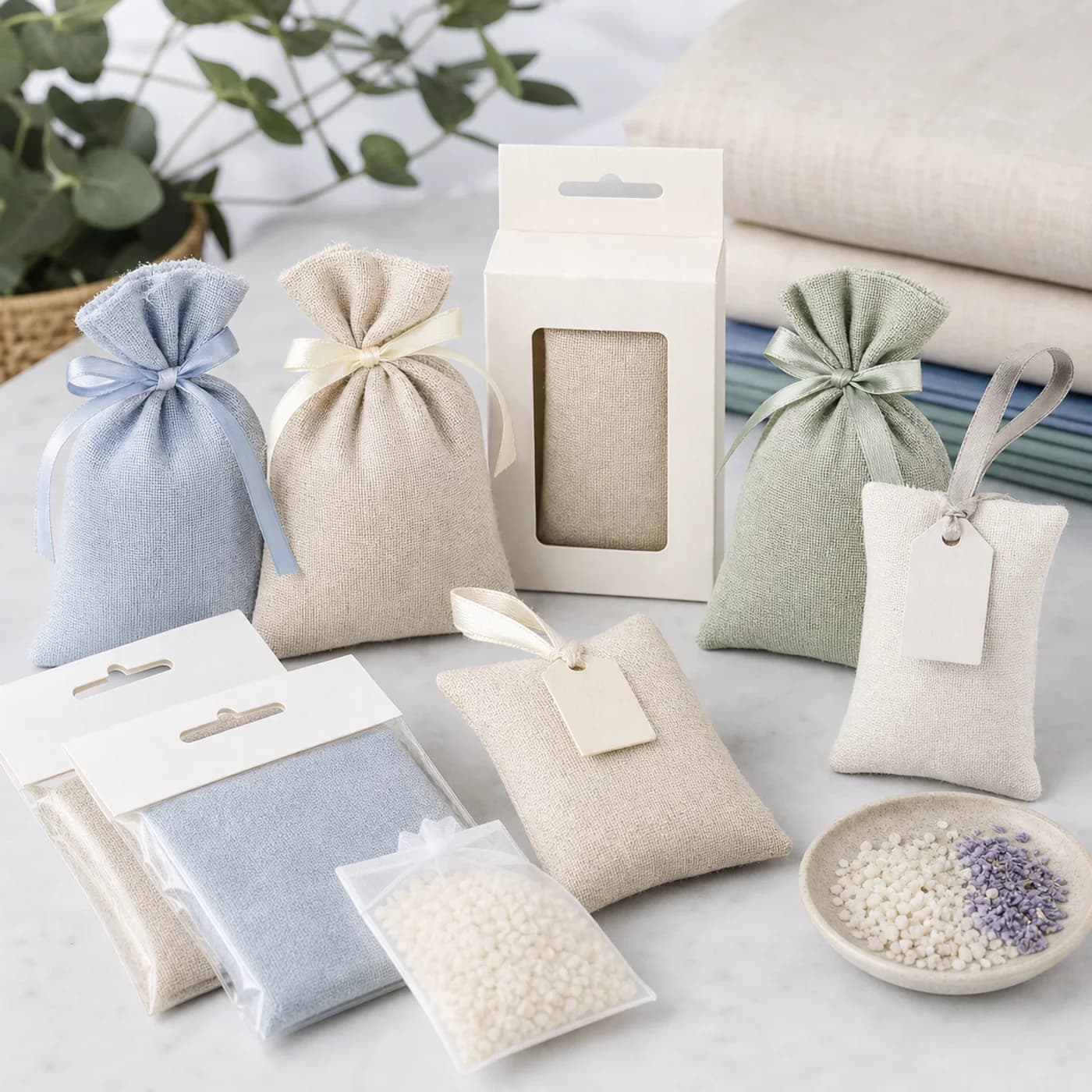
Quick answer: For LoyalCrafts, a fabric freshener is a scented fabric or linen sachet for closets, drawers, luggage, gift sets, hotel amenities, and home textile programs. US private label buyers should first confirm the fabric pouch, fragrance filling, hanging or drawer-use method, retail packaging, sample testing, and claim wording. The final order plan is then confirmed by the chosen size, filling, scent, artwork, packaging, and SKU split. For paper and fabric product routes, see our scented sachet manufacturing page before sending an OEM inquiry.
US Buyer Planning Snapshot
- Main keyword: fabric freshener private label.
- Best starting format: scented fabric or linen sachets with a tested fragrance filling and practical hanging or drawer-use packaging.
- Order planning: the practical quantity is confirmed by pouch size, filling, fragrance, artwork, packaging, and SKU split.
- Sample timing: stock samples 1-3 days; custom samples usually 7-14 days after the brief, fee, and freight are confirmed.
- Bulk timing: normally 30-40 days after sample approval and payment.
- Compliance focus: IFRA fragrance review, SDS support where relevant, FHSA label review, claim control, and retailer documentation.
What Fabric Freshener Means for This Product Category
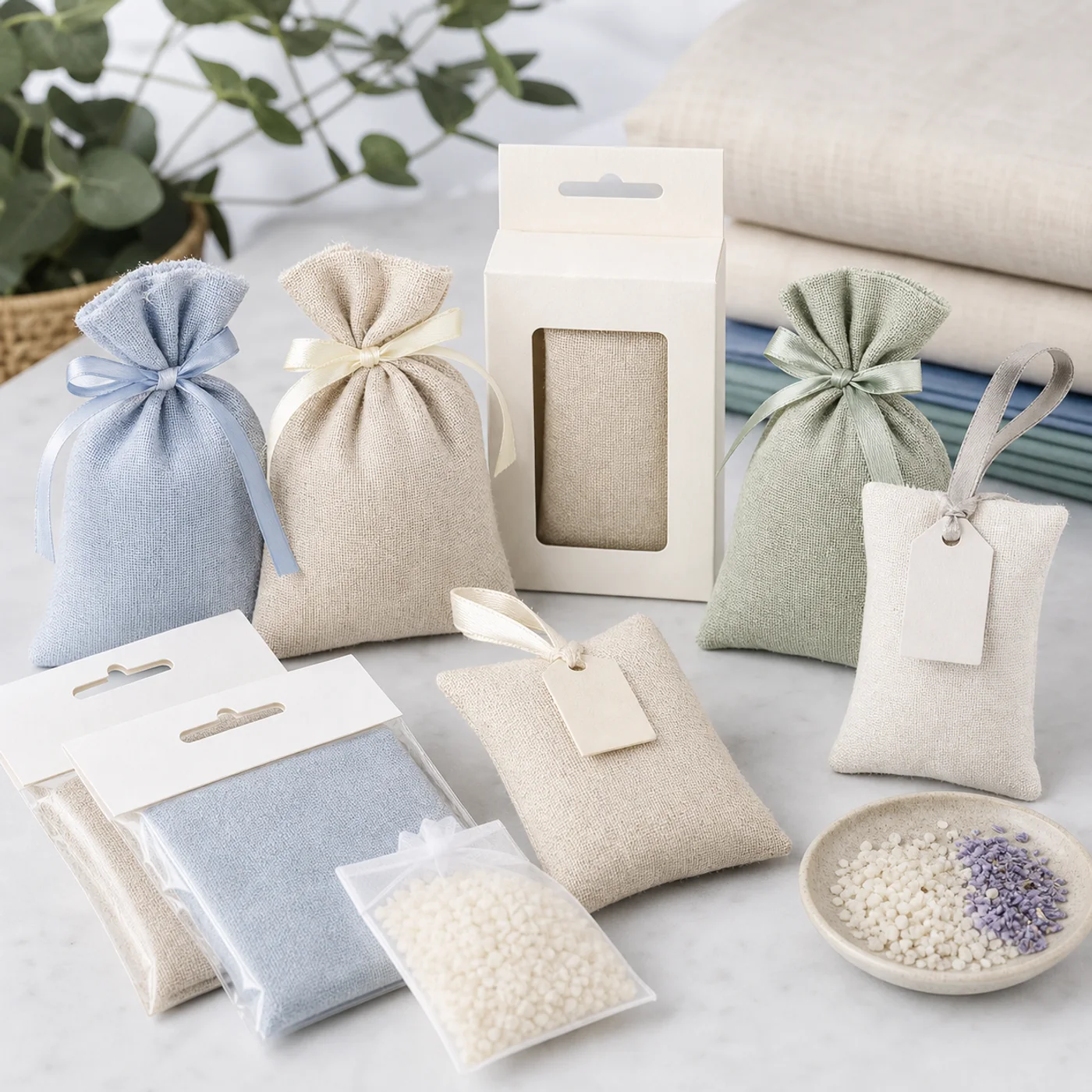
For LoyalCrafts scented home products, this article uses fabric freshener to describe a soft fragrance sachet: a small fabric pouch filled with a scented carrier and placed in a closet, drawer, suitcase, storage box, gift set, or hotel amenity pack. It is close to a scented linen sachet, but the sourcing brief may also call it a fabric sachet, closet freshener, drawer sachet, wardrobe freshener, or scented fabric pouch.
This definition matters because a fabric sachet is quoted and tested as a dry, filled fragrance product. The most important questions are: What filling carries the fragrance? Which fabric or pouch material holds the filling cleanly? Does the scent migrate into packaging? Can the pouch be hung securely? Does the product look suitable for the buyer's shelf, drawer set, hotel room, or gift box?
For buyers building a broader wardrobe-care line, fabric freshener sachets pair naturally with scented sachet manufacturing, paper sachets, scented drawer liners, and home fragrance OEM/ODM production. The opportunity is to create a low-risk, repeatable product that feels pleasant, packs efficiently, and supports private label branding.
Formula: The Fragrance Filling Is the Real Formula
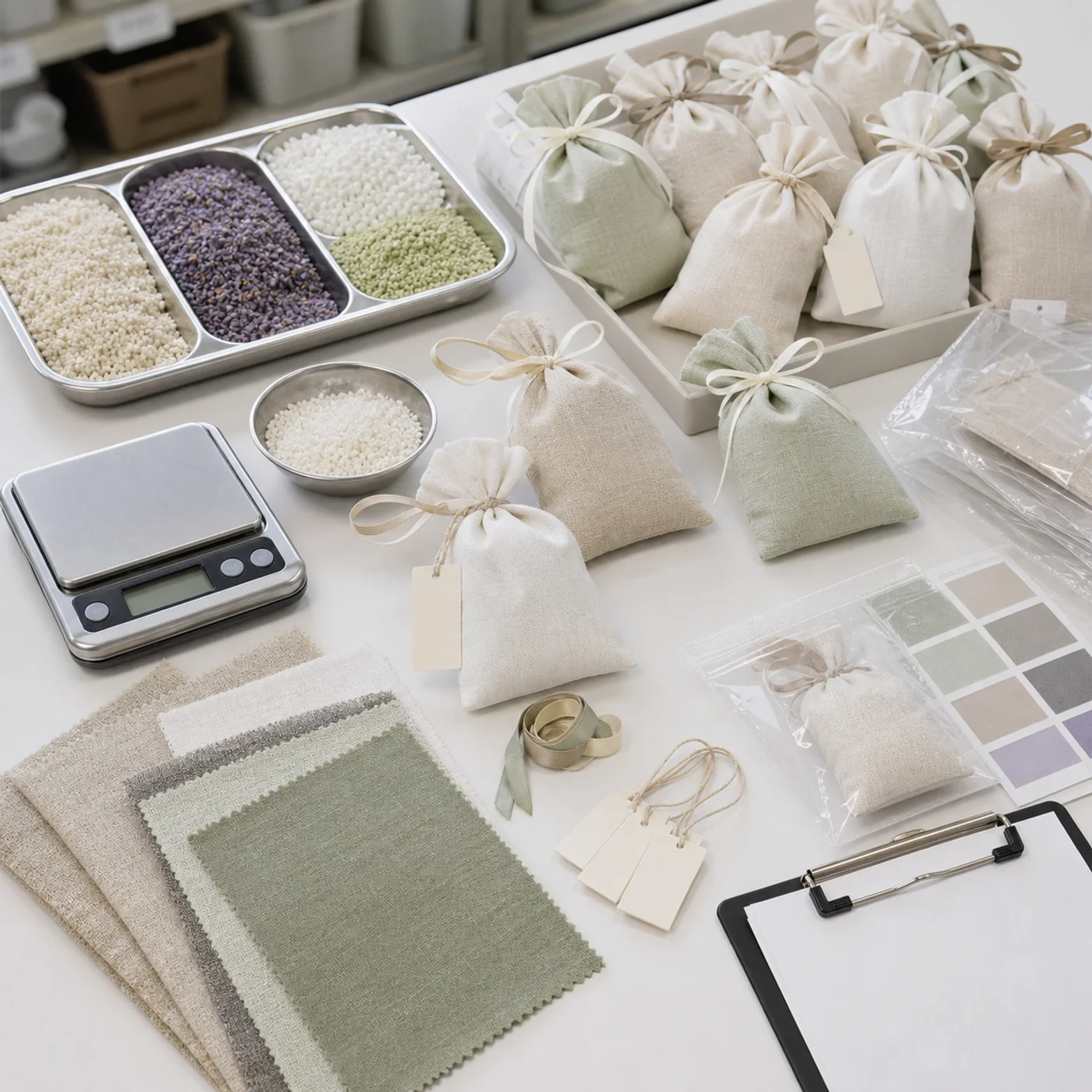
For a scented fabric sachet, formula means the fragrance system inside the pouch: the fragrance oil, the carrier material, the fragrance load, the anti-leak or dust-control approach, and the way the scent releases over time. Common filling options include scented beads, aroma granules, vermiculite, cellulose-based carriers, fragranced fiber pads, lightweight sachet powders, or blended carriers designed for a specific pouch structure.
Each carrier behaves differently. Beads can look cleaner in transparent or semi-open presentations, while vermiculite and granules can offer flexible fragrance loading. Fiber pads can be useful for thinner or shaped sachets. Some buyers choose a more decorative filling because the sachet will be partially visible; others prioritize odor retention in sealed retail packaging. A buyer should not approve fragrance oil alone. The scent must be checked in the final filling, final pouch, and final pack.
Our fragrance expert says: "For fabric freshener sachets, the best sample is not the strongest one on day one. It is the one that smells balanced after storage, does not stain the pouch, does not leak powder, and still feels pleasant when the consumer opens a drawer two or three weeks later."
Fragrance Direction: Clean, Familiar and Closet-Friendly
US buyers usually do well with fragrance directions that feel clean, soft, and familiar. Cotton, linen, white tea, lavender, green tea, soft musk, cedar, peony, rose, citrus, aloe, and light powdery profiles are practical starting points. Very heavy amber, sweet gourmand, smoky wood, or strong oriental notes can work for niche gift lines, but they may feel too intense in a closed wardrobe or drawer.
The fragrance should be tested under real use conditions. Put the sachet in a closed drawer, a small closet, a luggage pouch, and a retail box. Check the first impression, the dry storage smell, the fabric pouch appearance, and whether the scent feels comfortable after several days. If the buyer wants a multipack, each scent should be balanced so one fragrance does not overpower the others in a shared carton.
For IFRA planning, the IFRA Standards are widely used by the fragrance industry to support safe fragrance use. Buyers should request fragrance documentation for the intended product use and market, then keep the approved bulk production aligned with the approved sample.
Packaging: Pouch Material, Hanging Method and Retail Pack
Packaging cost is not only the outer box. For fabric freshener sachets, the pouch itself is the product. Buyers can choose cotton, linen-look fabric, nonwoven fabric, satin, organza, felt, canvas, printed polyester, or a custom textile. The best choice depends on the target channel. A hotel amenity may need a clean, simple pouch. A gift brand may want ribbon, embossing, woven label, hang tag, or a window box. A value retail program may use a standard fabric pouch with a printed card or multipack bag.
The closure and hanging method also affect cost and reliability. A simple sewn pouch is efficient for drawer use. A ribbon loop or elastic cord helps for wardrobe hanging. Metal eyelets can look stronger, but they add material and labor. A header card can improve shelf visibility. A sealed inner bag can help protect scent before purchase, especially for online or long-distance shipping.
Labels and cards should leave space for product name, scent name, net weight or count, use instructions, warning language, company details, country of origin, barcode, batch code, and retailer-required wording. If the buyer plans multiple fragrances, using one shared pouch structure with scent-specific labels is usually a safer first launch.
| Decision | Cost-Efficient Start | Premium Upgrade | Buyer Check |
|---|---|---|---|
| Filling | Standard scented granules or beads | Custom carrier blend or visible decorative filling | Scent life, oil migration, dust, leakage |
| Pouch | Stock fabric or linen-look pouch | Custom fabric, shape, embroidery, woven label | Seam strength, print clarity, staining risk |
| Hanging | Ribbon or elastic loop | Metal eyelet, bead, hook, premium cord | Pull strength, wardrobe fit, child-safety wording |
| Retail pack | Inner bag plus header card | Window box, gift set, drawer kit, display carton | Scent retention, barcode space, carton strength |
MOQ: Plan by SKU, Not by Product Name
MOQ should be discussed as a planning number tied to the exact SKU. A standard fabric pouch with one fragrance and a printed card is different from four scents, custom fabric colors, special stitching, embroidery, gift boxes, and retailer-specific label versions. A buyer may see the same product name on two quotations, but the production logic can be very different.
For LoyalCrafts custom scented linen or fabric sachets, private label projects usually start from 1,000 units. Final order planning depends on pouch size, material, filling, fragrance, print, hang tag, inner bag, retail box, destination market, and how many variations are included. If the buyer is comparing with paper sachets, keep the categories separate: custom scented paper sachets usually start from 3,000 units, while fabric or linen sachets usually start from 1,000 units.
The practical way to control first-order risk is to reduce SKU splits. Start with one pouch size, one fabric, one packaging structure, and two or three fragrances. Once sell-through is proven, the buyer can add seasonal scents, gift boxes, closet kits, or matching drawer liners.
US Compliance Checks Buyers Should Discuss Early
Fabric freshener sachets are simple consumer products, but US buyers should still review fragrance, filling, pouch, and label information before printing packaging. The CPSC explains that the Federal Hazardous Substances Act requires precautionary labeling for hazardous substances. This does not make every sachet hazardous, but it does mean buyers should check warning language, foreseeable use, and whether any component needs special handling.
SDS support can be useful for B2B handling, warehousing, and logistics, especially when fragrance mixtures or scented filling materials are shipped and stored before final sale. OSHA's Hazard Communication overview explains that chemical manufacturers and importers evaluate chemical hazards and provide labels and safety data sheets for downstream customers. For private label sourcing, documents help importers and retailers understand product handling and storage expectations.
Retailers may also ask for product specifications, packing lists, artwork confirmations, batch information, material descriptions, or fragrance documentation. These are best discussed before samples are approved, not after cartons are printed.
Claim Control: Be Careful with Moth, Insect and Antimicrobial Claims
Marketing language can change the compliance path. Leaves drawers smelling fresh is very different from kills bacteria, repels moths, prevents mold, eliminates allergens, or protects clothing from insects. EPA guidance on cleaning product claims under FIFRA explains that products making claims to mitigate a pest can be considered pesticide products, depending on the claim and context.
For most private label fragrance buyers, the safer first launch is a scent and freshness product. If a buyer wants moth-repellent, antimicrobial, mold-control, or disinfecting language, the product should be reviewed through a separate regulatory path before label copy is printed. Do not assume that a pleasant cedar or lavender scent automatically supports insect-control or antimicrobial claims.
Natural, non-toxic, eco-friendly, biodegradable, and plant-based claims also need discipline. The FTC Green Guides are designed to help marketers avoid misleading environmental claims. For a sachet program, broad claims should be qualified and supported rather than used as decoration.
Sample Approval Checklist
- Confirm the format: drawer sachet, hanging closet sachet, luggage sachet, gift sachet, or multipack refill.
- Check the scent in the final filling and pouch, not only as a fragrance oil sample.
- Review oil migration, pouch staining, powder leakage, seam strength, ribbon pull strength, and hang tag durability.
- Store samples in the inner bag and retail pack to check scent retention and packaging odor transfer.
- Confirm label space for directions, warnings, net weight or count, batch code, barcode, and company details.
- Request SDS support where relevant and fragrance documentation for the intended use and market.
- Approve a sealed golden sample before mass production starts.
Case Example: A US Home Textile Brand Launch
A US home textile brand wants to add a fabric freshener to its bedding, wardrobe, and gift collection. The first idea is four scents, custom printed fabric, embroidered logos, ribbon loops, window boxes, and broad claims such as natural odor eliminator and moth protection. That sounds attractive, but it creates cost, artwork, and claim risk before the brand has sales data.
A more practical launch would use one linen-look pouch size, two clean fragrance directions, a simple ribbon loop, scent-specific hang tags, and a sealed inner bag with a retail card. The filling would be checked for scent life, oil migration, powder leakage, and pouch appearance after storage. The label would use careful wording such as scented fabric sachet for drawers, closets, luggage, and storage spaces.
This version is easier to sample, quote, pack, ship, and reorder. When sell-through is proven, the brand can add embroidered pouches, seasonal scents, gift boxes, hotel amenity packs, or matching scented drawer liners.
Need a private label fabric sachet quote?
Send your target market, pouch size, scent direction, quantity per SKU, artwork status, and packaging reference. LoyalCrafts can help compare practical fabric, filling, and retail-pack options, then reply within 24 hours.
FAQ
What is a fabric freshener private label product?
In this context, it is a scented fabric or linen sachet made for another brand. It is usually placed in drawers, closets, luggage, gift boxes, hotel rooms, or wardrobe-care kits to add a pleasant fragrance.
What is the MOQ for private label fabric freshener?
For LoyalCrafts custom scented linen or fabric sachets, private label projects usually start from 1,000 units. Final quantity depends on pouch size, material, filling, fragrance, artwork, retail packaging, and SKU split.
Which filling works best for fabric freshener sachets?
There is no single best filling. Scented beads, aroma granules, vermiculite, cellulose carriers, and fragranced pads can all work. The best option depends on scent life, pouch material, appearance, dust control, cost, and retail packaging.
Does a scented fabric sachet need EPA registration in the US?
A normal fragrance freshness claim may not need EPA pesticide registration, but moth-repellent, insect-control, antimicrobial, mold-control, or disinfecting claims can change the regulatory path. US buyers should review claims before printing labels.
What documents should US buyers request?
Ask for product specification, material description, fragrance documentation, SDS support where relevant, packaging details, artwork confirmation, batch traceability, and any market or retailer-specific documents required by the importer.
What should be tested before approving a fabric freshener sample?
Test scent strength after storage, filling leakage, oil migration, pouch staining, seam strength, ribbon pull strength, packaging scent retention, label readability, carton protection, and consumer instruction clarity.
You May Also Like
- Scented Sachet Manufacturer
- Scented Linen Sachet Portfolio
- Paper vs Fabric Scented Sachets
- Fragrance Compliance Documents Checklist
Summary
A successful fabric freshener private label launch is not only about choosing a fresh scent. US buyers need a fragrance filling matched to the use case, a pouch that holds the filling cleanly, packaging that protects scent before purchase, clear label space, careful order planning, and early claim review. Start with a practical SKU structure, test the final sachet after storage, and keep claims aligned with the product and documents.
LoyalCrafts supports private label scented fabric sachet projects with fragrance direction, filling coordination, fabric pouch options, label and retail packaging support, SDS support where relevant, and sample review. Send your fabric freshener sachet brief with market, pouch size, scent direction, quantity, artwork status, and packaging reference for a practical sourcing plan.