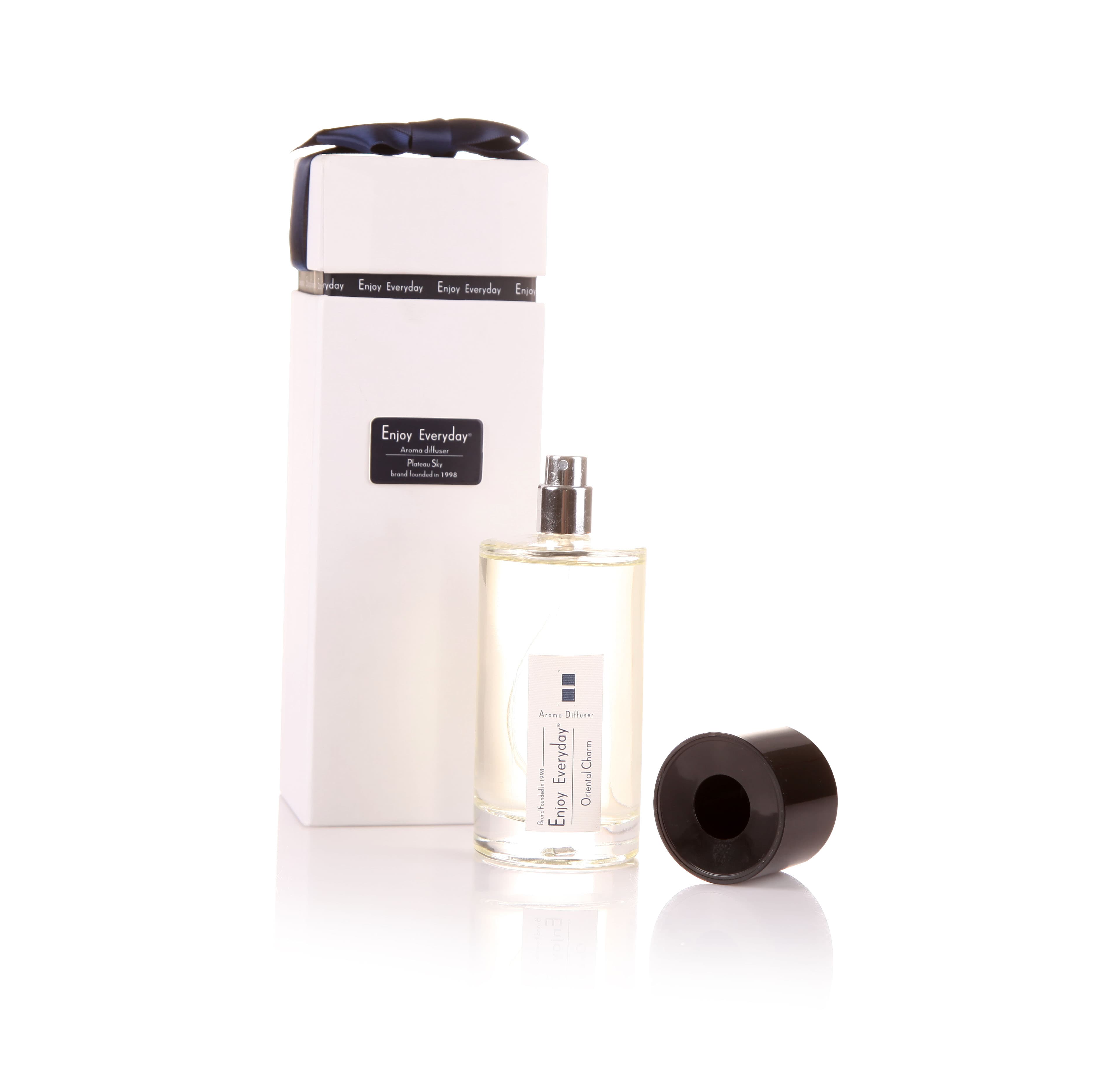
Quick answer: A private label room spray manufacturer should help B2B buyers control fragrance performance, mist quality, bottle compatibility, label durability, safety documentation, and retail packaging before mass production. The best partner is not only a filler. It is a fragrance engineering team that can turn a scent concept into a repeatable room spray SKU for home, hotel, spa, and lifestyle retail channels.
Private Label Room Spray Snapshot
- Best product fit: room spray, linen-adjacent spray, hotel amenity spray, wardrobe refresh spray, and home fragrance gift sets.
- Buyer intent: find an OEM partner for fragrance, bottle, pump, label, carton, and export documents.
- Main risk: a nice scent sample that fails in mist performance, packaging compatibility, label claims, or long-distance shipping.
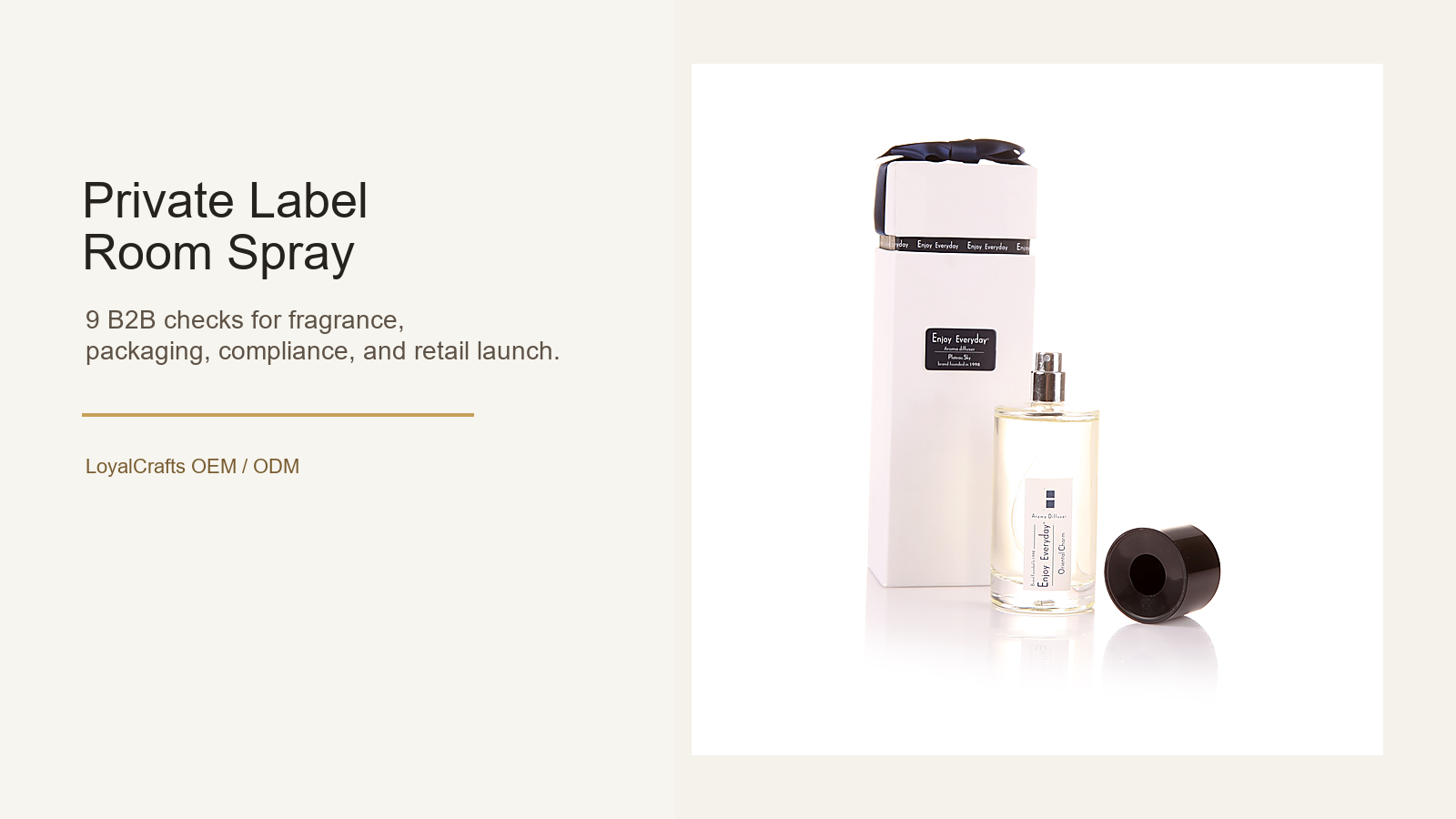
What Is a Private Label Room Spray Manufacturer?
A private label room spray manufacturer develops and fills room fragrance sprays for another brand. The buyer owns the branding, scent direction, packaging brief, and sales channel, while the manufacturer supports formulation, sourcing, filling, labeling, packing, quality checks, and export documentation.
This is different from simply buying a stock room spray. In a real private label project, the fragrance should match your customer, the mist should feel consistent, the pump should not leak, the bottle should suit the target shelf price, and the label text should fit the destination market. For B2B buyers in Europe, North America, Japan, and South Korea, these details often decide whether a room spray becomes a repeat SKU or a one-time test order.
Why Room Spray Is a Strong B2B Category
Room spray is attractive because it gives customers instant fragrance impact without burning, reeds, electricity, or long setup. It is easy to demonstrate in stores, easy to bundle with candles and diffusers, and flexible enough for hotels, spas, home decor retailers, laundry brands, and lifestyle gift sets.
For a value-focused brand, room spray can also be a practical entry product. It usually requires less shelf space than candles, less fragile display than glass reed diffuser sets, and less consumer education than technical deodorant formats. The challenge is that low cost should not mean weak performance. Buyers still need a formula that sprays cleanly, smells balanced, and survives storage and transport.
The category also carries responsibility. The U.S. Environmental Protection Agency explains that volatile organic compounds can affect indoor air quality, especially indoors where exposure conditions differ from outdoor air. For room spray buyers, this means fragrance load, use instructions, ventilation guidance, and claim discipline should be handled carefully.
9 Checks Before Choosing a Room Spray Manufacturer
1. Confirm That the Supplier Can Work to a Written Brief
Give each shortlisted supplier the same intended use, target market, fragrance direction, bottle size, packaging reference and quantity per SKU. Ask them to identify what is standard, what needs development and which requirements need further testing. Comparable briefs make it easier to judge the proposed finished product and quote.
B2B check: record the agreed use and excluded uses before sampling. Do not approve room, linen, car or body-use claims interchangeably. If the product format is still undecided, start with the small-space format selection guide, then return here to review spray suppliers.
2. Evaluate Fragrance Style, Not Only Fragrance Name
Names such as lavender, white tea, vanilla, ocean, cotton, or sandalwood are not enough. Buyers should define the scent style: clean, creamy, dry, herbal, woody, citrus, floral, spa-like, luxury hotel, laundry fresh, or deodorizing. This prevents the supplier from sending a generic fragrance that technically matches the name but misses the brand mood.
B2B check: keep the approved fragrance reference or code with the sample record. Compare the opening and settled scent in the finished spray, so a supplier cannot substitute a different interpretation of the same fragrance name without review.
3. Test Mist Quality and Spray Feel
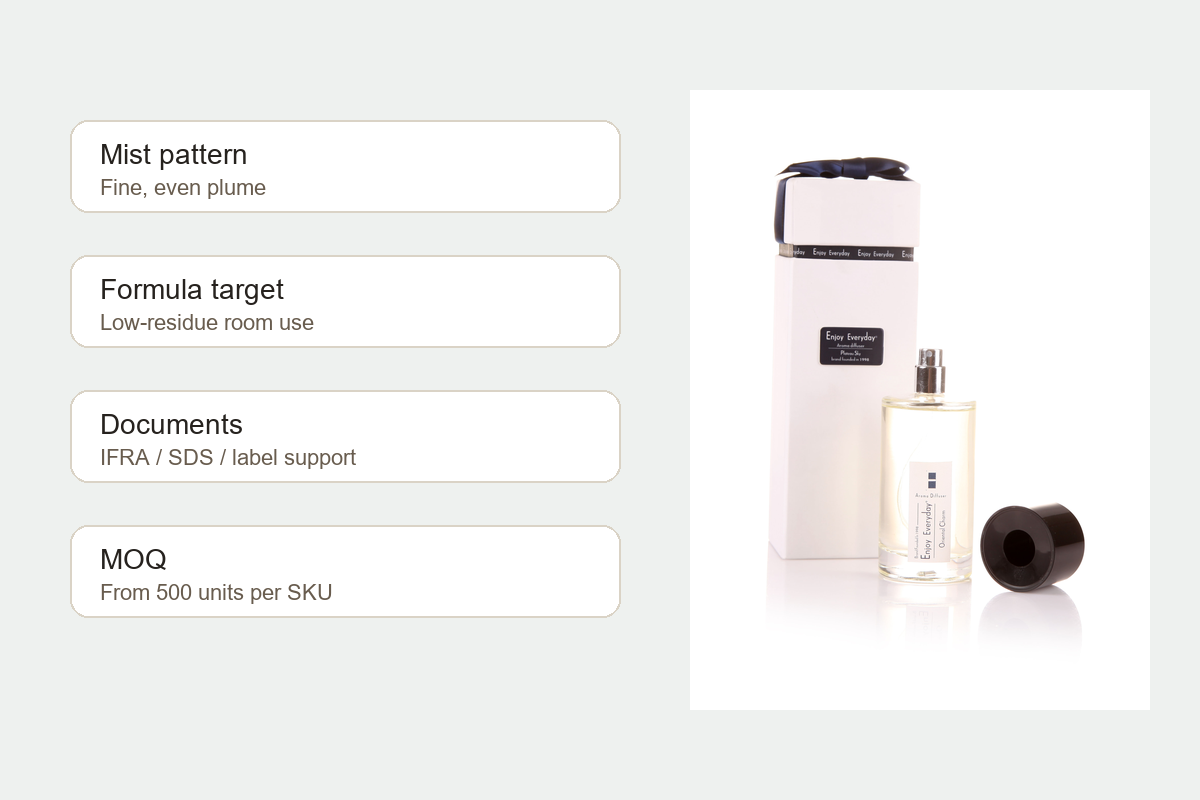
The pump is part of the product experience. A room spray should release a fine, even mist instead of large wet droplets. Poor atomization can create uneven scent distribution, surface residue, and a cheap user impression. Ask suppliers to test pump output, spray angle, leakage, actuator feel, and bottle compatibility before approval.
B2B check: agree how mist pattern, pump operation and leakage will be assessed. Record the pump reference and test conditions on the approved sample; repeat the same checks when reviewing pre-production samples.
4. Check Bottle, Pump, and Cap Compatibility
A beautiful bottle does not guarantee a stable product. Fragrance ingredients, solvents, pumps, liners, labels, and caps can interact over time. The wrong pump may leak, clog, discolor, or change spray output. The wrong label material may wrinkle if exposed to moisture or formula contact. The wrong cap may crack during transit.
B2B check: ask for compatibility testing on the exact bottle, pump, label, and formula combination that will go into production.
5. Separate Room Spray from Linen Spray Claims
Many buyers want to market one product as both room spray and linen spray. That can be possible, but it should not be assumed. Textile contact raises questions about staining, residue, color transfer, fragrance allergens, and consumer instructions. If the product will be used on fabric, test it on relevant textile colors and materials before making linen-related claims.
For value-positioned B2B brands, this is especially important because a low-cost claim mistake can become expensive after retail distribution. Clear use instructions protect both the consumer and the brand.
6. Ask for IFRA and SDS Documentation
The International Fragrance Association describes IFRA Standards as a global benchmark for fragrance ingredient safety. A serious room spray supplier should be able to provide fragrance documentation and SDS or MSDS support for the formula and destination market.
Documentation does not replace local legal review, but it gives importers, retailers, and compliance teams a starting point. For Europe, buyers should also consider classification, labeling, and fragrance allergen disclosure requirements that may apply depending on product type and claims.
7. Control Fragrance Load and Odor-Neutralizing Claims
A stronger room spray is not always better. Too much fragrance can feel harsh in small rooms and may increase residue risk. If you want an odor-neutralizing claim, ask the manufacturer what mechanism is being used. Is the product masking odor, pairing malodor counteractants, or using a specific deodorizing technology? These are different claims and should be supported differently.
Practical rule: if the claim sounds scientific, the supplier should explain the test method or evidence behind it in plain language.
8. Build Retail-Ready Packaging from the Start
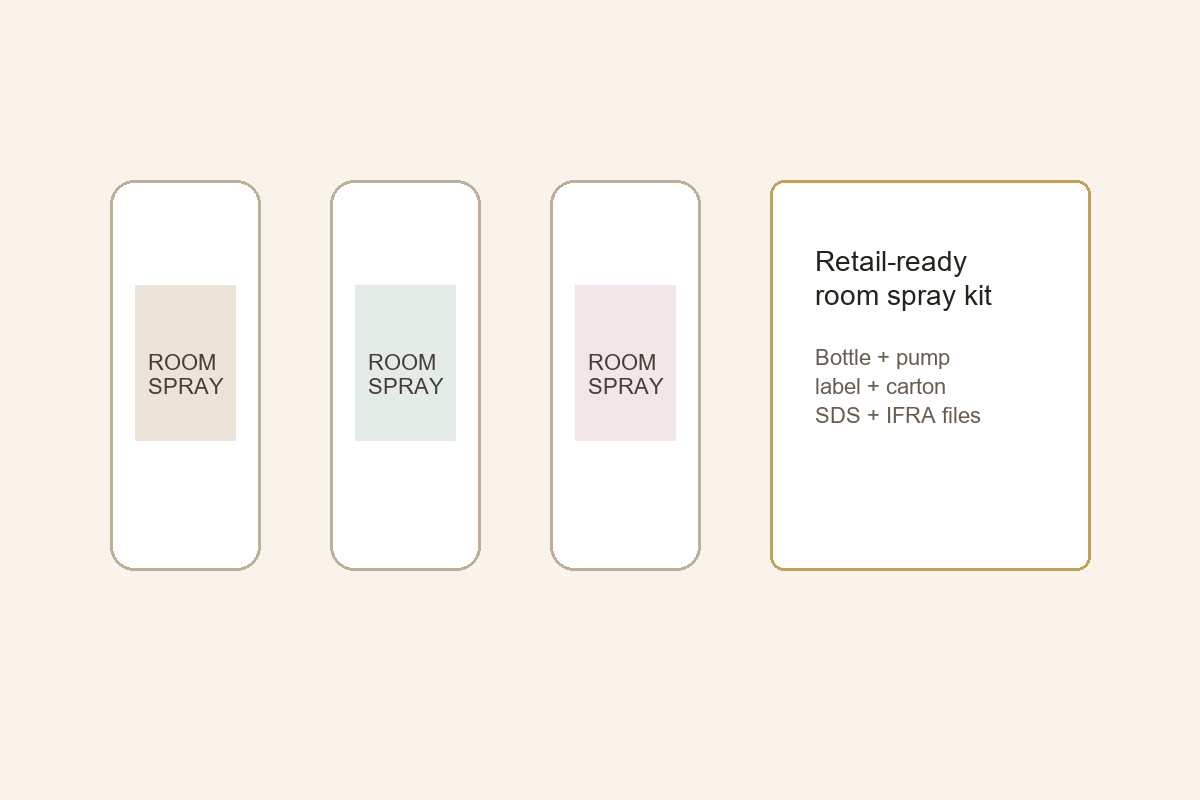
A private label room spray is not finished when the liquid is filled. Buyers also need label material, carton structure, barcode placement, warning text, batch code, shipping carton, and display requirements. If the product will be sold in gift sets, the bottle size and cap height must fit the tray or box before mass production begins.
This is where a full fragrance OEM manufacturer is more useful than a simple filler. Packaging coordination reduces delays and keeps the approved sample closer to the final shipment.
9. Verify MOQ, Sample Time, and Repeat Production
Low MOQ is helpful, but repeatability matters more. Ask whether the supplier can keep the same fragrance, pump, bottle, label material, and carton specification for future reorders. A first batch that cannot be repeated is risky for distributors and retail brands.
B2B check: request quantity per SKU, sample charges, component substitutions, artwork revisions, production timing and inspection arrangements in writing. Retain an approved finished sample and agree who must approve any formula, pump, bottle or packaging change before production.
At LoyalCrafts, room spray projects can be developed together with matching reed diffusers, candles, scented sachets, drawer liners, and body perfume. This helps buyers build a product family instead of a single isolated SKU.
Room Spray Sample Acceptance Records
| Approval Area | Record to Keep | Check Before Production |
|---|---|---|
| Formula and intended use | Fragrance reference, formula version, approved claims and use instructions | The finished spray matches the agreed scent and intended use |
| Bottle and pump | Component references, finished sample and agreed compatibility test conditions | Mist, leakage and storage checks use the actual production components |
| Artwork, documents and batch | Artwork revision, formula-specific documents, pack specification and batch reference | Labels, retail packs and inspection records match the approved version |
Planning Example: A Value-Focused Hotel Retail Room Spray
A hotel gift shop wants a 100 ml room spray that feels premium but stays cost-conscious. The brand wants white tea, citrus, and soft musk with a clean hotel impression. A practical development plan would include a stock glass bottle, a reliable fine-mist pump, a water-resistant label, a simple color carton, and a matching 50 ml travel version.
The formula would be tested for spray feel, bottle compatibility, scent balance after storage, carton rub resistance, and shipping stability. The buyer could then extend the same fragrance into a private label scented candle and a reed diffuser for a complete hotel fragrance set.
Questions to Ask Before Requesting a Quote
- What room spray size, bottle style, and target retail price do we need?
- Will this be used only in the air, or also near textiles?
- Which market will receive the first shipment: Europe, North America, Japan, South Korea, or another region?
- Do we need IFRA, SDS/MSDS, allergen information, or other retailer documents?
- Do we want a matching collection with candles, diffusers, sachets, or body perfume?
- What is the target MOQ, sample deadline, and launch date?
Build a Room Spray Program with LoyalCrafts
If you are sourcing a private label room spray manufacturer for a retail, hotel, spa, or home fragrance project, LoyalCrafts can help with fragrance direction, room spray formulation, bottle sourcing, pump matching, label review, carton planning, and export documentation. Request wholesale pricing today and share your target scent, bottle size, market, target quantity, and packaging idea.
FAQ
What is the MOQ for private label room spray?
Order quantity depends on the formula, bottle, pump, label, carton, customization scope, and number of variations. Special bottles, custom molds, or unusual packaging can require a higher quantity than standard components.
Can one product be both room spray and linen spray?
It can be possible, but it should be designed and tested for textile contact before making linen spray claims. Buyers should confirm staining, residue, fragrance strength, and label instructions.
What documents should room spray buyers request?
Ask for SDS or MSDS, IFRA-related fragrance documentation, product specifications, label information, carton details, and any documents required by the destination market or retailer.
Which scents work best for room spray?
White tea, citrus, linen, lavender, soft musk, sandalwood, fig, green tea, marine, and light floral scents often work well. The best choice depends on room size, market, brand mood, and target customer.