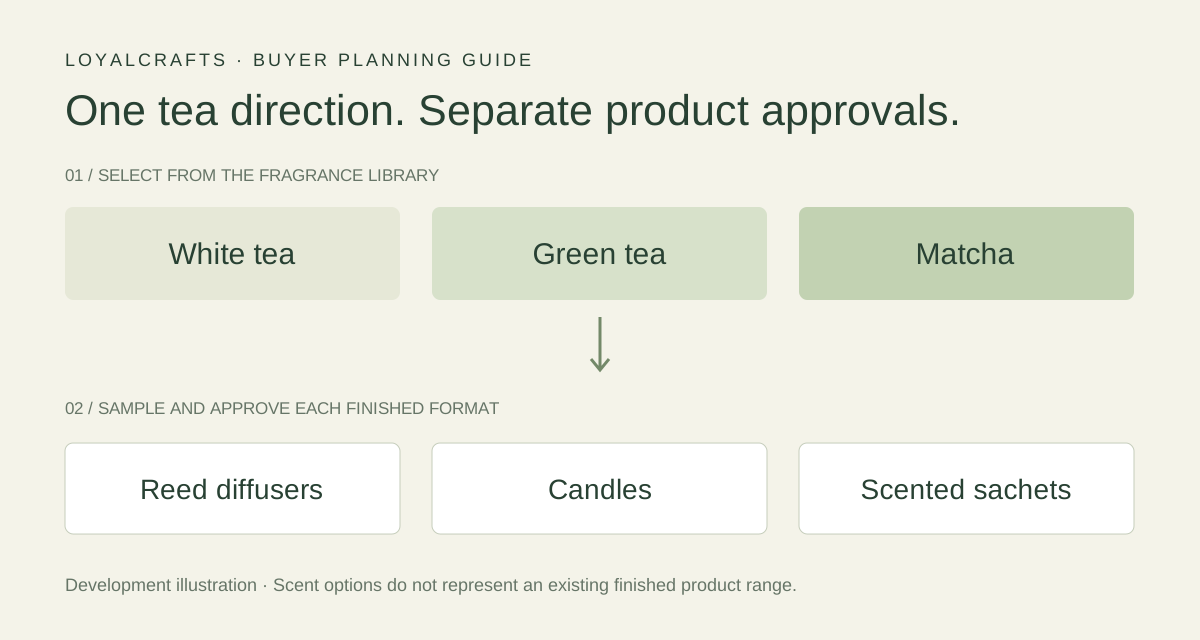
For a tea-scented home fragrance collection, start by choosing the character of the tea accord, then approve it separately in each finished product. White tea, green tea and matcha can support different collection ideas, but the scent name alone does not tell a buyer how sweet, green or strong the product will smell.
White tea, green tea and matcha are available in the LoyalCrafts fragrance library as starting points for reed diffuser, candle and scented sachet development. They are scent options, rather than an existing finished tea-fragrance product range. A shared scent direction can connect the formats; the formula, fragrance loading and finished-product performance still need to be confirmed for each application.
Why Consider a Tea-Scented Collection?
Tea gives a buyer several directions to brief: a light citrus-floral scent, a greener botanical character, or an earthy scent with a creamy accent. These are useful distinctions when a collection needs related products with different personalities. They are creative starting points, rather than fixed definitions of white tea, green tea or matcha fragrance.
There are current commercial examples to examine. Westin groups home fragrance and bath products within its White Tea collection. CandleScience offers a Matcha and Bergamot fragrance combining tea, citrus and a creamy base. These examples show how tea can be interpreted in a product range; they do not establish sales growth or predict demand for a new private label collection.
White Tea, Green Tea or Matcha: How to Write the Brief
Two suppliers may interpret the same tea name differently. One white tea sample might emphasize citrus; another might be more floral. Ask for a reference sample and describe what should remain noticeable after the opening impression fades.
| Tea direction | A possible brief | What to check in the sample |
|---|---|---|
| White tea | A light tea impression with restrained citrus and floral accents. | Is the result tea-led, citrus-led or floral-led? Does it remain identifiable at the intended scent strength? |
| Green tea | A fresher botanical direction, with a choice between leafy and citrus-led interpretations. | Do bright citrus or herbal notes overpower the tea character? Is the dry impression too sharp for the collection? |
| Matcha | A greener, earthy tea direction; specify whether a creamy or sweet accent is wanted. | Is the intended result dry and leafy, or closer to a matcha latte? Where should the sweetness stop? |
Supplier descriptions illustrate the variation. CandleScience's current White Tea includes citrus, ginger and jasmine notes, while its Green Tea and Lemongrass emphasizes citrus, tea and light musk. These are references from another supplier, not the note pyramids or ingredients of LoyalCrafts products.
Match the Tea Fragrance to the Finished Product
A coordinated range needs a recognizable scent identity across formats, even when each format requires its own formulation work. Start with one priority product and use its approved scent character as a reference for the rest of the range.
| Scent direction | Reed diffuser | Candle | Scented sachet |
|---|---|---|---|
| White tea | Does a subtle profile remain perceptible in the intended room? | Does the tea character remain recognizable in both unlit and lit assessments? | Is the scent level appropriate for the intended enclosed space after opening? |
| Green tea | Does the intended balance between tea and citrus persist through the observation period? | Does the finished candle retain the desired leafy or citrus character? | How does the scent impression change during sealed storage and after opening? |
| Matcha | Is the selected formulation suitable for the diffuser base and reed system? | Is the balance of earthy, creamy and sweet notes consistent with the approved brief? | Does the chosen filling and pouch preserve the intended scent character? |
This distinction matters even when the fragrance name stays the same. At the time of review, CandleScience's Matcha and Bergamot page lists candle uses but does not approve that specific oil for its diffuser base. That is a limitation of the named supplier product, not a rule that all matcha fragrances are unsuitable for reed diffusers. It is a reason to check the documentation for the exact formula being purchased.
For a tea scented reed diffuser, record the formula reference, bottle, fill, reeds and room conditions together. Our reed diffuser formulation guide explains the component decisions. For candles, review the final wax, wick and vessel combination. For sachets, review the filling, pouch and sealed outer pack, rather than approving the fragrance oil by itself.
A Practical Sampling and Approval Sequence
- Write the scent brief. Name the tea direction, preferred sweetness, intended room or use, and any reference scent. Mark the notes that should be prominent and those that should be restrained.
- Shortlist on scent. Compare coded samples under the same assessment conditions. Record the opening and later impressions. A preference at this stage selects a direction; it does not approve a finished product.
- Build the selected formats. Evaluate the diffuser, candle or sachet in its actual components. Agree on the observation schedule and approval criteria before comparing results.
- Check the packaged sample. Review leakage or staining where relevant, product appearance, scent retention, artwork and the intended use instructions. Identify which checks require a specialist or a separate test.
- Keep a reference for each product. Record the approved fragrance and component versions. A change to the fragrance, base, wax, filling or packaging should trigger a review of the affected checks.
| Record | What to enter |
|---|---|
| Scent identity | Sample code, fragrance revision, tea direction, desired sweetness and reference sample. |
| Finished product | Format, formula reference, container or pouch, fill, and relevant reed or wick specification. |
| Assessment | Dates, conditions, observations, agreed acceptance criteria and unresolved issues. |
| Approval | Approver, approved version, retained sample and changes that require reassessment. |
This record is a purchasing aid. It is not a substitute for product safety evaluation or the documentation required for the target market.
What to Send for a Private Label Tea Fragrance Project
Send the preferred tea direction, the products you want to launch first, target market, quantity by product, packaging reference and required launch date. Add a note about sweetness and intended scent strength: “green and lightly sweet” is more useful than “premium matcha.” If you have a reference product, explain which part of its scent you like.
LoyalCrafts can discuss white tea, green tea and matcha options from its fragrance library for your chosen product formats. Review our home fragrance OEM/ODM capabilities, then send a tea fragrance sample brief. Confirm the selected scent, finished sample, product specifications, commercial terms and required documents against that project.
Frequently Asked Questions
Can one tea fragrance be used in a diffuser, candle and sachet?
White tea, green tea and matcha are options in the LoyalCrafts fragrance library for developing these formats. There is not an existing finished tea-fragrance range to select from. The shared scent direction does not mean one formula or loading works unchanged; approve each finished application separately.
Does a tea-scented product contain real tea?
The scent name alone does not establish its ingredients. A tea impression may be created with an accord of fragrance materials. If tea extract, botanical origin or another ingredient claim matters to the brand, request documentation for the selected formula before using that claim on packaging.
Which tea scent should a new collection launch first?
Choose through sample assessment against a defined brief and audience. Compare white tea, green tea and matcha in the intended lead product, then assess whether the preferred direction carries into the other formats. A supplier's scent name or a trend example cannot replace this comparison.
Can the same scent name be used across a coordinated range?
A collection can share a scent name while using formulas suited to each format. Keep the consumer description faithful to the finished products, and make their use instructions clear. Approve the family resemblance in actual product samples rather than expecting every format to smell identical.