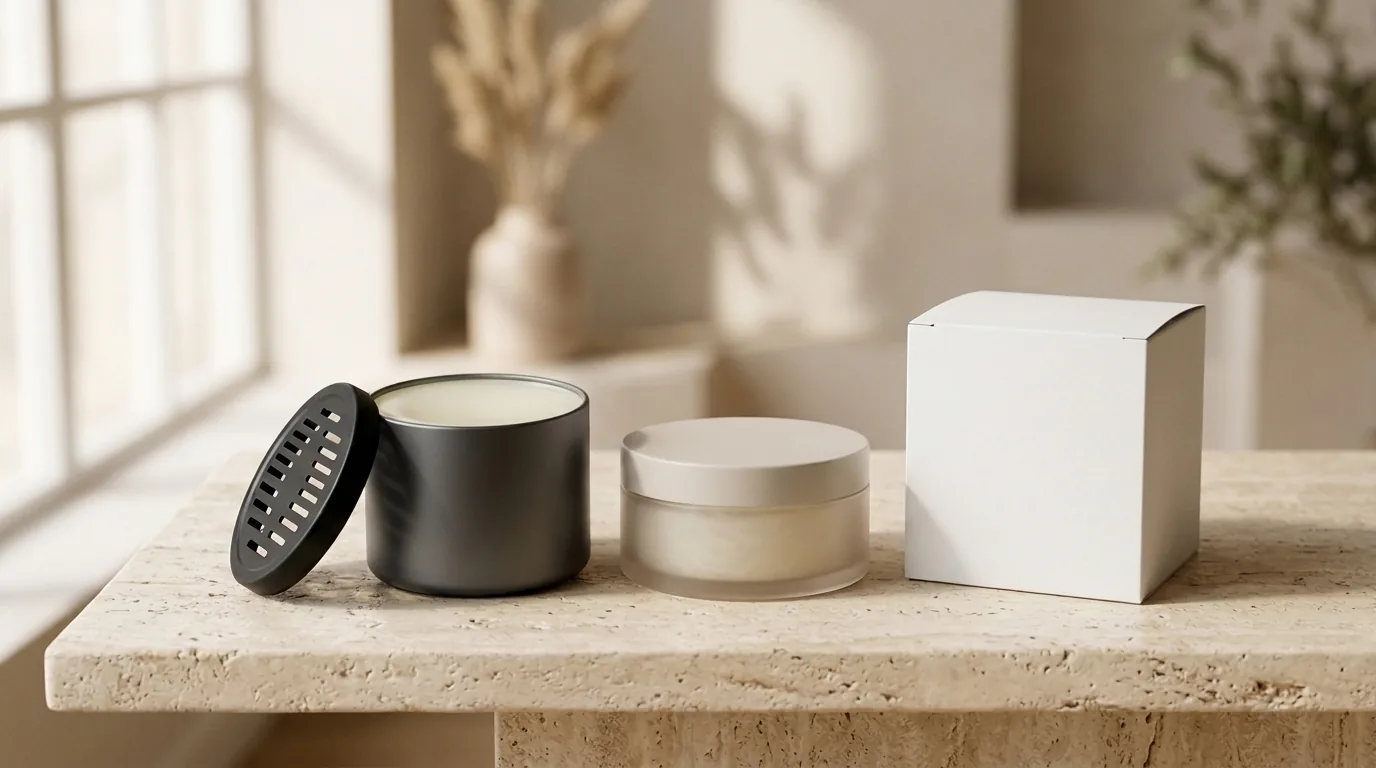
Quick answer: A commercial private label solid gel air freshener relies on a thermo-stable gelling matrix (such as carrageenan-based gel), a hermetic inner foil seal prior to opening, and a vented lid sized for the target space. Before ordering bulk production, buyers should verify resistance to water weeping (syneresis), cabin or transit heat stability, uniform gel shrinkage over its 30-day reference cycle, and cup-holder diameter compatibility.
For automotive retail chains, supermarket household aisles, and hospitality maintenance suppliers, scented solid gel deodorizers deliver continuous passive scenting and odor neutralization at an accessible unit cost—without glass breakage, wicks, or open liquid reservoirs. Because the aqueous fragrance-surfactant system is immobilized in a firm hydrocolloid gel, an overturned tub will not spill free liquid across upholstery or shelves.
This checklist walks B2B sourcing teams through container sizing, gel stability pitfalls, seal specification, and sample evaluation.
1. Position Solid Gel Containers Across Car Cup Holders and Small Rooms
Solid gel formulas can be hot-poured into aluminum cans, rigid PP/PET jars, frosted glass vessels, or wide low-profile tubs. Define the placement environment first so container geometry and vent aperture match how air moves past the gel surface.
| Application | Vessel & lid priorities | Key buyer checks | Planning reference |
|---|---|---|---|
| Vehicle cup-holder / under-seat can | Tapered or cylindrical base (commonly 65–72 mm outer diameter check) with rattle-free fit and slotted top grille | High-temperature softening resistance; secure snap or screw lid under road vibration | Custom MOQ ref: 3,000 units; duration ref: ~30 days |
| Closet, bathroom & pet-area tub | Wide-mouth low tub or twist-up adjustable cone for larger exposed surface area in still air | Uniform evaporation shrinkage; moisture-resistant wrap label for humid rooms | Custom MOQ ref: 3,000 units; duration ref: ~30 days |
| Decorative glass / minimalist retail jar | Frosted or matte-coated jar with discreet slotted metal or molded lid | Clean fill meniscus without air bubbles; inner peel seal hidden beneath decorative cap | Confirm jar lead time & drop-pack protection |
If your closet or laundry range specifically requires active humidity extraction alongside scent, compare calcium-chloride scented moisture absorbers or review our small-spaces air freshener buying guide to position both SKUs without overlap.
2. Evaluate Carrageenan Gel Firmness, Syneresis, and Shrinkage
Two solid gel samples can smell identical on day one yet behave very differently after ocean transit or two weeks in a warm car. Focus pre-production evaluation on three formulation mechanics:
- Syneresis (water weeping) control: Temperature swings during sea freight or warehouse storage can cause weakly cross-linked gels to release thin droplets of free water and fragrance surfactant onto the gel surface. When the end user peels the inner foil seal, pooled liquid feels like a defect. Ask how the carrageenan/gum ratio is balanced for freeze-thaw and warm-storage recovery.
- Thermal slump point for automotive SKUs: Standard household gels can slump if left in a sun-baked vehicle cabin. If the product is marketed for dashboards or cup holders, specify automotive use upfront so the R&D team sets the gelling agent concentration and verifies upper-temperature firmness against your agreed test protocol.
- Clean, uniform shrinkage profile: As water and fragrance co-evaporate over roughly 30 days, a solid gel naturally shrinks to a small dry core—providing a built-in end-of-life cue. Check that the shrinking block pulls away evenly rather than cracking into loose fragments that rattle inside a cup-holder can.
Developing a cup-holder or household solid gel line? Send your target net weight (e.g., 100 g–200 g), container style, scent directions, and destination market via our OEM inquiry form to align formulation and packaging specs before sampling.
3. Specify the Container, Inner Foil Seal, Vented Lid, and Label
Because solid gel contains a high proportion of water and volatile aroma compounds, an unsealed vented jar will start shrinking inside the master carton before it ever reaches retail shelves. Lock down four packaging components together:
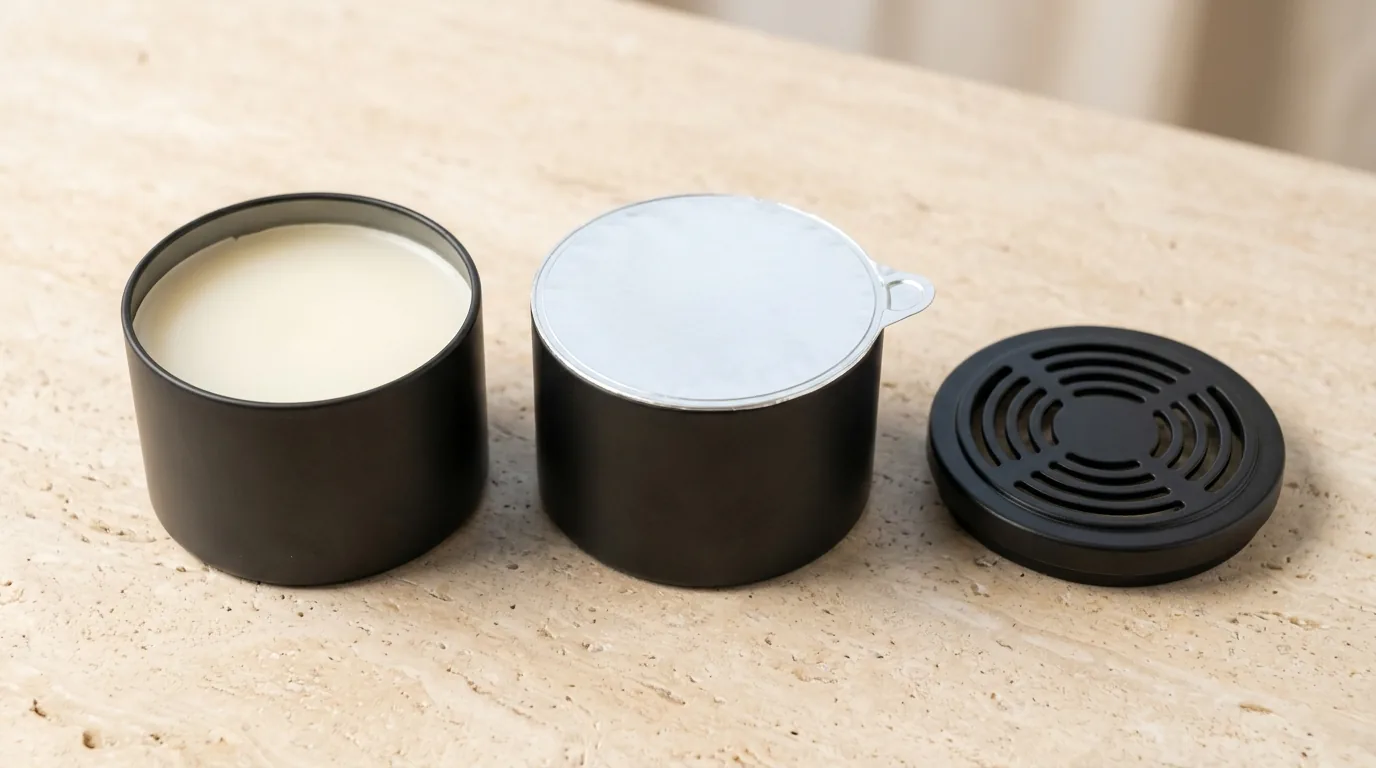
- Hermetic inner barrier seal: Specify an induction-sealed aluminum foil liner, heat-sealed barrier film with an ergonomic finger pull-tab, or an aluminum easy-open end (EOE) pull-ring lid beneath the plastic vented cap. Test both seal tightness and consumer peel effort.
- Adjustable vs. fixed louvered lids: Rotating two-piece slotted lids or raise-to-open cones let users regulate scent intensity in compact cabins versus larger bathrooms. Confirm detent click feel and child-curiosity resistance (preventing effortless lid pop-off if dropped).
- Label & sleeve durability: Use BOPP film labels, full-body shrink sleeves, or direct container printing rather than uncoated paper labels, which can wrinkle in humid bathrooms or cold-chain condensation.
- MOQ and SKU planning: LoyalCrafts’ custom MOQ planning reference for scented solid gel deodorizers is 3,000 units (1–3 days stock samples, 7–14 days custom samples, 30–40 days bulk production reference after approval and deposit). Sharing one jar and black vented lid across three scent labels is the most efficient way to control packaging minimums.
4. Blank Solid Gel Sample & Stability Observation Sheet
Copy this record into your sourcing workbook to track hot-poured pre-production samples across agreed storage conditions and regulatory checks.
| Evaluation item | Target specification & condition | Pass criteria to confirm | Sample status |
|---|---|---|---|
| Initial fill & surface | Approved net weight (g), cooling meniscus, color uniformity | Smooth, bubble-free gel surface; clean rim for foil sealing | To record |
| Inner foil seal & peel | Heat/induction seal check and manual tab removal | Zero vapor/moisture loss sealed; clean peel with no foil tearing | To record |
| Thermal & weeping check | Conditioned warm/cool storage cycle agreed for route and use | No liquefaction slump; minimal or zero free liquid weeping | To record |
| 30-day depletion review | Open-vent room or cabin test under recorded temperature/airflow | Steady scent release and cohesive, rattle-free core shrinkage | To record |
Before finalizing label dielines, confirm IFRA conformity documentation and Safety Data Sheet classification for the finished gel mixture at its exact fragrance load—frequently much lower in hazard classification than 100% oil refills, though allergen and aquatic statements still depend on the formula. European buyers should also review jar and multi-material lid separability against EU Regulation 2025/40 (PPWR) using our EU PPWR home fragrance packaging checklist.
FAQs
How does a carrageenan solid gel differ from polymer crystal beads?
Carrageenan-based solid gel forms a single cohesive, smooth block derived from seaweed polysaccharides that shrinks uniformly as it evaporates, whereas superabsorbent polymer beads are loose swollen spheres that can spill out if a vented lid pops open in a moving vehicle.
What is the typical custom MOQ for private label solid gel deodorizers?
Our planning reference is 3,000 units for custom private label solid gel orders. Final per-fragrance splits depend on hot-pour kettle batch size, container color, and label or shrink-sleeve printing minimums.
Will solid gel air fresheners melt in summer shipping containers?
Formulations intended for automotive cabins and summer ocean transit must be engineered and tested for elevated temperatures. Always inform your manufacturer whether the SKU is for indoor household rooms or hot vehicle interiors so the gelling system and pre-shipment thermal checks match the end use.
Can you match our existing home fragrance scents in a solid gel base?
In many cases, yes—our R&D team can adapt signature fragrance profiles for aqueous gel compatibility, then submit filled gel samples so you can evaluate cold throw, color appearance, and stability in the actual base.
5. Plan Your Solid Gel Deodorizer Order with LoyalCrafts
Compare solid gel alongside breathable membrane pods and molded EVA charms across our custom car air freshener manufacturer range, or send your vessel preference, net fill weight, and target quantity through our project inquiry form for sample and quotation support.