
Quick answer: For LoyalCrafts, a fabric freshener is a scented fabric or linen sachet used in enclosed spaces such as wardrobes, drawers, luggage, gift boxes and hotel closets. Before approving a private label version, test the finished sachet with the actual pouch fabric, fragrance filling, barrier pack and outer packaging. The useful questions are practical: does the sachet stay clean and intact, do nearby textiles remain presentable, does the pack protect the scent, and does the approved sample still match the intended retail product after the agreed review?
Private label validation snapshot
- Test the finished system: fabric pouch, scent carrier, filling weight, hanging loop, barrier pack and retail carton together.
- Check textile contact: compare the intended pouch with representative light and dark fabrics before final approval.
- Check color and appearance: look for marks, transfer, bleeding, distorted print, seam issues or changed fabric hand feel.
- Check packaging protection: review the sealed pack for scent retention, leakage, migration and presentation after agreed storage.
- Keep a reference sample: link the approved version to the pouch, fragrance direction, fill, artwork and pack revision used in production.

What Fabric Freshener Stability Testing Means
A fabric freshener sachet is not validated by smelling a loose pouch once. The fragrance, carrier or filling, pouch fabric, thread, ribbon, print, sealed barrier pouch and outer carton work as one retail system. A good sample plan checks that system in the form a buyer intends to sell. It is especially important when the sachet may sit beside clothing, bedding, delicate linens or gift items for an extended period.
This article is deliberately narrower than a general fragrance-formula test. It focuses on the material and packaging questions a buyer needs to resolve for a fabric sachet: compatibility with the pouch and adjacent textiles, appearance and colorfastness, filling containment, scent migration and retail-pack protection. For the wider product choice between a sachet and a spray, see Fabric Freshener vs Room Spray. For paper and linen formats, visit our Scented Sachet Manufacturer page.
Begin With the Actual Use Scene
The right checks depend on where the customer will place the sachet. A small linen sachet inside a drawer may touch light-colored clothing. A hanging pouch in a hotel wardrobe may need a secure loop and a clean presentation after travel. A gift-box insert may require a stronger barrier pack so the outer box arrives without visible scent migration. These are different jobs, even if the fragrance direction is the same.
Before sampling, write down the intended placement, nearby materials, expected storage route, target market and desired first-use experience. The buyer does not need to supply a laboratory protocol to start the conversation. A concise brief with the pouch reference, a fabric or color reference, scent direction, packaging style and use scene is enough to make a sample review more meaningful.
| Use scene | What to review | Why it matters |
|---|---|---|
| Drawer or wardrobe | Pouch surface, potential transfer, scent level and filling containment beside textiles. | The item may touch garments, including light fabrics, for a long period. |
| Hotel wardrobe or amenity | Hanging loop, seam strength, presentation and pack condition after handling. | A visible, guest-facing product needs consistent appearance. |
| Gift box or retail set | Barrier pouch, carton appearance, fragrance migration and interaction with adjacent items. | The sachet must support the complete unboxing experience. |
| Luggage or storage product | Compactness, closure, rub resistance and the condition of the sealed product. | Movement and compression can expose weak seams or unsuitable packaging. |
Fabric Compatibility: Test More Than the Pouch
Fabric compatibility starts with the sachet itself. Check the outer fabric, lining where used, seam thread, print, tag, ribbon and metal parts against the actual fragrance filling and scent carrier. Some combinations may look fine in a short first look but show a mark, texture change or odor imbalance after the product has been packed and stored. The sample should be reviewed as a finished pouch, not only as a loose fabric swatch and a separate fragrance component.
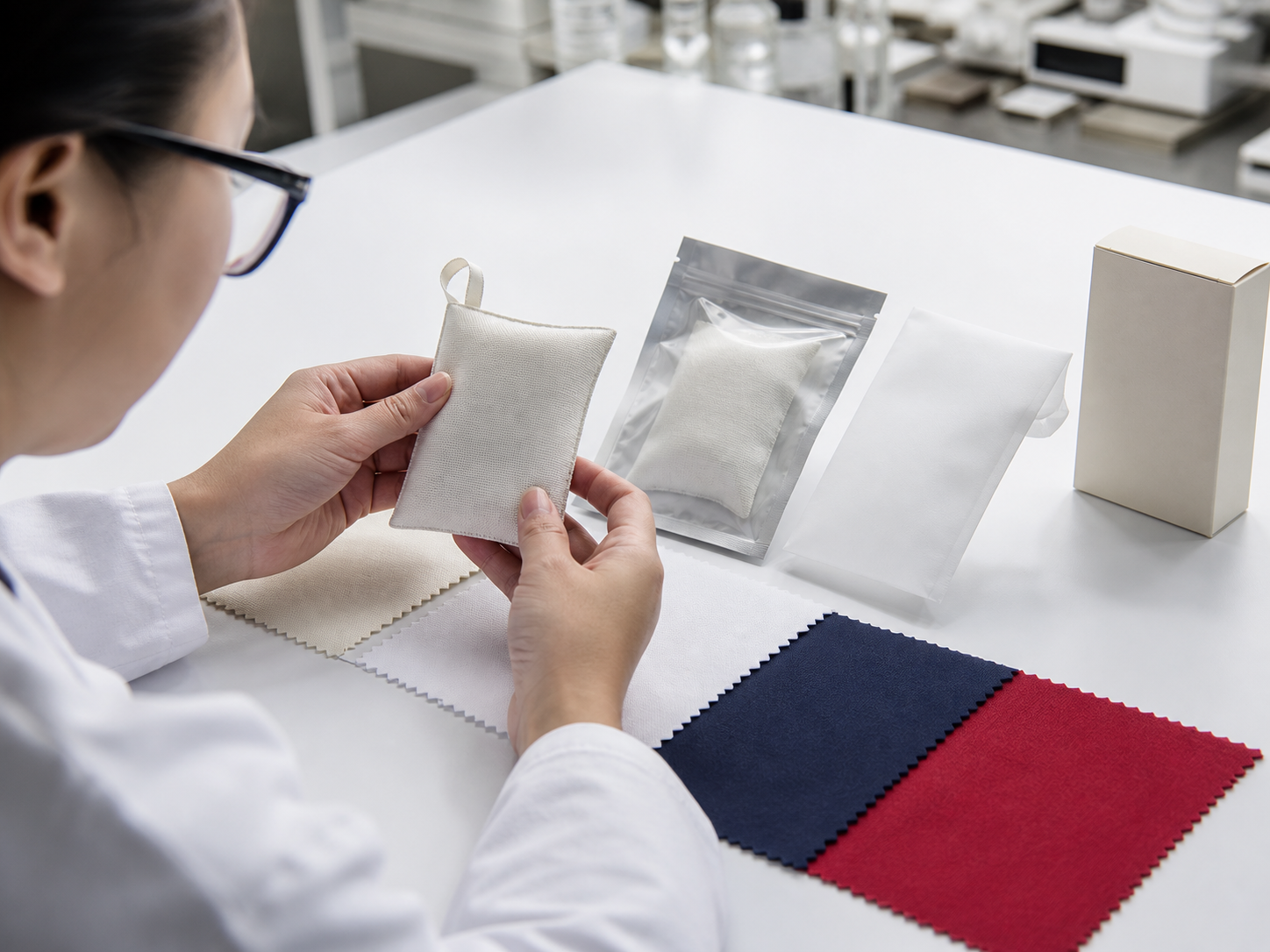
Then consider nearby textiles. Use representative fabrics that reflect the intended customer situation: for example, a light woven fabric, a darker fabric and any premium material the buyer specifically identifies. Keep the comparison controlled: use the same sample version, agreed contact arrangement, storage period and observation points. Note visible transfer, oily marks, altered hand feel, unexpected odor concentration or any change in the sachet's surface. This gives the buyer a basis for choosing a pouch material and packaging route without promising that every textile in every home will respond the same way.
Our fragrance expert says: "A retail sample must answer the question a customer will ask at home. If the sachet is designed for a closet, validate the finished pouch beside the fabrics that matter to that program, not only in isolation on a lab table."
Colorfastness and Appearance Checks
Colorfastness is not a single universal pass-or-fail claim. It is a practical review of whether the pouch color, print and decoration remain suitable in the product's expected condition. For a private label sample, this may include checking whether the pouch dye looks stable, whether printed artwork remains clean, whether the ribbon or tag stays presentable and whether the product creates visible marks on the selected comparison fabrics.
The buyer and factory should agree what counts as acceptable for the product. A white hotel sachet, a dark printed gift pouch and a natural linen wardrobe sachet will not have exactly the same visual priorities. Record the approved fabric color, print version and decoration in the sample file. If a later order changes the pouch supplier, print process, color, fragrance direction or fill, review the changed version again rather than treating the previous approval as automatic.
Check Filling Containment and Scent Migration
Fabric sachets can use different fragrance carriers and fillings, each with its own handling characteristics. The buyer should review whether the chosen fill remains contained, whether the pouch remains tidy, and whether the finished product stays suitable for the intended channel. A clean-looking sample is valuable for a gift, retail display or hotel setting; an uneven, dusty or marked package can weaken the program even when the scent direction is right.
Scent migration deserves a separate check. Fragrance is meant to reach the consumer after opening, but it should not leave the retail packaging visibly compromised before sale. Inspect the sealed pack, product surface, printing, adjacent inserts and carton after the agreed storage review. Compare it with the retained reference sample. If a buyer changes the fragrance load, carrier, pouch fabric, barrier pouch, sealing method or outer pack, test the revised finished system before approving bulk production.
Packaging Is Part of the Stability Plan
A barrier pouch helps protect a fabric freshener before the customer opens it. Its material, seal, size, opening method and relationship to the retail carton should be selected with the final sachet in mind. A giftable paper box may look excellent, but it cannot be assumed to provide the same protection as an individually sealed barrier pack. Likewise, a barrier pouch should be checked for seal condition and presentation, not treated as a hidden component that needs no review.
For a clear approval process, test the commercial pack the buyer expects to sell: sachet, barrier pouch, insert card where used, retail carton, labels and shipping configuration. Review whether the pack remains clean, whether the scent impression on opening is appropriate, whether the sachet still sits correctly, and whether any rubbing or compression has affected the finished presentation. This approach turns packaging from a late-stage artwork decision into part of product validation.
A Simple Buyer Test Plan
- Freeze the sample definition: choose pouch fabric, color, print, filling, fragrance direction, fill weight, loop or tag and retail-pack version.
- Set the use scene: identify where the sachet will sit and the representative textiles or packaging items it may contact.
- Prepare a retained reference: photograph the approved sample and record its component and artwork versions.
- Agree the review route: define the storage, handling or transport conditions that are relevant to the actual project.
- Review appearance and containment: inspect seams, filling, pouch surface, print, loop, barrier seal and carton condition.
- Compare textile and pack contact: note transfer, marks, odor imbalance or any change to the selected representative materials.
- Approve, adjust or resample: make changes to the actual component causing the issue, then review the revised finished version.
For an overview of filling options before this stage, read Drawer Sachet Filling Materials Compared. To see the finished textile format, visit the Scented Linen Sachet Portfolio.
Safety, Claims and Market Review
Compatibility testing and fragrance safety are related but different discussions. The IFRA Standards are a globally recognized risk-management system for fragrance ingredients. They can inform fragrance-use discussion, while the company placing the finished product on the market remains responsible for the product's intended use, claims and applicable local requirements.
Keep the claims aligned with the evidence. A fabric freshener sachet can be positioned around fragrance for drawers, closets, luggage or gifting when that is its intended use. Claims about disinfecting, preventing mold, repelling insects, removing all allergens or solving every odor issue may require a different review. Agree the final consumer wording and market requirements before retail packaging is printed.
Need a fabric freshener sample plan?
Send your use scene, fabric or pouch reference, fragrance direction, target market and packaging idea. LoyalCrafts can help organize a practical fabric sachet sample route and reply within 24 hours.
FAQ
What should be tested before approving a fabric freshener sachet?
Test the finished sachet with its actual fabric pouch, filling, fragrance direction, barrier pack and outer packaging. Review appearance, seam and filling condition, textile contact, visible transfer or marking, scent migration and pack presentation under the agreed project review.
Can a fabric freshener sachet touch clothing?
That depends on the pouch, filling, fragrance and intended use. For drawer or wardrobe programs, buyers should test the final sachet against representative nearby textiles before approving the product. Do not make a broad textile-contact claim from a loose sample alone.
How do you check colorfastness for a fabric sachet?
Review the pouch color, print and decoration in the finished product, together with any intended textile contact. Agree representative fabrics, observation points and an acceptable result for the particular project, then retain the approved sample and component versions.
Why does a fabric freshener need barrier packaging?
A barrier pack helps protect the fragrance and retail presentation before opening. The final pouch, seal and outer pack should be reviewed together for visible migration, cleanliness, scent impression and product condition after agreed storage.
Does an IFRA document replace finished-product testing?
No. IFRA Standards inform fragrance ingredient risk management, while finished-product compatibility, package condition, claims and target-market requirements still need review for the actual fabric freshener program.
You May Also Like
- Fabric Freshener Private Label Guide
- Fabric Freshener vs Room Spray
- Scented Sachet Manufacturer
- Scented Linen Sachet Portfolio
Summary
Private label fabric freshener stability testing should validate the final retail system, not only the scent. Define the use scene, test the actual pouch and filling beside relevant textiles, inspect color and appearance, review the sealed barrier pack and retain a clear approval reference. That gives a buyer a grounded basis for a fabric sachet that looks, feels and arrives as intended.