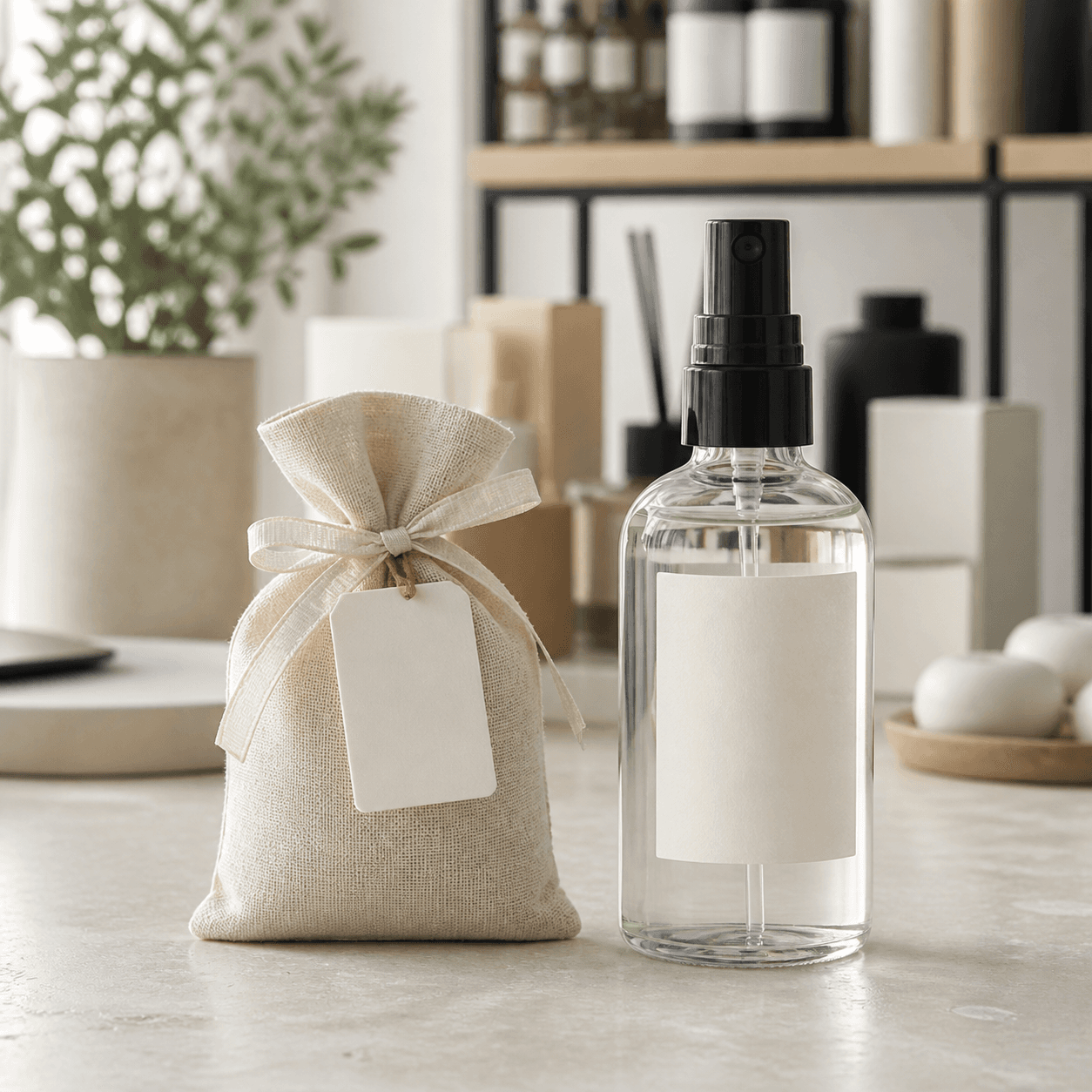
Quick answer: For LoyalCrafts, a fabric freshener is a scented fabric or linen sachet that adds a gentle fragrance to enclosed spaces such as closets, drawers, luggage, gift boxes and hotel wardrobes. A room spray is a fine-mist product for an immediate fragrance moment in a room. The right private label choice depends less on which product is "better" and more on where the customer will use it, how quickly they expect fragrance, how the brand plans to package it, and whether the range needs a refill, gift or hospitality story.
Private label decision snapshot
- Choose a fabric sachet for passive fragrance in drawers, wardrobes, luggage, gift sets and compact hospitality spaces.
- Choose a room spray when the customer wants an immediate, user-controlled refresh in a room or nearby home area.
- Choose both when a collection needs a room-level product plus a quieter wardrobe-care or gifting companion.
- Approve final samples separately: a pouch filling and a fine-mist spray have different packaging, storage and consumer-use checks.
- Plan timing realistically: stock samples are normally prepared in 1-3 days; custom samples normally take 7-14 days after the brief, sample fee and freight are confirmed.
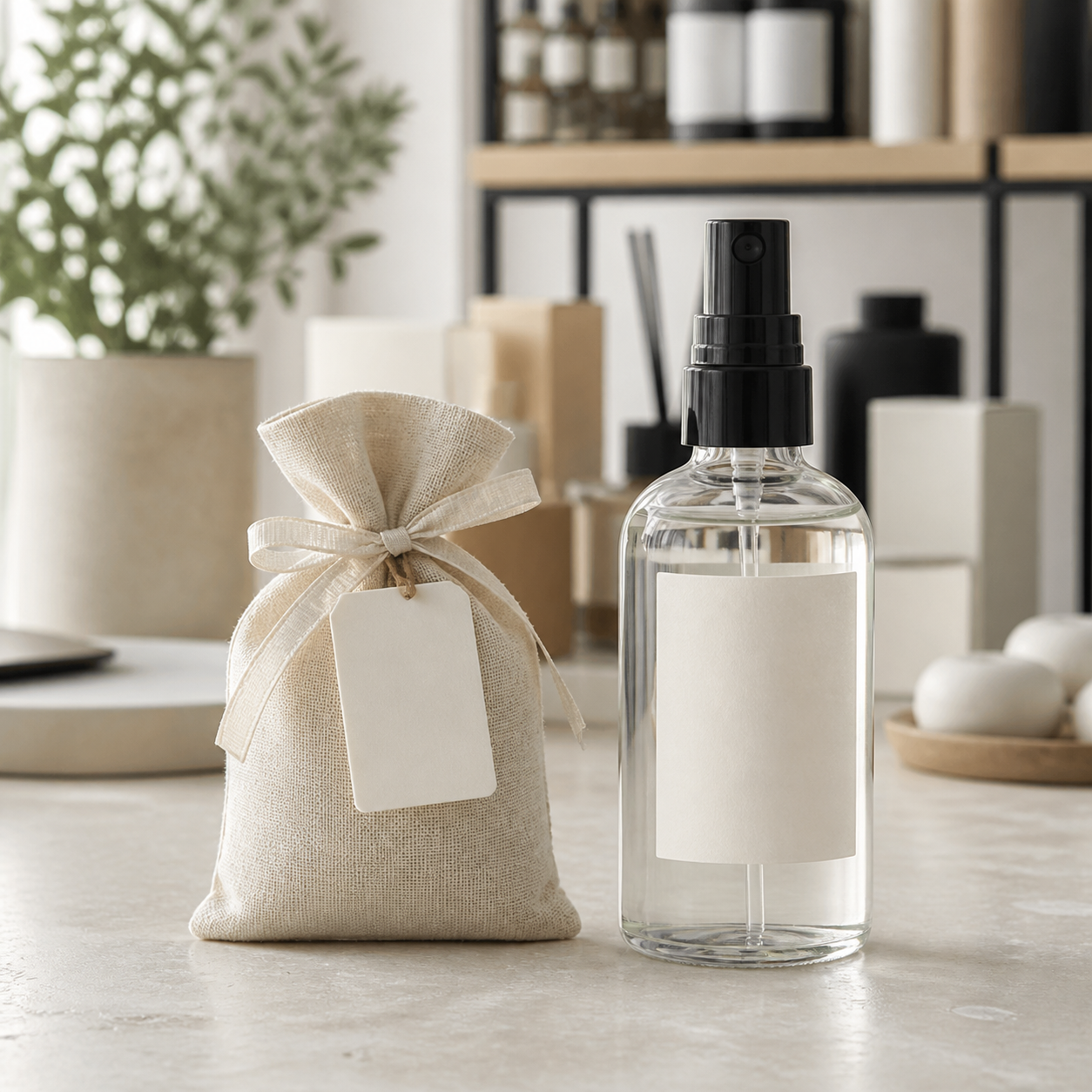
Fabric Freshener vs Room Spray: The Core Product Difference
These products serve different fragrance moments. A scented fabric sachet works quietly after it has been placed. It can sit in a drawer, hang in a closet, travel inside luggage or be included in a gift box. The customer does not need to spray, measure or store a liquid bottle. Its value is gentle background fragrance, soft product presentation and simple placement in a small enclosed area.
A room spray is more active. The consumer picks it up, sprays it and notices fragrance immediately. That makes it useful for a bedroom, bathroom, entryway, hotel room, retail display or other space that benefits from a quick refresh. It also means the formula, pump, spray pattern, bottle, label and carton need to be considered as one finished product. A room spray should not automatically be positioned for fabric contact unless that use has been specifically designed and tested.
For the detailed fabric-sachet route, see our Private Label Fabric Freshener Sachets guide. For spray formats and bottle references, visit the Scented Room Spray Portfolio.
Choose by the Customer's Use Scene
The simplest way to position the two products is by the moment a customer needs fragrance. A customer opening a drawer or unpacking a suitcase does not usually need an instant burst of scent. A sachet can be a natural part of that moment. A customer resetting a guest room, preparing for visitors or refreshing an entryway may want more direct control, which is where a fine-mist room spray can make sense.
| Use scene | Fabric freshener sachet | Room spray |
|---|---|---|
| Closet, drawer or luggage | Strong fit: passive fragrance with a soft, compact product format. | Usually secondary: convenient only when the product is specifically positioned for the surrounding area or tested textile use. |
| Guest room or hotel wardrobe | Useful as an amenity, wardrobe item or small take-home detail. | Useful for housekeeping or guest-controlled room refresh where suitable operational instructions are planned. |
| Gift set or seasonal launch | Adds tactile value, color and a lower-profile scent experience. | Adds a more demonstrable, immediate fragrance moment and bottle-led visual. |
| Home refresh | Best for smaller enclosed storage spaces and quiet background fragrance. | Best for a quick, user-controlled fragrance experience in an open room area. |
The table is a starting point, not a promise about every formula or market. A buyer should first write a plain product-use statement, such as "a scented wardrobe sachet for gift boxes" or "a fine-mist room refresh spray for hotel guestrooms." That short statement shapes the sample, label, packaging and quality checks that follow.
Positioning: Passive Care vs Immediate Refresh
A fabric sachet can feel more personal and decorative because it can be discovered inside a drawer, wardrobe or package. It is easy to combine with textiles, home organization, seasonal gifting, travel sets and amenity programs. The product story can focus on wardrobe care, a pleasant storage experience or a small scent detail. The buyer should make clear that fragrance complements a clean, dry storage space; it is not a replacement for moisture control, cleaning or ventilation.
A room spray has a different communication job. The pack needs to explain where and how the customer uses it, while the scent name, bottle and pump create the first impression. It can suit a bolder launch campaign because the customer can demonstrate it immediately. The buyer should avoid turning a general room spray into a fabric, antimicrobial or odor-removal claim without a project-specific formula, testing and market review to support that wording.
Our fragrance expert says: "A buyer gets a cleaner assortment when the two formats do not compete for the same job. Let the spray create the immediate room moment, and let the sachet deliver the quiet storage or gifting moment. Then use related scent names and packaging details to make the range feel connected."
Packaging and Development Work Are Different
A fabric freshener sachet is a dry, filled product. Its development questions are about the pouch material, filling, fragrance direction, seam or ribbon, hanging method, print, retail pouch and carton. The sample should be reviewed for clean filling, scent retention, leakage of filling material, oil migration, staining risk, package appearance and normal handling. Read our drawer sachet filling materials guide for a closer look at common filling decisions.
A room spray is a liquid system. The development work includes the formula, bottle, pump, dip tube, cap, label, any shrink or protective part, retail carton and shipping protection. The buyer should assess the finished bottle after agreed storage and repeated pump use, rather than judging an empty bottle or a loose fragrance sample. A refined bottle cannot compensate for a pump that feels inconsistent or a pack that does not protect the final assembly.
Neither product should be quoted from a photo alone. Send the intended size, scent direction, market, packaging reference, artwork status, sales channel and expected launch timing. This lets the factory recommend a practical sample route rather than assuming that a sachet and a spray can share the same materials, checks or production plan.
How to Build a Coherent Two-Product Collection
For many retail, hospitality and gifting buyers, the strongest answer is not either-or. A room spray and a fabric sachet can form a useful fragrance pair when each has a clear role. The spray can be the hero item for immediate home use; the sachet can become a low-profile companion for wardrobes, drawers, luggage or gift packaging. The same scent family can be adapted across both products, while the final formula and delivery system are tested for each format separately.
A retailer might launch a 100 ml room spray with a linen sachet tucked into a seasonal gift set. A hotel group might use a subtle sachet in a guest-room wardrobe while keeping a separate room refresh spray for housekeeping use. A home organization brand might pair drawer sachets with a room spray that shares the same scent name, then present the two as complementary products rather than identical experiences.
When planning a collection, define the visible difference on the shelf: the spray's bottle, pump and scent-story label; the sachet's fabric, ribbon, tag or small carton. Keep the scent naming aligned, but do not force a product claim from one format onto the other. This preserves a coherent range without creating confusion for the customer or extra risk in the artwork review.
Sample Approval Checklist for Both Formats
- Confirm the use scene: closet, drawer, luggage, gift box, guest room, home refresh or another specific placement.
- Approve the final format: sachet pouch, filling and retail pack on one side; spray formula, bottle, pump and carton on the other.
- Review appearance: fabric color, stitching, ribbon, filling cleanliness and tag placement for sachets; bottle finish, label position, cap and pump appearance for sprays.
- Check the relevant performance points: scent retention, filling containment and package condition for sachets; spray pattern, closure, storage appearance and packing protection for sprays.
- Record the approval: retain the product code, fragrance direction, artwork revision, pack version and sample photos before bulk production.
- Review claims before print: especially any fabric-contact, odor-control, antimicrobial or other functional wording.
For fragrance standards and safe-use information, the IFRA Standards are a useful industry reference. They do not replace a buyer's responsibility to review the finished-product claim, label and market requirements for the exact item being sold.
When to Choose One Product First
If the brief covers bathrooms, compact guest rooms, closets or drawers, use the small-space air freshener selection guide to match the use scene, placement and desired scent control to a product format before requesting samples.
Start with a fabric sachet when the brand already sells home textiles, storage, travel accessories, gifting or wardrobe-care products. It offers a compact entry point and can be visually tailored through material, shape, tag, ribbon and retail packaging. The initial brief should prioritize the use space and packaging experience, because those decisions affect the final scent-carrier and pouch route.
Start with a room spray when the brand's customer expects a visible bottle, immediate fragrance and an active daily-use product. It can be a clear addition to home fragrance, hospitality or lifestyle ranges. The first sample brief should prioritize intended use, bottle size, pump style, fragrance direction, pack level and target market, so the buyer can review the real finished system.
Start with both when the collection needs a clear scent journey across rooms and storage spaces. This is most compelling when the two products share a design language and scent family but are presented with their own practical instructions, packaging and quality checks.
Choosing a fabric sachet, room spray or paired collection?
Send your target use scene, preferred format, scent direction, packaging reference, market and launch timing. LoyalCrafts can suggest a practical sample route for the specific project and reply within 24 hours.
FAQ
What is the difference between a fabric freshener and a room spray?
Here, a fabric freshener is a scented fabric or linen sachet for enclosed spaces such as closets, drawers, luggage and gift boxes. A room spray is a fine-mist product for an immediate fragrance moment in a room. They use different delivery formats, packaging and sample checks.
Can a room spray be used on linen or other textiles?
Only when the formula is designed and tested for textile contact. A general room spray should not automatically be marketed as a linen product. The buyer should review residue, staining risk, label wording and intended use before making a textile-contact claim.
Can a fabric sachet and room spray share the same scent name?
Yes. A brand can create a coordinated scent family across both formats, but the fragrance delivery system should be tested separately in the final sachet and final spray. Shared scent naming does not mean the formula, packaging or performance checks are identical.
Which format works better for hotel programs?
It depends on the job. Sachets can suit wardrobes, amenity packs and take-home details. Room sprays can suit a controlled room-refresh use. Hotels should define who uses the product, where it is placed, how it is stored and what instructions are needed before selecting a format.
What should I send before asking for a quote?
Send the target use scene, preferred product type, scent direction, target market, quantity per SKU, packaging reference, artwork status, document needs and expected launch timing. This helps the factory plan the right sample and production route.
You May Also Like
- Private Label Fabric Freshener Sachets: US Buyer Guide
- Scented Linen Sachet Portfolio
- Scented Room Spray Portfolio
- Home Fragrance OEM/ODM Factory
Summary
Fabric freshener sachets and room sprays are complementary private label products with different jobs. Use a sachet for quiet fragrance in enclosed storage and a room spray for an immediate, consumer-controlled room refresh. The best buying decision starts with the use scene, then matches the format, packaging, sample review and product claim to that real moment. When a collection needs both, keep the scent story connected while approving each product as its own finished system.